Wednesday, 30 April 2014

Ten Kindles I have known

I do love a Kindle, as I’m sure you know by now if you have ever visited this blog before. I think I’ve used at least ten different Kindles, but let’s see. I write this knowing it won’t interest anyone but me. But I will find it fascinating.

1. The iPad Kindle app, which by checking my iTunes receipts I can see I got in the week of 13 May 2010. In fact, it’s the very first item on my very first iTunes receipt. I’d had a pair of Sony Readers and though I used them a lot, I only bought a few books in that format (from WH Smith, weirdly), because they were so expensive, such a faff to get on there, and I had lots of review stuff to keep me occupied. I did give iBooks a try (another iTunes receipt tells me that on 12 June 2010 I bought Neal Asher’s Shadow of the Scorpion) on there, but the iPad was a bit big for reading at length, and I couldn’t conveniently take it with me anywhere to read. Even now that it’s 37 generations behind the times I’m still reluctant to get it out in public. Funny now to think that when it first came out, sensible people were calling the iPad a Kindle killer. More like a stalking horse.

2. International Kindle (version 2). After settling for that pair of Sony Readers while impatiently waiting for Amazon to release the Kindle here, and then using the iPad app, this was my first actual Kindle. At this point they were still being shipped from the US. There’s a lot to like about this Kindle, not least that it still, even now, has absolutely free 3G internet access, and unlike more recent iterations it’s not restricted to browsing the Amazon store and receiving publications. You can use it to browse the wider web, albeit fairly slowly. It also has a nice little pair of speakers and a keyboard (which was a big selling point for me after struggling to make notes on the Sony Readers), sits nicely in your hand because its width lets it balance, and it has nice big buttons for clicking forward and back between pages. I still use this one from time to time.

3. Kindle (version 3, wi-fi only). Retrospectively renamed the Kindle Keyboard, the first of these I bought was for Mrs Theaker, and I was jealous of its wi-fi, which for the first time let documents be emailed to it without incurring a charge, and the ability to change the contrast of text in pdfs – useful for many review pdfs. One thing I don’t like about Mrs Theaker’s Kindle version 3 is that the keyboard buttons are a bit scratchy.

4. Kindle (version 3, wi-fi only). This one was mine. I just got too jealous of Mrs Theaker’s and bought myself one. Not quite as easy to hold as the v2, and the keyboard lost the number row, but as well as the features mentioned above it had one that made it ideal for an internet addict for me: it could only access the internet if the wifi router allowed it, and I made sure it didn’t. That meant no breaking away from reading to check my email just one more time before sleeping. The v3 had nice speakers too, and plenty of room for audiobooks.

5. Kindle (version 3, wi-fi only). Being an idiot I once put my v3 under my pillow and then leant on it with my elbow. Amazon let me have a new one for £40 in return for sending them the broken one, and I still use it quite often, especially for reading comics (the panel view is glitchy on the Paperwhite) and listening to audiobooks and music (I keep the new Pixies MP3s on it).

6. Kindle Android app on Google Nexus. I want to like this, and it’s slowly getting better, but it has problems. It doesn’t use the full height of the Nexus screen, and you can’t turn the brightness of the screen down to a bearable level. If I’m reading on the Nexus, I tend to use Play Books instead, which doesn’t have those problems.

7. Kindle Android app on Samsung phone. I want to like this more than I do, but the phone is always running out of power and slow to respond and by the time the app has loaded itself and loaded a book I’m often past the point where I needed something to read.

8. Kindle Paperwhite. I wasn’t that impressed by this model at first: it certainly didn’t live up to the promise of its name, and was quickly dubbed the Kindle Ghostlight in our house. The backlight caused strange shadows at the bottom of the screen, and could never be switched entirely off, giving it an eerie green glow. But it grew on me very quickly, for a few reasons. Its case is lovely, and switches it on automatically. All the screen, except left and top bars, can be tapped for next page, so you can hold it in lots of different positions and there’s no need for irritating swipes. No internet browsing on 3G, only book shopping, which means I don’t waste time checking my email on it. The downside: from the day I got a Paperwhite I had to negotiate in order to read in bed with the lamp on, and that’s made me very, very slow to read paper books, to the point where I’ve told publishers to stop sending them to us for review.

9. Kindle Desktop. I would like this a lot more if you could access your personal documents on it, since review copies make up a lot of my reading. It’d be really handy to browse my notes on the Kindle Desktop, side by side with the reviews I’m writing. Instead I have to cross refer to a physical Kindle. Disappointing.

10. Kindle Cloud Reader. Quite handy, but again suffers from a lack of personal documents, for me at least.

That’s a lot of Kindles. There are quite a few Kindles I’ve never tried, but the two I wish I’d had were the original, and the big Kindle DX. I was desperate for a DX at one point, but the lack of wifi and the way it couldn’t annotate pdfs meant it was never going to be a sensible use of my money. Still want one though.

Kindles that don’t yet exist that I would like: Kindle on Xbox, a little phone-sized Kindle, and Kindle on Google Glasses. That’s what I’ve always dreamed of – to be able to read while walking around, without walking into lamp-posts.

Wednesday is occasionally list day on the blog, though not as frequently this year because I have been so busy, and this is list #17. I would describe this as our most boring yet, but I fear my muse would take that as a challenge.

Monday, 28 April 2014

La Vallée Infernale by Henri Vernes, read by Stephen Theaker

La Vallée Infernale (in Tout Bob Morane 1, Les Éditions Ananké, ebook, 10,308ll) by Henri Vernes is the first novel in the long-running Bob Morane series, which doesn’t seem to have made much of an impact in Anglophone countries. Post-WWII Bob is working as a courier pilot for a shifty operator who has him run some scallywags to Papua New Guinea.

It’s supposed to be an flyover, but upon arrival they demand to land, and when Bob declines they force a crash, into an area cut off by mountains, ruled by dangerous tribes, and far from safety. His honour forces Bob to attempt the protection of the idiots who have landed him in the mess.

Monday, 21 April 2014

Wonder Woman Unbound, by Tim Hanley, reviewed by Stephen Theaker

In Wonder Woman Unbound (Chicago Review Press, pb, c.322pp), subtitled The Curious History of the World’s Most Famous Heroine, Tim Hanley takes a look at the history of DC’s best-known female superhero, with a particular focus on her earliest stories and the man who created her, William Moulton Marston, and his interest in an idiosyncratic brand of bondage-led feminism. The book explores Hanley’s theory that “every version of Wonder Woman has been simultaneously progressive and problematic”, with parts devoted to the Golden Age, Silver Age and Bronze Age versions of the character.

Monday, 14 April 2014

Ghost Train to New Orleans by Mur Lafferty, reviewed by Stephen Theaker

Her travel guide to New York having done well, despite a series of supernatural calamities that occurred in the course of its writing, Zoë Norris is given a new assignment by her editor at Underground Publishing: the supernatural tourist’s guide to New Orleans. She takes a hand-picked team of writers with her: two vampires, one of whom would kill her now if it wasn’t against company policy, a goddess of death, a Valkyrie, and a baby dragon, Bertie.

Friday, 11 April 2014

Template by Matthew Hughes, reviewed by Stephen Theaker

There are few things I find more enjoyable than a Matthew Hughes novel, and it’s a struggle to stop myself gorging on them at the expense of everything else. Template (self-published, ebook, 4865ll) is a book from 2008, new to me, recently republished. Like most of the Hughes books previously reviewed here, it is set among the Ten Thousand worlds of the Spray, under the subtle rule of the Archonate.

Conn Labro is an exceptional sportsman, brilliant at everything from fencing to chess, and he takes on all-comers at Horder’s Gaming Emporium – which owns him. Hallis Tharp has paid in advance for a lifetime of his services: a weekly two-hour game of paduay. On one occasion, Tharp is not ready for the game, and Conn goes to investigate.

Monday, 7 April 2014

Divergent, reviewed by Douglas J. Ogurek

Chicago plows dauntlessly into young heroine-driven dystopia subgenre

We Chicagoans recently endured one of our worst winters in recorded history. I wonder how many of us, clomping through the slush-laden Loop streets or stuck on bleak highways, saw the Divergent ads on billboards and bus wraps as not only an exciting way to launch spring, but also as a potential to extend our city’s reputation for innovation.

Friday, 4 April 2014

BFS Journal #11: out now!

Sorry that things have been so quiet on the TQF blog this year – paying work has been keeping me very busy (can’t and won’t complain!) but work is progressing on the next issue of Theaker's Quarterly Fiction – and about 25 reviews I have at various stages of unreadiness.

One distraction has been that I was asked to help out on the BFS Journal for a couple of issues after it had stalled, to give the new managing editor time to train up. You can only get this 184pp paperback if you’re a BFS member, but we’ve ordered a handful of extra copies, so if you join today there’s still a chance of getting it.

Sarah Newton is the editor of this issue’s fiction:

  • The Switch, Mark Lewis
  • Electricity, Gary Couzens
  • Pawnarchy, Mark Huntley-James
  • The Eden Paradigm, Allen Ashley and Madeleine Beresford
  • A Barrow on the Border, Rima Devereaux
  • The Need to Create, Emma Newman
  • The Lost Name, Sandra Unerman
  • Baby 17, Jonathan Oliver
  • The Long Hard Road Out of Hell, M.E. Lerman

Stuart Douglas edits the non-fiction:

  • Jennie Gyllblad, interviewed by Max Edwards
  • Freda Warrington, interviewed by Alex Bardy
  • The Adventures of Brak, Mike Barrett
  • Tim Powers, interviewed by Stuart Douglas
  • Nick Campbell on The Child Garden
  • Forbidden Fruits, Ray Cluley

And Ian Hunter edits the poetry:

  • Cybernetic Mary, Deborah Walker
  • Protecting Veil, Megan Kerr
  • A Paranormal Romance, Allen Ashley

There’s also a controversial editorial by Max Edwards, a controversial chairman’s chat by Mark Barrowcliffe, and a BFS news section that has not yet attracted any controversy (but maybe no one has read it yet). Cover art by Jennie Gyllblad.

Monday, 17 March 2014

The Glorkian Warrior Delivers a Pizza by James Kochalka, reviewed by Stephen Theaker

The Glorkian Warrior Delivers a Pizza (First Second, hb/pb, 112pp; Netgalley pdf) is another superb, hilarious comic for children by James Kochalka. Well, I say for children, but it made me laugh out loud enough times to attract the children to my office, concerned they were missing out on some fun. And they were. The Glorkian Warrior is happy to doze on his sofa until he is woken by the sound of the emergency space phone. Someone has called to order a pizza. A pepperoni pizza. His Super Backpack is keen for adventure, but not too impressed with this one: “I’m not SCARED. I just don’t think ‘heroic destiny’ is usually this STUPID.” There’s no pepperoni pizza in the fridge, but there are leftover peanut butter and clams slices, so that’ll have to do. On the way to deliver the pizza they’ll meet, battle and make friends with battle-suited Gonk, attempt Glorkian kung fu on a spaceship, adopt a space invader baby, and meet the Magic Robot!

Monday, 10 February 2014

I, Frankenstein, reviewed by Douglas J. Ogurek

Juvenile, shallow, and highly recommended: Legendary monster romps with angel-gargoyles and suit-wearing demons in Underworldesque adventure

No. I will not join the critics who’ve ganged up to lambast I, Frankenstein, the film inspired by Kevin Grevioux’s graphic novel of the same title. I will not take sides with those who say that they did not enjoy this film because of its one-dimensional characters, poor dialogue, and rambling storyline.

Saturday, 1 February 2014

BFS Journal #10, out soon

During January I helped out on organising and typesetting #10 of the BFS Journal. It’s one hundred and sixty-eight pages of fantasy fun, weirdness and even a dash of controversy, edited by Max Edwards, Sarah Newton, Stuart Douglas and Ian Hunter.

Contributors include Al Kratz, Allen Ashley, Anne Lyle, Anne Shah, Anton Sim, Cav Scott, Clare Le May, David Buchan, David Gullen, Erik T. Johnson, Gary Budgen, Jaine Fenn, James Barclay, Juliet Boyd, Juliet McKenna, Mark Barrowcliffe, Mike Chinn, Paul Magrs, Pye Parr, Richard Farren Barber, Stuart Douglas, Tammy O’Malley, Zoe Gilbert and frequent TQF contributor Douglas Thompson.

The cover art, originally from Blood and Feathers: Rebellion by Lou Morgan, is by Pye Parr, who is interviewed by Cavan Scott about his work on that and other books.

BFS periodicals aren’t generally available to non-members. However, we ordered 25 spares and they will be sent out to new members and renewals as long as stocks last, along with two BFS exclusive hardback anthologies, The Burning Circus and Unexpected Journeys, edited by Johnny Mains and Juliet McKenna respectively. Contributors to those books include Kate Elliott, Stephen Volk, Muriel Gray and Adam Nevill. Join here.

Theakerly plans for 2014

We’ve been a bit quiet on here since the beginning of the year, with just the one blog post so far, a review from Douglas, but don’t fear! We’re still here! I’ve been writing quite a bit, but most of it has gone into interminable BFS discussions of one kind or another.

So, what are our plans for this year of Theaker’s? Well, we aim to publish four quarterly issues of the magazine as usual, in March, June, September and December, or thereabouts. We will also publish, at long last, John’s novel The Hatchling in paperback and ebook.

I’m aiming once again to have a new review here on the blog each Monday (I managed that about 35 times in 2013). The Wednesday lists may or may not make a comeback. In truth, I rather resent them for attracting more hits than the reviews which require so much more work to produce!

The Theakerly thoughts will definitely return. They provide a useful and moderately healthy way to empty the rubbish from my head. Their absence over the last month has principally been down to the frequency with which my thoughts have been unpublishable.

On the reviews front, I’ve been asking publishers to take us off their mailing lists for print review copies. I hardly ever read print books these days and when I try they take me three or four times as long as they should, however good the books.

It’s a shame, because there are few feelings as pleasant as receiving a mystery book package in the post. But nice as that is, and grateful as I was to receive them, I think they were a drag on my reviewing and reading.

Let’s see how it goes. Whatever your plans for the year, I hope they come to fruition!

Sunday, 19 January 2014

Paranormal Activity: The Marked Ones, reviewed by Douglas J. Ogurek


Thugs meet witches as horror dynasty takes it to the hood, and delivers yet again.

The first four Paranormal Activity (PA) films were simply numbered (e.g., Paranormal Activity 2). Number five is slated for release this October. This month, however, the PA team, which has held court in the pop culture horror realm since the series’ phenomenal inception in 2007, threw a curveball when it released Paranormal Activity: The Marked Ones.

Tuesday, 31 December 2013

Hey, Theaker's Quarterly Fiction #46 is out now! Free ebook, cheap paperback!

Amazing fiction! Insightful reviews! A self-indulgent editorial! Yes, it’s Theaker’s Quarterly Fiction #46! This issue features alphabetically-ordered stories by Gary Budgen, Mitchell Edgeworth, Josie Gowler, Stephen Palmer, Jessy Randall, Charles Wilkinson and Ross Gresham, plus eighteen reviews from Stephen Theaker, Jacob Edwards and Douglas J. Ogurek. Our spacechristmassy cover art is by Howard Watts.

Our print format changes a bit with this issue, shaving an inch off in each direction. Not sure if we'll stick with the new size until we see how the printing goes, but as ever the goal is to make the publication easier to produce and easier to read. I hope you'll like it.

Links

Paperback edition: on Amazon.co.uk / on Amazon.com / on CreateSpace
Epub version (free)
Mobi version (free)
PDF version (free)
Kindle edition: on Amazon.co.uk / on Amazon.com
The ebook is also available on Feedbooks and Lulu (both free)

All 45 back issues are also available for free download, in various formats.

Contributors

Charles Wilkinson’s short stories have appeared in Best Short Stories 1990, Best English Short Stories 2, Midwinter Mysteries and London Magazine. A collection, The Pain Tree and Other Stories, was published by London Magazine Editions. Ag & Au, a pamphlet of his poems, recently appeared from Flarestack Poets, Birmingham. Previously in Theaker’s: “Notes on the Bone” (#41) and “Notes from the Undergrowth” (#44). This issue: “Petrol-Saved”.

Douglas J. Ogurek reviews The Hunger Games: Catching Fire for us this time. His work has appeared in the BFS Journal, The Literary Review, Morpheus Tales, Gone Lawn, and several anthologies. He lives in a Chicago suburb with the woman whose husband he is and their five pets. His website: www.douglasjogurek.weebly.com.

Gary Budgen’s fiction has been published in a number of magazines and anthologies including Interzone, Theaker’s Quarterly Fiction (“Through the Ages”, #43) and Morpheus Tales. Recently he has had stories in the anthologies Where Are We Going? and Urban Green Man. He is a member of London Clockhouse Writers. Read more at http://garybudgen.wordpress.com. In this issue: “Black Ribbon”.

Howard Watts is a writer, artist and composer living in Seaford who provides the fantastic cover art for this issue. In fact, he provided it over a year ago, for the issue originally intended for Christmas 2012! Check out his Deviantart page.

Jacob Edwards reviews About Time, Computing with Quantum Cats, The Day of the Doctor and Gravity in this issue. His heart belongs to Australia’s speculative fiction flagship Andromeda Spaceways Inflight Magazine, but we’re happy to be his holiday romance. This writer, poet and recovering lexiphanicist’s site: www.jacobedwards.id.au.

Jessy Randall’s stories, poems, and other things have appeared in Asimov’s, Flurb, Lady Churchill’s Rosebud Wristlet, LQQK, McSweeney’s, and Star*Line. Her website is personalwebs.coloradocollege.edu/~jrandall/. Her story in this issue: “The Night of Red Butterflies”.

Josie Gowler specialises in writing weird tales set in the English East Anglian Fens, and science fiction and fantasy short stories; she has most fun when these all overlap. She’s been published in 365 Tomorrows, Lorelei Signal, Theaker’s Quarterly Fiction (“Soldier”, all the way back in #28) and Bewildering Tales. She is a Napoleonic re-enactor and is currently working on a trashy coming-of-age space opera. Her story in this issue is “The Lazarus Loophole”.

Mitchell Edgeworth lives in Melbourne, Australia, and his fiction has been published in The Battered Suitcase and SQ Mag, as well as here. He keeps a blog at www.grubstreethack.wordpress.com and tweets as @mitchedgeworth. “Customs” is the fourth in his Black Swan series to appear in these pages. Like everything we publish, it can be read quite happily in isolation, but if you want to find out how the Black Swan got off the ground, see his stories in #40 (“Homecoming”), #42 (“Drydock”) and #43 (“Flight”).

Ross Gresham teaches at the Air Force Academy in Colorado Springs. His stories have previously appeared in #34 (“Name the Planet”), #41 (“Milo Don’t Count Coup”) and #44 (“Milo on Fire”). His story in this issue is “Wild Seed”.

Stephen Palmer is the author of seven published novels, including Memory Seed and Glass (Orbit), Muezzinland, and Urbis Morpheos (PS Publishing). His short fiction has been published by NewCon Press, Wildside Press, SF Spectrum, Rocket Science, Eibonvale Press, Unspoken Water, Infinity Plus and Solaris, plus two more currently unmentionable. Ebooks of all his novels have recently been published by Infinity Plus Ebooks, who will also be publishing his forthcoming novel Hairy London. He lives and works in Shropshire, UK. His story in this issue: “The Mines of Sorrow”.

Stephen Theaker reviews all sorts of things in this issue. He even liked some of them. Further to last issue’s editorial, he got up to 107 consecutive days of writing at least 250 words a day (getting up to an average of 837), before post-Nanowrimo fatigue kicked in and brought the run to a halt on December 5. His work has also appeared in Black Static, Interzone, Prism, the BFS Journal, and the letters page of the NME. (He wrote to defend the authenticity of the Manic Street Preachers, comparing them favourably in that regard with bands like Curve. Time has – as usual! – proven him quite right.)

Monday, 30 December 2013

The Hobbit: The Desolation of Smaug, reviewed by Douglas J. Ogurek


Smaug may desolate, but Legolas steals the show in a superb epic fantasy adventure

Ostensibly, The Hobbit film series is about its namesake character: Bilbo Baggins. The first film, An Unexpected Journey (2012), focuses on Bilbo, who undertakes an expedition both physical and mental. However, in this second installment, The Desolation of Smaug (2013), returning director Peter Jackson (who also directed the Lord of the Rings (LOTR) trilogy) moves further back, assuming a wider view on a group of unlikely and in some cases likely heroes. Those coming to see Desolation aren’t just coming to see Bilbo; they’re coming to see a collection of beloved characters. Moreover, true to the contemporary western culture that spawned such blockbusters as The Avengers (2012), Desolation has minimized those pesky internal struggles, and taken external challenges and battlefield bravura to the next level.    

Wednesday, 25 December 2013

Twenty artists by whom I’ve only ever bought one album

Twenty artists by whom I’ve only ever bought one album (for myself, at least), and in brackets what the album was:

  1. Vampire Weekend (Modern Vampires of the City)
  2. The Streets (Original Pirate Material)
  3. The Magnetic Fields (69 Love Songs)
  4. S’Express (Original Soundtrack)
  5. The Prodigy (Their Law)
  6. Korn (Follow the Leader)
  7. Mouse on Mars (Rost Pocks)
  8. Los Campesinos! (Hold on Now, Youngster...)
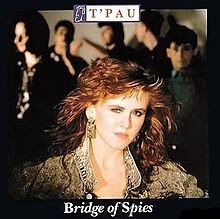
  9. T'Pau (Bridge of Spies)
  10. The Hold Steady (Boys and Girls in America)
  11. Yo La Tengo (Summer Sun)
  12. Bomb the Bass (Enter the Dragon)
  13. Big Fun (Paradise)
  14. Liza Minelli (Results)
  15. The Bloodhound Gang (Hooray for Boobies*)
  16. The Cooper Temple Clause (See This Through and Leave)
  17. Oasis (What’s the Story, Morning Glory)
  18. The Art of Noise (In Visible Silence)
  19. Editors (The Back Room)
  20. Klaxons (Myths of the Near Future)

How about you?

And by the way, Merry Christmas! With any luck this will be the only new article on the internet today and our hits will go through the roof.

Wednesday is list day. This is list #16.

* I’m so, so sorry.

Monday, 23 December 2013

Doctor Who and the Pescatons by Victor Pemberton, reviewed by Stephen Theaker

It has been quite a while since I last dipped into the six-story collection Doctor Who: The BBC Radio Episodes. I began with the Jon Pertwee story The Paradise of Death, reviewed in these pages many years ago, and it wasn’t too bad. A bit later I listened to The Ghosts of N-Space, which was so painfully awful I couldn’t bring myself to review it, especially since that was shortly after the deaths of Elisabeth Sladen and Nicholas Courtney and it wasn’t the right time to give their work a slating, however richly deserved. If you haven’t heard that story and you’re curious what was so bad about it, as an example let’s just say I never needed to hear the third Doctor explain the meaning of “sodomite” to Sarah Jane Smith.

Monday, 16 December 2013

Diablo III, reviewed by Stephen Theaker

Diablo III (Blizzard Entertainment, Xbox 360; Amazon purchase) is the first of the series I’ve played, and since I don’t play games on the PC, the Xbox 360 version is a new game to me. It’s an isometric dungeon crawler, an action RPG where your heroes run around semi-randomly generated environments bashing hordes of creatures, fulfilling simple fetch-quests. Players can choose from wizard, demon hunter, barbarian, witch doctor and monk, and from male and female versions of each. The setting is pretty much indistinguishable from other fantasy games, with your regulation ghosts, zombies, skeletons etc to fight. Sometimes you get a funny feeling you’re just playing Dragon Age: Origins or Oblivion from a different point of view, though some laser-like magical powers would be more at home in Halo.

Friday, 13 December 2013

The Hunger Games: Catching Fire, reviewed by Douglas J. Ogurek

Rarely does a movie outshine the book that inspired it. The Hunger Games: Catching Fire blazes as an exception.

Catching Fire, the middle installment in Suzanne Collins’s hugely popular Hunger Games trilogy, divides into two stories that could stand alone. The second and far better half details the Hunger Games’ 75th anniversary “Quarter Quell”. District 12 tributes (i.e., competitors) and winners of the last game, Katniss Everdeen and Peeta Mellark, square off in a fight-to-the-death match against past victors from the nation of Panem’s other eleven districts. Collins writes about this battle royal with skill, and the film follows suit.

Wednesday, 11 December 2013

Ten things which I learned of from Steven Gilligan

Ten things I had no experience and/or knowledge of until I was introduced to them by our much-missed friend Steven Gilligan:
  1. Buffalo Tom
  2. John Constantine, Hellblazer
  3. J-Pop
  4. My Bloody Valentine
  5. A Song of Ice and Fire
  6. Using a small amount of water to wash out the inside of a ketchup bottle
  7. Vic Reeves’ Big Night Out
  8. Nick Cave and the Bad Seeds
  9. Wim Wenders
  10. Funerals
I'm grateful for some more than others. My life has not been improved by the addition of Mini Moni songs to my inner playlist. Not one bit. On the other hand, the first time Steven showed me an episode of Vic Reeves, I laughed so hard and so suddenly that tea shot out of my nose.

Wednesday is list day. This is list #14.

Monday, 9 December 2013

Nexus Omnibus, Vol. 2 by Mike Baron and Steve Rude, reviewed by Stephen Theaker

Nexus Omnibus, Vol. 2 (Dark Horse, ebook, 423pp; Dark Horse app purchase), written by Mike Baron with most artwork by Steve Rude, collects issues 12 to 25 of the original series from First Comics. They continue the comic’s odd mix of high seriousness and low humour. The former: the punishment of genocidal maniacs, as super-powered Nexus puts to death the mass murderers of whom he mysteriously dreams. An example of the latter: the ongoing adventures of Clonezone the Hilariator, a terrible Catskills-style comedian who travels the galaxy from one crummy gig to another, always in hope of making it big.