

Possibly the UK's second longest-running sf/f fiction zine.
Monday, 24 April 2017
Preacher, Season 1, by Seth Rogen, Evan Goldberg and chums (Amazon Prime Video) | review by Stephen Theaker


Saturday, 22 April 2017
THEN: Science Fiction Fandom in the UK: 1930–1980 by Rob Hansen #rednosereviews

What a tragedy it was, though, to see this astonishing, informative and amazing book lose out to Geoff Ryman's writing about one hundred African science fiction writers. Yes, Ryman made everyone laugh the instant he came to the stage by kneeling down to the low microphone, and yes, he provided a brilliant example of "paying it forward" by taking his moment in the sun to announce the nominees for best novel in the new Nommo award to celebrate African writers, but what does any of that matter when the victim was THEN: Science Fiction Fandom in the UK: 1930–1980 by Rob Hansen, so cruelly deprived of that glorious transition from nominee to winner that is reserved for a fortunate few.
Perhaps I am to blame? I think I voted in the BSFA awards, being a member of that fine and august institution, but the screen went blank after I submitted the form so who can say? Surely, for all the wondrous writers covered in Geoff Ryman's articles, those articles were not the revised, expanded and corrected edition of a history that originally appeared in four fanzine-format volumes from 1988 to 1993. And surely, however popular the winner of the non-fiction award was, it did not include over three hundred photos of contemporary fans of all eras, nor dozens of scans of fanzine covers from each decade, nor an index of those photographs.
Did Ryman's work feature an introduction by Peter Weston, was it published by David Langford, and did it feature chapters enticingly entitled "Man and Supermancon", "Aardvarks, Wombats, Gannets and Rats" or "The Bastard Offspring of Science Fiction Monthly"? I think not. If it did, I apologise for my mistake. But I suspect that the only place you will find these things is in THEN: Science Fiction Fandom in the UK: 1930–1980 by Rob Hansen, which might not have won the award that night, but wins a place in all our hearts, just like the genre and the fans it chronicles. What else could it get but five red noses? So it does.
Buy the book here and count yourself lucky that you can! It's available in paperback, hardback and ebook.
This is the last of our Red Nose Reviews, written for fun (about a month after the event) without reading the book.
Friday, 21 April 2017
Children of Eden, by Joey Graceffa (and Laura L. Sullivan) (Simon and Schuster Audio) | review

Monday, 17 April 2017
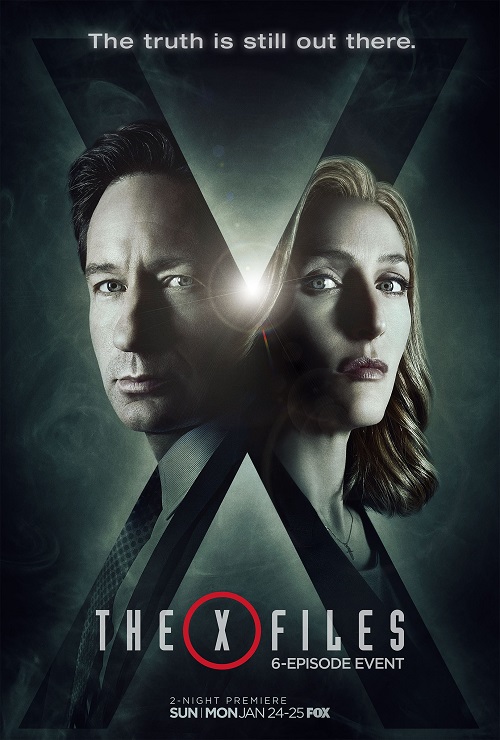
The X-Files, Season 10, by Chris Carter and chums (Ten Thirteen Productions et al.) | review by Stephen Theaker
Friday, 14 April 2017
The Dispatcher, by John Scalzi (Audible) | review by Stephen Theaker

This review originally appeared in Theaker's Quarterly Fiction #59, which also included stories by Rafe McGregor, Michael Wyndham Thomas, Jessy Randall, Charles Wilkinson, David Penn, Elaine Graham-Leigh and Chris Roper.
Friday, 7 April 2017
The Adventures of Roderick Langham: now out, in print and ebook!

Roderick Langham is a retired soldier, disgraced police inspector, and reluctant occult detective. He inhabits the world of Sherlock Holmes, investigates cases with John Watson and Sebastian Moran, and is able to perceive the reality concealed by the illusion of everyday appearances. These nine stories follow Langham from his first encounter with the inexplicable in the Himalayan hills to his investigation of the wreck of the Demeter and his growing realisation that the dales, moors, and wolds which surround his Yorkshire refuge are home to an evil far older than the honeycomb of medieval monasteries and Roman ruins suggests.
Rafe McGregor is the author of The Value of Literature, The Architect of Murder, six collections of short fiction, and one hundred and fifty magazine articles, journal papers, and review essays. He lectures at the University of York and can be found online at @rafemcgregor. The cover is by Dave Elsey.
Praise for Rafe McGregor’s The Architect of Murder:
“Arthur Conan Doyle is alive and well, and writing under the name Rafe McGregor.” – Tess Gerritsen
“Rafe McGregor is the architect of murderously good historical fiction.” – Gyles Brandreth
“…a fascinating marriage of investigative mayhem with keen attention to historical detail…” – Graham Hurley
“There’s some dandy police procedure…and plenty of interesting characters to carry the story along.” – Bill Crider
“…an exciting read, giving a very authentic flavour of the period…” – Bernard Knight
Review copies available in print, pdf, epub and mobi. Please send requests to theakersquarterlyfiction@gmail.com.
Monday, 3 April 2017
Ms. Marvel Vol. 1: No Normal, by G. Willow Wilson and Adrian Alphona (Marvel) | review by Stephen Theaker

Sunday, 2 April 2017
Winners of the Theaker's Quarterly Awards 2017
As announced in Theaker's Quarterly Fiction #59, these are the winners of the Theaker's Quarterly Awards 2017.


Items were eligible for our awards if they were reviewed in our magazine during 2016, whatever their original year of publication, or published in 2016, in the case of the TQF-specific awards. Our readers and the public were then able to vote for as many items in each category as they wanted. To break any ties we referred to our reviewers’ star ratings, where relevant, and if that didn’t do the trick we invited Alexa to roll a dice with a suitable number of sides.
To claim their prestigious Theaker’s Quarterly Awards, pictured below, winners should email us at theakersquarterlyfiction@gmail.com with an address to which we can send them.


Audio
- 1st The Brenda and Effie Mysteries: Spicy Tea and Sympathy, by Paul Magrs (Bafflegab Productions)
- 2nd Doctor Who and the Ark in Space, by Ian Marter (BBC/Audible)
- 3rd Vince Cosmos: Glam Rock Detective, by Paul Magrs (Bafflegab Productions)

Books
- 1st Songs of a Dead Dreamer and Grimscribe, by Thomas Ligotti (Penguin Classics)
- 2nd The Last Weekend, by Nick Mamatas (PS Publishing)
- 3rd Slow Bullets, by Alastair Reynolds (Tachyon Publications)

Comics
- 1st The Glorkian Warrior and the Mustache of Destiny, by James Kochalka (First Second)
- 2nd Ms. Marvel Vol. 1: No Normal, by G. Willow Wilson and Adrian Alphona (Marvel)
- 3rd The Savage Sword of Conan, Vol. 14, by Charles Dixon, Gary Kwapisz, Ernie Chan and chums (Dark Horse Books)
Films
- 1st Captain America: Civil War, by Christopher Markus and Stephen McFeely (Marvel Entertainment et al.)
- 2nd Star Wars: The Force Awakens, by Lawrence Kasdan, J.J. Abrams and Michael Arndt (Lucasfilm et al.)
- 3rd X-Men: Apocalypse, by Simon Kinberg (Twentieth Century Fox Film Corporation et al.)

Games
- 1st Trials Fusion Awesome Max Edition, by RedLynx (Ubisoft)
- 2nd Rare Replay, by Rare (Microsoft Studios)
- 3rd Saints Row IV: Re-Elected, by Volition Software (Deep Silver)

Music
- 1st It Follows: Original Motion Picture Soundtrack, by Disasterpeace (Milan Records)
- 2nd —
- 3rd —

Television
- 1st Doctor Who, Season 9, by Steven Moffat and friends (BBC)
- 2nd The Flash, Season 1, by Andrew Kreisberg and many others (Warner Bros Television)
- 3rd Penny Dreadful, Season 2, by John Logan and chums (Sky Atlantic)

Issue of TQF
- 1st Theaker’s Quarterly Fiction #56, edited by Stephen Theaker and John Greenwood
- 2nd Theaker’s Quarterly Fiction #54, edited by Stephen Theaker and John Greenwood
- 3rd Theaker’s Quarterly Fiction #57, edited by Stephen Theaker and John Greenwood
TQF cover art
- 1st Theaker’s Quarterly Fiction #56, art by Howard Watts
- 2nd Theaker’s Quarterly Fiction #55, art by Howard Watts
- 3rd Theaker’s Quarterly Fiction #57, art by Howard Watts
Fiction from TQF
- 1st The Policeman and the Silence, by Patrick Whittaker
- 2nd Septs, by Charles Wilkinson
- 3rd Nold, by Stephen Theaker
Congratulations to all the winners and runners-up!
Items were eligible for our awards if they were reviewed in our magazine during 2016, whatever their original year of publication, or published in 2016, in the case of the TQF-specific awards. Our readers and the public were then able to vote for as many items in each category as they wanted. To break any ties we referred to our reviewers’ star ratings, where relevant, and if that didn’t do the trick we invited Alexa to roll a dice with a suitable number of sides.
To claim their prestigious Theaker’s Quarterly Awards, pictured below, winners should email us at theakersquarterlyfiction@gmail.com with an address to which we can send them.

Friday, 31 March 2017
Theaker's Quarterly Fiction #59: now out!

Theaker’s Quarterly Fiction #59 is now out! This issue, one of our best ever, contains seven short stories, all of them likely to amaze: “The Devil’s Hollow” by Rafe McGregor, “Give You a Game?” by Michael Wyndham Thomas, “The Baby Downstairs” by Jessy Randall, “The Constant Providers” by Charles Wilkinson, “Man + Van” by David Penn, “The Night They Sacked New Rome” by Elaine Graham-Leigh and “Anathema: The Underside” by Chris Roper. The issue also features the announcement of the first annual Theaker’s Quarterly Award winners, and an essay on fake internet reviews, plus a selection of the fake reviews we wrote to raise money for Comic Relief on Red Nose Day.
Then there are ninety pages of real reviews, by Stephen Theaker, Jacob Edwards, Douglas J. Ogurek and Rafe McGregor.
We review books and audios from Joey Graceffa, John Scalzi, James Lovegrove, Emily Foster, Greg Egan, Nick Mamatas, Bruce Campbell, S.T. Joshi, Oliver Langmead, Bruce Sterling, Lisa A. Koosis, Kai Ashante Wilson and Matthew Hughes; comics including Marceline Gone Adrift, Bloodshot: Reborn, The Complete Scarlet Traces, Groo: Fray of the Gods, The Great Darkness Saga, and X-Men: Legacy; films including Assassin’s Creed (reviewed in verse!), The Bye Bye Man, Get Out, Kong: Skull Island, The Lego Batman Movie, Logan, Rogue One, Spectral, and Split; plus a whole bunch of television programmes: Ash vs Evil Dead, Dirk Gently’s Holistic Detective Agency, Doctor Who: The Power of the Daleks, The Expanse, iZombie, The Man in the High Castle, Sherlock, and Westworld. The spectacular wraparound cover is by Howard Watts.
Here are the wise and generous contributors to this issue:
Charles Wilkinson’s publications include The Pain Tree and Other Stories (London Magazine Editions), Ag & Au (a pamphlet of poems from Flarestack), and his collection of strange tales and weird fiction, A Twist in the Eye, now out from Egaeus Press. His stories have appeared in Best Short Stories 1990 (Heinemann), Best English Short Stories 2 (W.W. Norton), Unthology (Unthank Books), Best British Short Stories 2015 (Salt) and Best Weird Fiction 2015 (Undertow Books), as well as in genre magazines/anthologies such as Black Static, Supernatural Tales, Horror Without Victims, The Dark Lane Anthology, Theaker’s Quarterly Fiction, Phantom Drift, Bourbon Penn, Shadows & Tall Trees, and Nightscript. He lives in Powys, Wales.

David Penn’s short stories have appeared in the magazines Midnight Street, Whispers of Wickedness and previously in Theaker’s Quarterly Fiction, and his poems in Magma, Smith’s Knoll and the Poetry School anthology I Am Twenty People (Enitharmon, 2007). He lives in London, where he also works as a librarian.
Douglas J. Ogurek’s work has appeared in the BFS Journal, The Literary Review, Morpheus Tales, Gone Lawn, and several anthologies. Douglas’s website can be found at www.douglasjogurek.weebly.com.
Elaine Graham-Leigh is a writer and campaigner based in London. When not bringing down the system from within, she writes speculative fiction and has had previous stories published in Theaker’s Quarterly Fiction, Jupiter SF, Bewildering Stories and The Harrow. Her website: www.redpuffin.co.uk.
Howard Watts is a writer, artist and composer living in Seaford. He provides the spacetacular wraparound cover art for this issue. His artwork can be seen in its native resolution on his DeviantArt page: http://hswatts.deviantart.com. His novel The Master of Clouds is available on Kindle.
Jacob Edwards also writes 42-word reviews for Derelict Space Sheep. This writer, poet and recovering lexiphanicist’s website is at www.jacobedwards.id.au. He has a Facebook page at www.facebook.com/JacobEdwardsWriter, where he posts poems and the occasional oddity, and he can now be found on Twitter too: https://twitter.com/ToastyVogon.
Jessy Randall’s science fiction stories and poems have appeared in Asimov’s, Lady Churchill’s Rosebud Wristlet, Strange Horizons, and Theaker’s (“The Night of Red Butterflies”, December 2013). Her most recent book is Suicide Hotline Hold Music, a collection of poems and comics. She is a librarian at Colorado College and her website is bit.ly/JessyRandall.
Michael Wyndham Thomas’s novels include The Mercury Annual and Pilgrims at the White Horizon, and his poetry collections include Port Winston Mulberry, Batman’s Hill, South Staffs, Come to Pass and The Stations of the Day. His work has appeared in The Antioch Review, Critical Survey, The London Magazine, Magazine Six, Stand Magazine and the TLS. His novella “Esp” was shortlisted for the UK Novella Award. He is currently working on Nowherian, the fictionalised memoir of a Grenadian traveller. Twitter: @thomasmichaelw. Blog: swansreport.blogspot.co.uk. Website: www.michaelwthomas.co.uk.
Rafe McGregor is the author of The Value of Literature, The Architect of Murder, six collections of short fiction, and one hundred and fifty magazine articles, journal papers, and review essays. He lectures at the University of York and can be found online at @rafemcgregor.
Stephen Theaker is the co-editor of Theaker’s Quarterly Fiction, and the father of two amazing super-friends, one of whom also contributes a review to this issue.
As ever, all back issues of Theaker’s Quarterly Fiction are available for free download.
Monday, 27 March 2017
Captain Midnight, Vol. 1: On the Run, by Joshua Williamson, Fernando Dagnino and chums (Dark Horse Books) | review by Stephen Theaker

Saturday, 25 March 2017
Three books by Howard Phillips #rednosereviews #rednoseday

His Nerves Extruded is not the first book in the series. That was The Ghastly Mountain, which was never finished. But despite that this remains a brilliant introduction…
…
…
…
No, I can't do this.
It's one thing to write fake reviews of books that I haven't read, but I have read these Howard Phillips books, and I know how ropey they are. Can I really pretend that they're any good? He did make his donation at the last minute, and so, as I write this, it's no longer Red Nose Day, so strictly speaking I'm no longer obliged to give everything a glowing review. In fact, I think you would be disappointed if I did. So let's get back to normal:
His Nerves Extruded is a book by Howard Phillips about his own adventures, which you may or may not choose to believe. Whether it really happened or not, the way in which he parades around England with a troupe of paid palanquinettes is undeniably sexist. That the writer includes a photographer in the group and promptly forgets about his presence says a lot about how much thought went into the book.

The Day the Moon Wept Blood is perhaps the most preposterous of them all. It's all about a terrible writer (it takes one to know one!) who steals a book from the British Library and plots the assassination of the central figure in English literature, whose surprising identity I will leave readers to discover for themselves. It's clear throughout that the author made no attempt to research the book's various settings.
All three books share a level of self-indulgence that is almost impossible to credit, a belief in the power of poetry that makes a mockery of that noble art, and a tendency to skip over events because the author doesn't feel like writing them. All pretend to be true, but all were written in less than a month and it shows. Do not read these books unless you are a glutton for punishment.
I give them all one red nose to share between them.
You can buy the books here: His Nerves Extruded, The Doom That Came to Sea Base Delta, and The Day the Moon Wept Blood.
NB: this is a fake internet review, written for fun for Red Nose Day. It's our last one. Thank you to everyone who donated, helping us reach our target of £100. Not bad for a niche fundraising concept that couldn't be explained in under twenty minutes and massively limited the number of people likely to sponsor us!
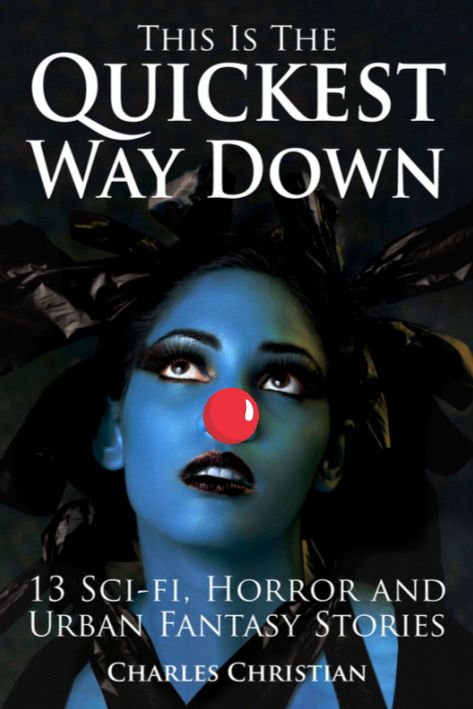
This is the Quickest Way Down by Charles Christian #rednosereviews #rednoseday
Friday, 24 March 2017
All Good Things: The Last SFX Visions by David Langford #rednosereviews

Clovenhoof and the Trump of Doom by Heide Goody and Iain Grant #rednosereviews #rednoseday

Sea-Girt Jungles by Cyril Collenette #rednosereviews #rednoseday

There Will Be Walrus: First Volume V #rednosereviews #rednoseday

These United States by Clive Tern #rednosereviews #rednoseday

Letters to Barack Obama from Handsworth #rednosereviews #rednoseday

"I wish I had all the power you have but I don't. That ain't fair!" said one. (Are we sure Donald Trump wasn't living in Handsworth back then?) "I wanted to tell you, you are a great man," said another in a matter-of-fact tone. "What is your favourite soccer team? I hope it's not a naff team like Wolves or Burnley," asked one pupil, with an admirable grasp of the most important issue of the day. "Was your name Barry when you were younger?" asked another, a question to which we now know the answer to be yes, thanks to the Netflix original movie of that name.
The project was inspired by the McSweeney's book Thanks and Have Fun Running the Country, in which the letters were by American children. Here the letters are by British children, a crucial difference that perhaps explains the greater interest in association football shown within its pages. One of the most charming parts of the book was how often the children drew pictures of themselves with the new president, as on the cover. They trusted him, could imagine him hanging out with the class, buying them an ice cream.
It's hard to imagine any British children wanting to spend time with the current president, though if they did I imagine they would put him to shame with their maturity and interest in the world and its future. This book reminds us that it doesn't have to be that way, that we can have leaders we believe in, that give us hope, and even if they don't deliver on every single one of those hopes, it's better than the alternative. I give this book five red noses.
You can buy the book here.
NB: this is a fake internet review, written for fun on Red Nose Day. Book a fake internet review of your book.
Children of Eden by Joey Graceffa #rednosereviews #rednoseday

Professor Challenger in Space by SW Theaker #rednosereviews #rednoseday

Professor George Challenger is one of the classic characters of science fiction, although he has perhaps not outshone The Lost World to the extent that fellow Arthur Conan Doyle creation Sherlock Holmes has thrown all the books in which he appeared into the shadows. This novel is by a writer I definitely do not know personally, S.W. Theaker.
Subscribe to:
Posts (Atom)