Showing posts with label Frankenstein. Show all posts

Monday, 5 August 2024

Weird Fiction Old, New, and In-Between I: The Weird Tale – Rafe McGregor

The first of six blog posts exploring the literary and philosophical significance of the weird tale, the occult detective story, and the ecological weird. The series suggests that the three genres of weird fiction dramatize humanity’s cognitive and evolutionary insignificance by framing first the limitations of language, then the inaccessibility of the world, and finally the alienation within ourselves. This post introduces the weird tale.


Wyrd, Weyrd, Weird

‘Weyrd’ came to Middle English in the fifteenth century from the Old Norse urðr via the Anglo-Saxon wurd and Old English ‘wyrd’. Its meaning in the ancient languages was twofold, denoting both personal destiny and the personification of personal destiny in the three deities that tended Yggdrasil (the Norse tree of life), who were known as the Norns. A thinly-disguised version of the Norns appears in Shakespeare’s Macbeth (first performed in 1606), where they are called the ‘weyrd’ or ‘weyward’ sisters, i.e. witches (like his contemporaries, Shakespeare had little interest in consistent spelling, including the writing of his own name). The Oxford English Dictionary identifies four distinct but related meanings of ‘weird’ in Modern English:

1.     Having or claiming to have the power to control the fate or the destiny of human beings.

2.     Suggestive of unearthly character or strangeness that is unaccountable or uncomfortable.

3.     Having a strange or unusual appearance.

4.     Out of the ordinary, odd, fantastic.

We can summarise these by conceiving of ‘the weird’ as supernatural rather than natural and uncommon rather than common, but this isn’t particularly helpful when it comes to identifying a category or genre of fiction. Almost all speculative fiction, from Mary Shelley’s Frankenstein; or, The Modern Prometheus (1818) to Denis Villeneuve’s Dune series (2021, 2024), could be described as supernatural and/or uncommon.

A popular route out of this impasse is to identify the weird with the uncanny. Writing for The New Yorker, Joshua Rothman compares King, Lovecraft, and Kafka: ‘Still, when you’re in the presence of the genuine, uncanny article, you know. Stephen King is tremendously imaginative, but H.P. Lovecraft is weird; Kafka is probably the ultimate weird writer.’ The concept of the uncanny as it is commonly used today, particularly with respect to literary criticism, is a translation of Sigmund Freud’s Das Unheimliche, which was introduced in an essay published in 1919. Directly translated, ‘unheimlich’ means ‘not from the home’ and some critics prefer to use the more direct ‘unhomely’. In Freud’s essay, the uncanny is the return of the repressed and he explains it by means of E.T.A. Hoffmann’s short story, ‘The Sandman’ (1817), and Otto Rank’s The Double (published in 1925, but written in 1914), a psychoanalytic exploration of the doppelgänger. The core of Freud’s conception of the unhomely is that something can be simultaneously familiar and alien. In his authoritative The Uncanny (2003), Nicholas Royle identifies Martin Heidegger as providing the most intense philosophical exploration of the concept. The very premise of Heidegger’s magnum opus, Being and Time (1927), is that what we take to be ordinary is in fact extra-ordinary and uncanny. Dasein (which can be translated as ‘being-here’ or, to use less abstruse terminology, ‘agency’ or ‘selfhood’) is fundamentally ‘not-at-home’ in the world and Dasein itself is thus uncanny, in consequence of which we experience Angst (anxiety). Like China Miéville and Mark Fisher, however, I don’t think that the uncanny gives us the answer to what weird fiction is.

Romanticism to Modernism

Unlike Miéville, I do think that the origins of weird fiction can be found in Gothic Romanticism. In medieval art, Gothic style was distinguished from Classical style by its abandonment of restraint and subtlety, deploying caricature and exaggeration to evoke strong emotions and created with the intention of expressing the artist’s emotion rather than representing the reality in which the artist lived. As an artistic movement, the Gothic survived the transition from the medieval to the modern in the form of architecture, specifically the Gothic Revival or Neo-Gothic that became popular in the seventeenth century. The Gothic focus on emotion, expression, and evocation meant that interest was revived once again with the development of Romanticism a century later. The Romantic movement elevated the significance of emotion, expression, and individualism and prioritised the natural over the industrial and the medieval over the modern. Unsurprisingly, the Romantic movement saw the development of the English novel from an experimental to an established art form and Horace Walpole’s The Castle of Otranto (1764) is regarded as the first work of Gothic fiction. The genre reached its apotheosis with Shelley’s Frankenstein which, in turn, influenced two distinct sets of nineteenth century precursors to weird fiction, one on each side of the Atlantic. I should mention at this point that this series will focus exclusively on the Anglophone weird, in consequence of the combination of my own ignominious monolingualism, the consolidation of the genre in America’s pulp magazines in the first half of the twentieth century, and the continued dominance of English as the preferred language of its authors. This restriction means that I exclude at least one exemplary author of weird fiction, Franz Kafka (1883-1924). As one of the leading lights of Modernist literature, Kafka is rarely linked to pulp, popular, or genre fiction, but I agree completely with Rothman’s characterisation.

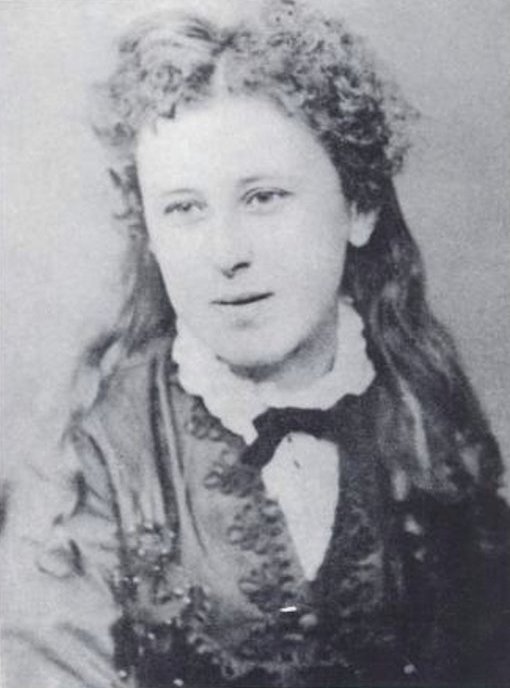
In the US, the crucial link between Gothic Romanticism and weird fiction is, of course, Edgar Allan Poe (1809-1849, pictured). Poe was one of the first masters of the short story and I regard his ‘The Murders in the Rue Morgue’ (published in Graham’s Magazine in 1841) as the origin of both crime fiction and weird fiction. Poe was succeeded by Ambrose Bierce (1842-c.1914), Madeline Yale Wynne (1847-1918), and Robert W. Chambers (1865-1933). The tradition in the UK (actually Ireland, which was part of the UK at the time) emerged with the work of Sheridan Le Fanu (1814-1873), who retains a reputation as one of the greatest ghost story writers in English. Le Fanu was succeeded by Violet Paget (1854-1933, writing under the penname Vernon Lee, pictured), Conan Doyle (1859-1930), and M.R. James (1862-1936). Doyle is often underrated as a writer of horror and I have attempted to redress this imbalance in The Conan Doyle Weirdbook (2012). Ramsey Campbell claims that H.P. Lovecraft (1890-1937) united and advanced the traditions in which Poe and Le Fanu were working and Lovecraft acknowledged his debt to both traditions in his literary criticism. Campbell regards Lovecraft’s Mythos (which he prefers to call the Lovecraft rather than Cthulhu Mythos) as evidence of his lifelong attempt to perfect the weird tale, which involved an experimentation with prose comparable to his more lauded contemporaries in Modernist literature, such as Virginia Woolf, James Joyce, and Kafka. If not a part of Modernism, the weird tale is, at the very least, an epiphenomenon of it.


Weird Worldviews

I still haven’t answered the question of what weird fiction is or what it was Lovecraft spent his life trying to perfect. There was little critical or academic interest in the weird until the turn of the century and that interest is largely the result of the efforts of literary critic S.T. Joshi, who spent the last decade of the twentieth century pioneering the field of weird fiction criticism. In 1990, he published The Weird Tale, which was the first of his many monographs on the genre and remains the most authoritative critical study published to date. Joshi identifies the weird tale as a retrospective category of speculative fiction that was published from 1880 to 1940 and is essentially rather than superficially philosophical in virtue of presenting or representing a fully-fledged and fleshed-out worldview. Although alternative definitions of the weird in terms of the sublime, the uncanny, and the disgusting have been proposed, Joshi’s remains the most compelling. Lovecraft was a prolific – perhaps even compulsive – letter writer and defined his own oeuvre as cosmic horror, in which ‘common human laws and interests are emotions that have no validity or significance in the vast cosmos-at-large’. What distinguishes Lovecraft from his contemporaries, such as Algernon Blackwood (1869-1951, pictured) and Edward Plunkett (1878-1957, writing under his aristocratic title Lord Dunsany), is thus the absence of the supernatural. Lovecraft’s monsters are not werewolves, vampires, or ghosts, but aliens (although humanity is unable to distinguish the two). In his out-of-print biography of Lovecraft, L. Spraque de Camp referred to the worldview on which Joshi places so much emphasis as ‘futilitarianism’. Lovecraft denied that he was a pessimist in another of his letters: ‘I am not a pessimist but an indifferentist – that is, I don’t make the mistake of thinking that the resultant of the natural forces surrounding and governing organic life will have any connexion with the wishes or tastes of any part of that organic life-process.’

With the exception of James, Joshi argues that each of the six exemplars of the weird tale – Bierce, James, Arthur Machen (1863-1947), Blackwood, Plunkett, and Lovecraft – had their own worldview, which was explored, expressed, and experimented with in their weird tales. I have already suggested that Bierce and James are more accurately considered as precursors to the weird and I think Joshi errs in omitting William Hope Hodgson (1877-1918) from his list. My adjustment thus presents the canonical weird tale as being the work of: Machen, Plunkett, Blackwood, Hodgson, and Lovecraft. Although the prototypical weird tale and the genre of weird fiction more generally are almost always associated with Lovecraft above all others, the best weird tale itself is widely acknowledged to be Blackwood’s ‘The Willows’, which was first published in his collection of short stories, The Listener and Other Stories (1907, Alfred A. Knopf). I came to Lovecraft much later than most – in my thirties – and have read his work in three cycles in the last two decades. In the first, I was amazed, enthralled, and even shocked by his singularity, innovativeness, and complexity. My second reading was much more critical, identifying flaws in both his form (structure and dialogue) and content (pathological racism and casual sexism) and wondering how and why he remains so popular. More recently, I’ve come to see him as a genius for all his moral and artistic flaws, a literary equivalent of philosopher Friedrich Nietzsche: two awkward, unhappy, and rather unpleasant men whose talent was unrecognised while they were alive, but whose posthumous influence is too great to calculate with any accuracy.


Recommended Reading

Fiction

Edgar Allan Poe, The Murders in the Rue Morgue, Graham’ s Magazine (1848).

Algernon Blackwood, The Willows, The Listener and Other Stories (1907).

H.P. Lovecraft, The Call of Cthulhu, Weird Tales (1928).

Nonfiction

S.T. Joshi, The Weird Tale, Hippocampus Press (1990).

Kate Marshall, Novels by Aliens: Weird Tales and the Twenty-First Century, The University of Chicago Press (2023).

Michael Dirda, Introduction, Weird Tales, The Folio Society (2024).


Monday, 4 March 2024

Lisa Frankenstein | review by Stephen Theaker

1989: the unfortunately named Lisa Swallows (Kathryn Newton) has a new home and a new school. When Lisa was a little younger, her mum was killed by an axe murderer. Her dad has now married Janet (Carla Gugino), a nasty piece of work who thinks very little of Lisa. Stepsister Taffy (Liza Soberano) does her best to be nice but isn’t very good at it. After another girl deliberately gives Lisa a spiked drink at a party, and her science lab partner sexually assaults her, she takes a shortcut home through her favourite graveyard. She wishes she could be with the subject of her favourite bit of statuary, a piano player who died young in 1837 (Cole Sprouse, one half of the little kid in Big Daddy).

Monday, 19 February 2024

Poor Things | review by Stephen Theaker

A woman tries to commit suicide, throwing herself off a bridge. We later find out that she was pregnant, with a husband who would have driven anyone to despair. Her body is recovered by Dr Godwin Baxter (Willem Dafoe), God for short. While watching, given that Godwin was Mary Shelley's maiden name, I assumed him to be Frankenstein's monster, now a mad scientist himself, but if so or not, he had a father who performed similarly ghastly experiments on him. Now he continues the family tradition, performing ghastly miracles such as binding the head of a pig to the body of a chicken, or reanimating the body of a suicidal woman by using the brain of her unborn baby.

Monday, 8 May 2023

Cultures of Climate Change, Changes of Climate Cultures – Rafe McGregor

Climate Change Culture

Climate change is unquestionably the greatest challenge ever faced by humanity, even if we choose to ignore it. The question I want to answer here, which I hope will be of interest to most if not all Theaker’s Quarterly readers, is whether fiction has a role to play in meeting this challenge and, if so, what that role might be. Recently, this subject has transgressed the disciplinary boundaries of academia and escaped the confines of its ivory towers to be aired where it belongs, in the public domain. I shall trace the debate from its origins in a 2015 lecture series at the University of Chicago to the work-in-progress of a criminologist in Richmond, Kentucky. Jnanpith Award winner Amitav Ghosh delivered the lectures, which were published the following year in full as The Great Derangement: Climate Change and the Unthinkable and in 2021 in part as Uncanny and Improbable Events. The latter is one of Penguin’s Green Ideas, a series that includes philosopher Timothy Morton’s All Art Is Ecological, which was also published in 2021 and is an extract from his 2018 book, Being Ecological. Morton’s long essay is tangential to Ghosh’s lectures, but film critic Mark Bould responded directly in his short 2021 book, The Anthropocene Unconscious: Climate Catastrophe Culture. Critical criminologist Avi Brisman responds to both Bould and Ghosh in “Ecocide and Khattam-Shud: Thoughts on How We Might Tell (More, Better) Stories of Climate Change”, an article due for release in the Journal of Aesthetic Education this autumn. I summarise each thesis in terms of its three primary claims.

Ecology is Nowhere

Ghosh’s “Great Derangement” is a play on the “Great Acceleration”, the dramatic and synchronous increase in a range of socioeconomic trends from population and gross domestic product to transportation and telecommunications since 1945. The derangement is contemporary culture’s lack of ability or will to address the climate change caused by the Great Acceleration. Ghosh imagines a future in which critics identify the paradox of a culture that both prided itself on its self-awareness and ignored its self-destruction. Ghosh’s thesis begins with the claim that literature has never recovered from the split into literary and genre fiction, which he dates to the publication of Mary Shelley’s Frankenstein; or, The Modern Prometheus, in 1818. Second, he argues that while genre – science, speculative, or climate – fiction has attempted to meet the challenge of climate change, it has for the most part failed in virtue of being nothing more than disaster fiction set in the future. Finally, literary or artistic fiction has not even tried to meet the challenge and Ghosh cites Abdul Rahman Munif’s 1984 “petrofiction” novel, Cities of Salt, as one of the exceptions that proves the rule. Interestingly, the Hollywood film industry has been accused of a similar derangement with, for example, Rewrite the Future director Daniel Hinerfeld claiming that “Hollywood has not reflected the greatest drama of our generation”.


⁠It is hard to fault Ghosh because he is making a very specific point for which there appears to be ample evidence: criticism of cultures of mass harm such as classism, racism and sexism has traditionally been the purview of the institution of literature, which has failed to address the most significant mass harm of all, ecocide, understood as the destruction of the planet’s capacity to support human and nonhuman animal life. Like Ghosh, I believe the distinction between high and popular culture is irrelevant at best and harmful at worst, but he is right to point out that it remains as deeply entrenched as ever two hundred years after Frankenstein. Notwithstanding, he is at least partly complicit in maintaining the distinction by the significance he accords to the different ways in which each category of fiction has failed. I wonder why this is so important and also why he does not make more of the fictions of Margaret Atwood (whom he cites with approval), Octavia Butler, Kim Stanley Robinson, N.K. Jemisin, and others that so clearly bridge the literary-genre divide.⁠


Ecology is Everywhere I

Morton is a member of the Object-Oriented Ontology (OOO) school of philosophy, which was inaugurated by Graham Harman in 2002 with Tool-Being: Heidegger and the Metaphysics of Objects and draws heavily on both Martin Heidegger’s hermeneutic phenomenology and Immanuel Kant’s transcendental idealism. Morton summarises OOO in terms of two key insights: nothing (whether object or subject) can ever be grasped in its entirety and there is no privileged mode of access to these ungraspable things, in consequence of which (OOO) philosophy cannot be anthropocentric. Morton’s thesis begins by delineating “ecological” as caring for nonhumans in a more conscious way, which involves recognising that one is already ecological, i.e. entangled in a symbiotic whole that is less than the sum of its parts. Second, the aesthetic experience of beauty – Kant’s elitist and baggage-laden theory does a great deal of work here – is an experience in which one feels solidarity with a nonhuman thing whose meaning is inexhaustible. Finally, artistic appreciation – a nod to philosophical aesthetics here – is appreciation of the simultaneity of familiarity and strangeness, the uncanny, in which it is difficult to sustain the distinction between self and other. The eradication of this distinction enables human beings to achieve solidarity with the nonhuman by recognising that we are already ecological or, to use a phrase Morton deliberately avoids, always already ecological.

What Morton is actually doing in All Art Is Ecological is setting out a theory in the tradition of aesthetic education, which originated with J.C. Friedrich von Schiller’s 1794 Letters on the Aesthetic Education of Man. Schiller, who also drew on Kant but managed to avoid some of his elitism, argued for a causal relation between aesthetic experience and both harmony of character (moral harmony) and harmony in society (political harmony). Literary critic Gayatri Chakravorty Spivak recently radicalised the tradition by describing the experience of literature as training for and practice in the experience of being ethical. In a similar manner, Morton maintains the experience of art is training for and practice in the experience of being ecological. Morton takes a great deal for granted and would benefit from piggybacking on Spivak in a similar manner to that in which Bould piggybacks on Marxist critic Fredric Jameson, but is prohibited from doing so because of the commitment to OOO (Spivak is a poststructuralist and OOO is phenomenology, broadly construed).

Ecology is Everywhere II

Jameson published one of the most important works of cultural criticism to date with The Political Unconscious: Narrative as a Socially Symbolic Act in 1981. He demonstrates that all texts are political because they are all produced and consumed within the historical context of class struggle between oppressor and oppressed and that this struggle permeates both the form and the content of the stories human beings tell themselves and one another. Bould begins with the provocative claim that all cultural texts are ecological, i.e. about the Anthropocene, usually on an unconscious level. Given that the popularisation of the novel as a literary form was contemporaneous with the Industrial Revolution, first novels and later feature films and television series were all produced and consumed within the Anthropocene. Second, in the same way that the class struggle permeates all texts to characterise them as political so the Anthropocene permeates all texts to characterise them as ecological. Finally, Bould evinces his thesis by delineating the environmental uncanny as involving both recognition by human beings that they are in the presence of nonhuman agency and an anthropocentric hubris which assumes it will be able to control its nonhuman creations. As such, Bould turns Ghosh’s environmental uncanny against him: the environmental uncanny is everywhere, from Jane Austen’s Mansfield Park to Richard Powers’ The Overstory and from Mauro Herce’s Dead Slow Ahead to the Fast & Furious and Sharknado film franchises.


⁠What strikes one immediately is that the uncanny is central to all three theses, albeit to a lesser extent for Ghosh than Morton and Bould. There is a more obvious similarity between the latter two theses, which can both be abstracted to ecology is everywhere, although the relationship between the ubiquity of ecology and the environmental uncanny differs in each. While Bould would benefit from fleshing out this relationship in more detail, a more trenchant criticism was recently made in the Ancillary Review of Books by science fiction critic Fabius Mayland, who claims he is naïve to assume that “climate politics just needs a little more imagination and storytelling to really get going”. Neither more fiction about climate change (first-order culture in Mayland’s taxonomy) nor more theory about fiction about climate change (second-order culture, where Bould fits in) can achieve this aim. Both the crisis and its solutions have been established beyond all reasonable doubt by the sciences so what is required is the political power to implement them. I agree with Mayland about the need for political power, but I think he misses an important part of the problem, to which I return in my conclusion.⁠


Ecology is Everywhere and Nowhere

Brisman’s contribution to the debate is the article mentioned above, but it is also worth noting that he is expanding the article into a short book, Climate Change as a Crisis of Imagination, which will be published by Bristol University Press in 2024. With his permission, I draw on both the article and his work-in-progress. Brisman begins by contending that Ghosh and Bould should be read as complementary rather than contradictory because they are actually arguing for the same result, a cultural turn towards the Anthropocene. When viewed through this lens, Ghosh motivates the cultural turn by drawing attention to the failure of the institution of literature to perform one of its core functions (cultural critique) and Bould enables it by raising awareness of the Anthropocene from its unconscious depths. Finally, the synthesis of Ghosh and Bould reframes the climate crisis as (also) a narrative crisis that can be resolved by allegorising a broad range of stories for their climate messages in a way that foregrounds the temporal and the utopian. The significance of the utopian to Brisman dovetails with Ghosh’s critique of genre fiction neatly: counterfactual narratives should present us with possible future worlds that contrast with the probable dystopian future in order to provide a pathway to those possible future worlds.

A great strength of Brisman’s “green criminology” is his own utopian impulse, the desire to seek allies rather than opponents, and this is very much reflected in his work-in-progress. Everyone involved in this debate is, after all, really enthusiastic about culture, really enthusiastic about avoiding ecocide, and really enthusiastic about finding a role for the former in the latter. It is in this spirit that I have included Morton in my discussion, in spite of my reservations about OOO, because – at the very least – All Art Is Ecological raises awareness of the issue at stake. There is nonetheless an aspect of Brisman’s utopian ideal that is problematic with respect to narrative. Focusing on utopia rather than dystopia – on cooperation rather than conflict – is a tall order for writers and undermines what may be the most fundamental narrative heuristic of all: character + conflict = plot. So much so that Anna Jayne Joyner established her nonprofit, Good Energy, in 2019 for precisely this purpose and their open access playbook provides screenwriters with a host of solutions to the problems of representing climate change.

Political Power and Climate Change Culture

Where does this all leave us? I began by asking whether fiction has a role to play in meeting the challenge of climate change. I am confident the answer is “yes”. While I agree with Mayland about the need to exert political power, it cannot come exclusively from the top-down. Most governments are already too invested in the capitalist world-system to dismantle it and the COVID-19 pandemic demonstrated the extent to which proportions of the population are prepared to resist even the most benign official impositions, never mind radically altering their lifestyles on a permanent basis. What is needed is a complementary change from the bottom-up, which would require nothing more than the reconfiguration of human consciousness from hyper-capitalist consumption to post-capitalist sustenance. Which leads to the second part of my opening question: if fiction does have a role to play, what is it? That role was identified by Ghosh at the beginning of his first lecture in 2015, to change human consciousness by changing individual desires. Culture – including literature, art, film, and narrative – shapes desire and shaping of desire is at least as much of a solution to the problem as exerting political power. Humanity needs both changes, top-down and bottom-up, if it is to avoid its dystopian horizons.


Published online ahead of its appearance in Theaker's Quarterly Fiction #76, due in September 2023.

Rafe McGregor lectures at Edge Hill University. He is the author of two monographs, two novels, six collections of short fiction, and two hundred articles, essays and reviews. His most recent work of fiction is The Adventures of Roderick Langham, a collection of occult detective stories.

Monday, 15 February 2016

The Brenda and Effie Mysteries: Brenda Has Risen from the Grave, by Paul Magrs (Bafflegab Productions) | review

Effie might be in love, “in a whirlwind of amour” in fact, with a man named Keith, who has an elephantine proboscis upon his face. Brenda, former bride of Frankenstein’s monster, doesn’t like Keith, and that leads to a fall-out with Effie, who even stops opening her little shop. As she worries about her friend, memories return to Brenda of another old friend, Joseph Merrick, known as the Elephant Man back when they were in a travelling circus together. She was the Half-Dead Woman, who could let her stitches loose and horrify the crowds by wriggling her bits when they weren’t attached to each other any more. She was a callow young thing then, less than a century old, and just like Effie she didn’t listen to the advice of a well-meaning friend when she should have. What’s more, women were being killed back then, and they are dying now as well in a very similar way. It’s too soon for Brenda and Effie to go their separate ways. We learn much more about Brenda in this story (at least those of us who haven’t read more than one or two of the original novels yet). She has been in the course of her long life “a graverobber, a vagabond, a woman of ill repute, a warrior, a witch, a handmaiden to a queen, a sorcerer’s assistant, a lady pirate” and one suspects that isn’t all, but what she needs to be in this fourth story is a good friend, and perhaps she’s better at that than anything else. Another entertaining story, though it’s rather less light-hearted than earlier instalments. Stephen Theaker ***

Monday, 8 February 2016

The Brenda and Effie Mysteries: Spicy Tea and Sympathy, by Paul Magrs (Bafflegab Productions) | review


Brenda, former bride of Frankenstein, tells most of this third story while strapped to a table in the murky underground base of a villain. Her blood is being drained and infused with a special tea, in hopes of bringing a dried-up corpse back to life. The situation dredges from the depths of Brenda’s imperfect memory the events of a night in the fifties, when she worked as housemaid to Professor Tyler. He is one of the Smudglings, a group of fantasy writers much like the one frequented by C.S. Lewis and J.R.R. Tolkien. One of their meetings was disturbed by the attack of a mummy, who made off with their best tea set and all of its contents. In the present day this is somehow connected with the Tipple teahouse (and massage parlour), owned by international traveller and explorer Professor Marius Keys, of whom Brenda says “everything about him speaks of quality and polish”, a phrase that would be even more apt in description of this series of audio plays. Anne Reid is terrific as Brenda, bringing both the sweetness and the toughness that the role requires, and the writing is a constant delight, full of detail, care, specificity, and ideas. Effie sounds uncannily like Sarah Millican, which makes me smile every time she speaks. From the moment the now familiar theme music plays, you know it’s going to be good. Stephen Theaker ****

Friday, 25 September 2015

The Brenda and Effie Mysteries: Bat Out of Hull (Bafflegab) by Paul Magrs | mini-review

Brenda, the former bride of Frankenstein, continues her new life in Whitby, getting tangled up in mysteries with new friend and neighbour Effie. In this second story the entanglement is literal, as Tolstoy, a ventriloquist’s felt bat puppet with the uncanny ability to fly on its own, gets stuck in her famous beehive during a performance at the Christmas Hotel. The weirdness with the bat may be connected to the discovery of a toyshop, supposedly established in 1818, though Effie’s never heard of it. The music is perfect, the performances excellent, the story a good one. Never mind Radio 4, this would make perfect Sunday night television. Stephen Theaker ****

Monday, 6 October 2014

Penny Dreadful, Season 1 / review by Stephen Theaker

Penny Dreadful is a new television take on an old idea: the out-of-copyright crossover. Here we have young Doctor Frankenstein (Harry Treadaway) and his monster (a marvellously melodramatic Rory Kinnear); Sir Malcolm Murray (Timothy Dalton), father of Mina; and Dorian Gray (Reeve Carney); plus four apparently unfamiliar characters: Josh Hartnett as gunslinger Ethan Chandler; Billie Piper as Brona Croft, the dying prostitute he falls for; Danny Sapani as Murray’s fighting manservant, Sembene; and Eva Green as Vanessa Ives, whose prim comportment conceals an ongoing inner battle with the forces of darkness.

Monday, 10 February 2014

I, Frankenstein, reviewed by Douglas J. Ogurek

Juvenile, shallow, and highly recommended: Legendary monster romps with angel-gargoyles and suit-wearing demons in Underworldesque adventure

No. I will not join the critics who’ve ganged up to lambast I, Frankenstein, the film inspired by Kevin Grevioux’s graphic novel of the same title. I will not take sides with those who say that they did not enjoy this film because of its one-dimensional characters, poor dialogue, and rambling storyline.