Monday, 25 January 2016

Terminator Genisys, by Laeta Kalogridis and Patrick Lussier (Paramount) | review

Tirmynator Genisys: the best misspelling since slyced bred.

Yes, let’s start with the obvious gripe: Genisys. Originally the film was titled Genesis, then someone made the executive decision (absolute power corrupting absolutely) to change/distort/pervert it, presumably working under the delusion that misspelling something makes it stand out in a good way. One wonders how the original Terminator would have fared had Sarah Connor been misspelled in Skynet’s records. The T-1000 would have opened up the phone directory and had a meltdown. Where is S’air-a Conher? Target cannot be acquired. And why? (We bang our heads against the nearest busborne billboard.) Why subscribe to this wanton degradation of language? The only explanation that doesn’t leave the producers hanging their heads in shame is that the alphabetic disparity between Genesis and Genisys is intended to mirror the narrative disparity between the events of the first Terminator movie and their retrofitting in this latest offering. In which case, well played… but a propensity for randomising still seems the more likely cause! Watch out for Terminator 6, where Skynet, unable to destroy humanity by conventional means, sends a T-3000 back to 12 May 1754 to kill Samuel Johnson. Without his dictionary to unite them, the Resistance of the future is torn apart by wilful misspellings.

Friday, 22 January 2016

The Glorkian Warrior and the Mustache of Destiny, by James Kochalka (First Second) | review

The funniest idiot since Groo the Wanderer returns for his third “adventure”. That is to say, he has a nightmare about a giant moustache, decides that he has invented a talking coffee cup, gets headbutted by a bunch of armless baby would-be Glorkian Warriors, and falls down a big hole. Later, he falls down another hole and meets the book’s villain, Quackaboodle the Space God! (Although I have my qualms about the behaviour of the Glorkian Supergrandma too.) This is just as funny as the previous two books, the stupidity reaching absolutely glorious levels, e.g. the four baby Glorks saying, “Can Gonk do this?” and “Can Doonkies do thats?” and “May Crazy Face?” and then “Cans Bronk bronk bronk?” In context it’s funny, trust me, on this if nothing else. And while we’re talking about glorious, you should see the colours in this book. You know that nonsense about using 10% of your brain? The art in this book makes you feel like you’ve only been using 10% of your eyes. A thank you page at the end makes it sound like this may be the last in the series. Let’s hope not. I could keep reading these forever. It’s not out till March 2016, so don’t let your children grow up too fast. Stephen Theaker *****

Monday, 18 January 2016

Doctor Who: City of Death by Douglas Adams and James Goss (BBC Books) | review

The gamble with time – playing the odds of authorship.

Douglas Adams’ involvement with Doctor Who is… complicated. For many years the three scripts he wrote were lamented as being very good (City of Death), very bad (The Pirate Planet), very good and bad in a Schrödinger’s cat kind of way (the unfinished, unbroadcast Shada), and in all cases very much and quite pointedly so, unnovelised. Adams did write a fourth script, which was novelised, but that was Doctor Who and the Krikkitmen, which upon being rejected by the Doctor Who production team eventually lost the Doctor and regenerated into Adams’ third Hitchhiker’s novel, Life, the Universe and Everything. In a similar vein, City of Death and Shada weren’t entirely unnovelised: significant portions of them found their way into Dirk Gently’s Holistic Detective Agency. But these caveats aside, of all the authors whose stories could have disappeared into the time void, it was Adams alone (okay, and two of Eric Saward’s scripts; not such a great loss) whose Who output was destined not to line the bookshelves of fans most eager to devour it. Adams wouldn’t accept the pittance being offered by Target Books; nor, especially after he’d cherry-picked from them himself, would he allow his scripts to be novelised by someone else. End of story.

Friday, 15 January 2016

Theaker's Quarterly Fiction #53 is out now: free ebook, cheap in print

free pdf | free epub | free mobi | print UK | print US | Kindle UK | Kindle US

You have waited so long for this, but now the wait is over!

Theaker’s Quarterly Fiction #53 contains three fantastic stories. In “Restitution” Mitchell Edgeworth takes us back to the Black Swan, its crew double-crossed by the thief Nisha. In “Dodge Sidestep’s (and Martin’s) Final Dastardly Plan” regular TQF cover artist Howard Watts completes his absurdist musical trilogy. And “Rathfern’s Menagerie” is a bodyswapping science fantasy from Allen Ashley. The issue also contains fifty pages of reviews by Jacob Edwards, Douglas Ogurek and Stephen Theaker.

We review work by Adam Warren, Alastair Reynolds, Aliette de Bodard, Andrew Cartmel, Brian K. Vaughan, Cate Gardner, Disasterpeace, Geoff Johns, Greg Pak, Ian Edginton, Ian Marter, J.M. DeMatteis, James Goss, James Kochalka, Jean-Claude Forest, John Dorney, John Logan, Justin Richards, Keith Giffen, Kurt Busiek, Laeta Kalogridis, Lavie Tidhar, Mario Alberti, Paul Magrs, Rare, Robert Kirkman, Ryan Ottley, Simon Guerrier, Steve Yeowell, Vaughan Stanger, Volition Software and others.

We’re sorry again that it is so late, but here it is at last! Possibly the only publication in the world in which you can read positive reviews of not one but two of Adam Sandler’s recent films.


Here are the kindly contributors to this issue:

Allen Ashley works as a writer, poet, editor, critical reader, event host and writing tutor. He runs five creative writing groups in north London including the advanced group Clockhouse London Writers. His most recent books are as editor of Sensorama: Stories of the Senses (Eibonvale Press) and Creeping Crawlers (Shadow Publishing). He contributes a short story, “Rathfern’s Menagerie”, to this issue.

Douglas J. Ogurek’s work has appeared in the BFS Journal, The Literary Review, Morpheus Tales, Gone Lawn, and several anthologies. He lives in a Chicago suburb with the woman whose husband he is and their pit bull Phlegmpus Bilesnot. Douglas’s website can be found at: http://www.douglasjogurek.weebly.com. In this issue he reviews The Gallows and Pixels.

Howard Watts is a writer, artist and composer living in Seaford who also provides both a story, “Dodge Sidestep’s (and Martin’s) Final Dastardly Plan”, and the cover art for this issue. His artwork can be seen in its native resolution on his deviantart page: http://hswatts.deviantart.com. His novel The Master of Clouds is now available on Kindle.

Jacob Edwards also writes 42-word reviews for Derelict Space Sheep. This writer, poet and recovering lexiphanicist’s website is at http://www.jacobedwards.id.au. He also has a Facebook page at http://www.facebook.com/JacobEdwardsWriter, where he posts poems and the occasional oddity. Like him and follow him! In this issue he reviews Doctor Who: City of Death and Terminator Genisys.

Mitchell Edgeworth’s previous stories in the Black Swan series were “Homecoming” (TQF40), “Drydock” (TQF42), “Flight” (TQF43), “Customs” (TQF46), “Abandon” (TQF47) and “Heritage” (TQF50). This issue the saga continues with “Restitution”. He keeps a blog at http://www.grubstreethack.wordpress.com.

Stephen Theaker’s reviews have appeared in Black Static, Interzone, Prism and the BFS Journal, as well as clogging up our pages. He shares his home with three slightly smaller Theakers, runs the British Fantasy Awards, and works in legal and medical publishing. In this issue he reviews work by Paul Magrs, Ian Marter, Lavie Tidhar, Cate Gardner, Vaughan Stanger, Aliette de Bodard, Alastair Reynolds, Adam Warren, James Kochalka and many more.


As ever, all back issues of Theaker’s Quarterly Fiction are available for free download.

Monday, 11 January 2016

The Bureau of Them, by Cate Gardner (Spectral Press) | review

Glynn has been dead for thirteen months, twelve days, seven hours and some minutes, and Katy can’t stop missing him, can’t move on with her life. She doesn’t want to. He walked out in front of a coach, so there’s no doubt about his passing, but she thinks she sees him watching her, and these brief glimpses lead her to an abandoned office building, where dust and shadows move with uncanny life. Glynn has become part of this office of lost souls, the bureau of them, and they are looking for new recruits! As in previous books like In the Broken Birdcage of Kathleen Fair and Nowhere Hall Cate Gardner creates an eerie atmosphere that serves the story well, and Katy’s grief is painful to watch. For me it was a bit disappointing that there wasn’t more bureaucracy in the novella, the title conjuring up visions of weird, secret officialdom working behind the scenes of reality, and that isn’t really what it’s about, the office here being more of a base than where the work is done. (I’m trying to avoid giving too much away.) The novella’s spell is broken a bit by a couple of jarring production problems: “may” being used instead of “might” all the way through, and (in the ebook at least) unspaced hyphens being used in place of dashes, which leaves the reader trying to make sense of odd hyphenates (e.g. “Sounds echoed from within the cinema-tinny”). Definitely worth reading, though. No other writer I’ve read is producing books that remind me so very much of my own bad dreams. If Cate Gardner’s next book is about being lost in a spooky school without a timetable you’ll know she’s stolen my dream journal. Stephen Theaker ***

Favourites of 2016

Here are a few of my favourite fantastical things from last year, jotted down without too much thought and deliberation. If you reckon I've forgotten something, let me know in the comments! Additional categories may be added to the post at a later date.

Comic: The Glorkian Warrior and the Mustache of Destiny by James Kochalka. Delightful idiocy. (Out in March 2016.) [Link]


Television: Fargo, Season 2. There was so much great tv to watch last year, but I think this was my favourite. Not going to explain why it fits on this blog, you'll just need to watch it.


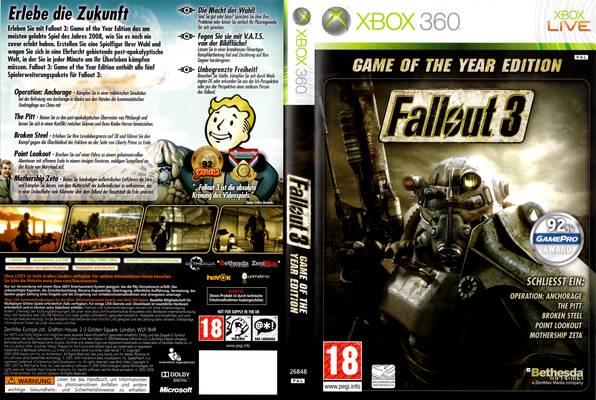
Game: Fallout 3. I finished the main mission ages ago, but last year I picked it up again and played through all the expansion packs. I also had a lot of fun with Saints Row: Re-Elected and Shadows of Mordor.


Book: Black Gods Kiss by Lavie Tidhar. Brilliant collection of fantasy novellas about a really shady guy. [Link]


Podcast: The Adventure Zone. Absolutely hilarious, and takes me right back to roleplaying as a teenager, when I would invariably end up laughing so much I couldn't play any more. [Link]


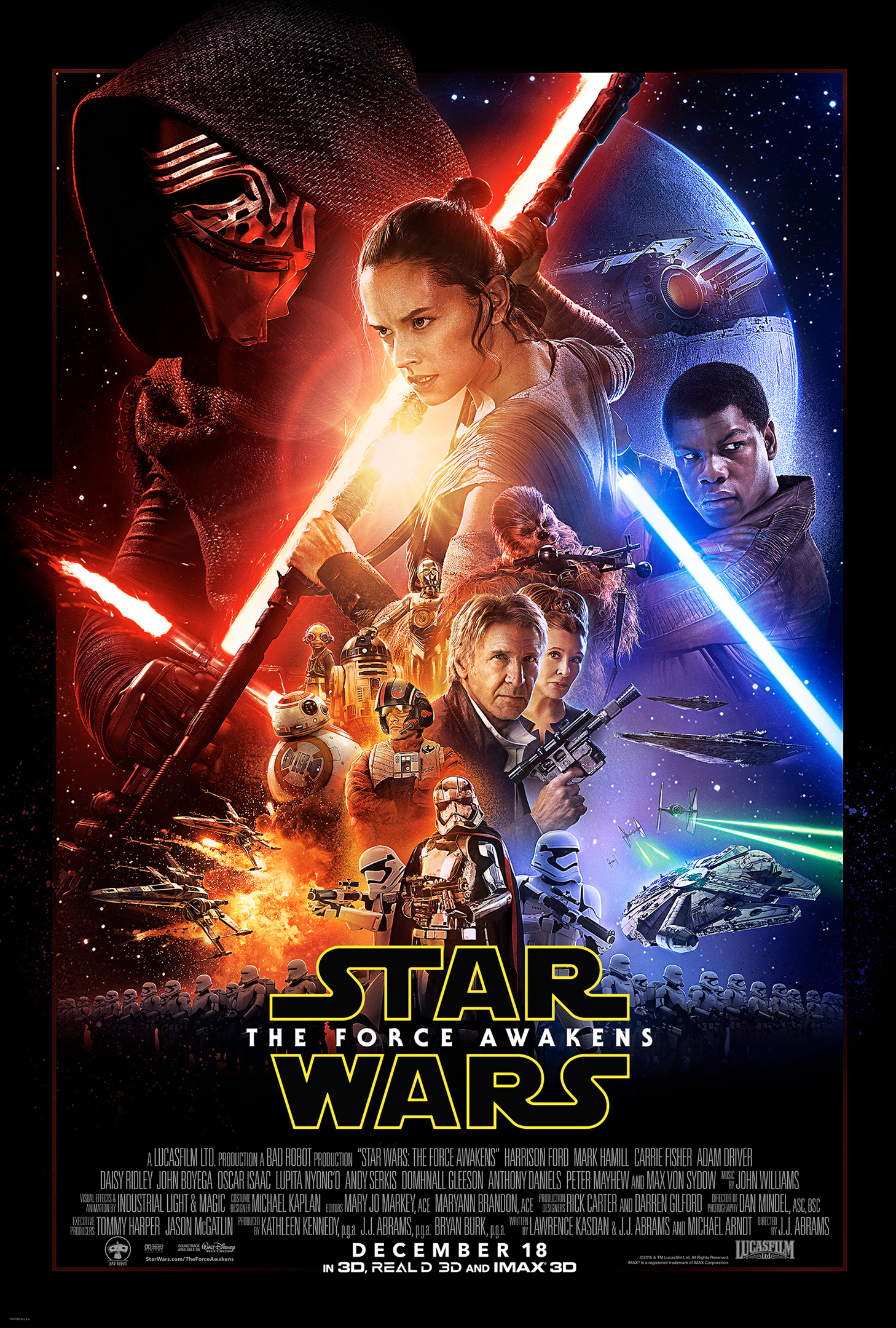
Film: I can't choose between Star Wars: The Force Awakens and Mad Max: Fury Road. No, you know what, I can, it's Star Wars. I just remembered the bit where the stormtroopers back away from Kylo Ren's tantrum.


Actor: A tie between Eva Green in Penny Dreadful and Andrew Lincoln in The Walking Dead. They add so much to those shows, portraying characters pushed beyond ordinary human limits.


Album: Central Belters by Mogwai. Yes, it's a compilation, but it's probably the best compilation ever. You won't find a better album to soundtrack your writing or reading.


Come on 2016. Let's see what you can do!

Wednesday, 6 January 2016

Star Wars: The Force Awakens | review by Douglas J. Ogurek

This one lives up to the fever.

An acquaintance of mine arrived at Star Wars: The Force Awakens while in the throes of a fever. Director J.J. Abrams had a daunting task: to cut through this individual’s nausea, back pain, and somewhat clouded mental capacity. Plus this acquaintance wasn’t the brightest lightsaber in the bunch; what kind of guy goes to the theatre sick?

Friday, 1 January 2016

Book notes: The Chimpanzee Complex, The Whispering Swarm, and more

The Agonizing Resurrection of Victor Frankenstein (Subterranean Press) by Thomas Ligotti. Short-shorts that put alternative spins on well-known stories. ***

The Chimpanzee Complex: Paradox (Cinebook) by Richard Marazano and Jean-Michel Ponzio. An astronaut looking forward to reassignment, and spending more time with her daughter, is required back in space after the astronauts from Apollo 11 splash down – again. The year is 2035. The story is intriguing, reminding me of the first Quatermass Experiment. The art is a bit unusual, looking to me a bit like it’s been drawn over photographs, but I got to like it. ***

The Dirty Dozen: The Best 12 Commando Books Ever! (Carlton Publishing Group), edited by George Low. Took me a long time to finish this one. For our overseas readers who haven’t heard of Commando, it’s a small squarish comic of about sixty pages, with a couple of panels per page, telling lots of stories about World War Two, very much in the style of British war films. The stories in this collection are a mixed bag, some tedious, some thrilling. The highlight for me was “Battle-Wagon”, about the rivalry between two teams of supply truck drivers racing for the same destination. ***

The Great Bazaar & Brayan’s Gold (Tachyon Publications) by Peter V. Brett. A courier travels through mountains haunted by rock demons, and tries to recover precious pottery from a village abandoned to sand demons. Enjoyable enough. My review appeared in Interzone #259. ***

The Hitchhiker’s Guide to the Galaxy: Primary Phase (BBC Audio) by Douglas Adams. Audible edition collecting the Radio 4 series that started it all. Seems strange that I listened to this for the first time so long after watching the television series, reading the books, watching the the film and listening to the audiobook read by Stephen Fry, but the jokes still made me laugh. It had never clicked before that the extracts from the Guide had originally served as introductions and recaps for each episodes. Very much looking forward to the next three phases. *****

The Merchant and the Alchemist’s Gate (Subterranean Press) by Ted Chiang. An alchemist tells a merchant a series of stories about the people who have used his magical gate – one side takes you into the past, the other into the future. It’s a stylish and clever take on the style of the Arabian Nights. ****

The Whispering Swarm (Tor Books) by Michael Moorcock. A character called Michael Moorcock becomes a professional writer, while cheating on his wife and making regular visits to an abbey connected to all time and space by way of the moonbeam road. It’s a fascinating book, but as a novel it slumps badly in the middle before ending well. Maybe they should have sold it as an autobiography and let the fantasy elements come as a surprise. Reviewed for Interzone #258. ***

Thorgal: The Guardian of the Keys (Cinebook) by Grzegorz Rosinski and Jean Van Hamme. Volsung of Nichor steals Thorgal’s identity and takes his place among the Vikings. Invincible, thanks to a belt cruelly stolen from the guardian of the keys (it’s the only bit of clothing she has!), he begins to murder his way to the kingship. ***

Tortured Souls: The Legend of Primordium (Subterranean Press) by Clive Barker. This collects short stories that originally appeared in the packaging of a series of action figures, so it’s a bit disjointed, but I liked the idea that on Sunday God, rather than resting, made all the monsters. ***

Trekker Omnibus (Dark Horse Books) by Ron Randalland Jim Gibbons. Decent series about a bounty hunter in very tight trousers. A mix of colour and black-and-white stories. ***

Usagi Yojimbo Saga, Vol. 1 (Dark Horse Books) by Stan Sakai. The adventures of a ronin – a masterless samurai – with a conscience. So brilliant even the appearance of the Teenage Mutant Ninja Turtles couldn’t harm it. Poetry in every panel. *****

Welcome to Just a Minute! A Celebration of Britain’s Best-Loved Radio Comedy (Canongate Books) by Nicholas Parsons. Read in a single day! Fascinating anecdotes of tetchiness, bitchiness and no little affection among the Just a Minute regulars. Almost enough to make me forgive Parsons for the time we took the children to his supposedly PG-rated Edinburgh show. You can’t trust anyone these days! ****

Friday, 25 December 2015

Book notes: Star Wars Legacy and more

Star Wars Tales, Vol. 6 (Dark Horse Comics) by Jeremy Barlow. Last and weakest of the series. Too glum, too serious, and too little of the major characters, so that it could try to stay in continuity more. A lot less fun than any of the previous books. ***

Star Wars: Crimson Empire III: Empire Lost (Dark Horse Comics) by Mike Richardson, Randy Stradley, Paul Gulacy, Michael Bartolo and Dave Dorman. The third adventure of Kir Kanos, former guard to Emperor Palpatine, is the first to include Luke, Leia and Han (who seem rather tetchy), but it’s the usual story of imperial remnants fighting the new republic and each other. Often hard to tell what’s happening in action scenes. ***

Star Wars: Legacy, Vol. 10: Extremes (Dark Horse Comics) by John Ostrander, Jan Duursema, Brad Anderson and Sean Cooke. Takes the series up to its cancellation with issue 50, though volume 11 continues the story by collecting a mini-series. All the plotlines that have been running keep on running. Cade Skywalker continues to draw on the power of the dark side to fight his enemies and help his friends, while the Sith, former emperors and the remnants of the alliance jockey for galactic power. Readable without being all that exciting. ***

Star Wars: Legacy, Vol. 11: War (Dark Horse Comics) by John Ostrander, Jan Duursema and Dan Parsons. Burdened with much recapping in its early pages, the miniseries collected in this volume still does a surprisingly good job of roosting all the pigeons that flapped around in books one to ten. Cade Skywalker confronts the dark side of the force, the new alliance goes for broke, and the Sith reveal their terrible new weapon. I never grew to love this series, but I read one volume after another, and that tells its own story. It’s essentially a thousand-page Star Wars graphic novel. How could I not enjoy it, at least a bit? ***

Star Wars: Legacy, Vol. 5: The Hidden Temple (Dark Horse Comics) by John Ostrander, Jan Duursema and Dan Parsons. The story steps up a gear, but Cade is still an unpleasant protagonist with terrible hair and Darth Krayt seems more like a He-Man villain than something from Star Wars. I’ll keep reading, but only because I bought the whole series in one go. ***

Star Wars: Legacy, Vol. 7: Storms (Dark Horse Comics) by John Ostrander, Omar Fancia, Jan Duursema, Dan Parsons and Brad Anderson. More adventures in the post-Luke future of Star Wars. An imperial knight helps the Mon Calamari fight back against the Sith, underwater, and Cade Skywalker continues his aimless, charmless meanderings around the galaxy. ***

Star Wars: Legacy, Vol. 8: Tatooine (Dark Horse Comics) by John Ostrander, Jan Duursema, Dan Parsons and Brad Anderson. The most obnoxious brat in comics turns to ripping off pirates but they get wise to his force tricks and his stay on Tatooine ends up being longer than planned. Elsewhere in the galaxy far, far away we see how a Mandalorian (like Boba Fett) came to join Rogue Squadron, and what happens when his vengeful ex-wife finds him there. ***

Star Wars: Vector, Vol. 2 (Dark Horse Comics) by Rob Williams, John Ostrander, Dustin Weaver, Jan Duursema and Dan Parsons. The second half of a crossover between four ongoing Star Wars titles. This contains one story with Luke Skywalker set during the rebellion, and one set over a century later with Cade Skywalker. The connection is a long-lived former Jedi, Celeste Morne, who is bonded with the Muur talisman and the Sith consciousness within it. As well as volume two of Vector, this also stands as volume four of Rebellion and volume six of Legacy, a bizarre set-up that left me searching fruitlessly for the latter after having bought the other ten volumes in a sale. In this book Cade teams up with a trio of Imperial Knights and Celeste Morne to make an assassination attempt on Darth Krayt. It’s okay. ***

Merry Christmas everybody!

Tuesday, 22 December 2015

Krampus | review by Douglas J. Ogurek

Killjoys beware: this holiday horror surprises with positive message, tender moments.

A colleague expressed reservations about Krampus. How could I, he wondered, want to see a horror movie that ostensibly spits in the face of the Christmas holiday spirit?

As it turns out, this individual is way off the mark. Yes, Krampus is billed as a horror film. Yes, the demonic title character is, if you’ll pardon the expression, the polar opposite of Santa Claus. At first glance, Krampus seems little more than sprinkling some red and green on the typical B/slasher film in which a savvy monster gradually picks off unlikable or shallow characters.

Friday, 18 December 2015

Book notes: Nexus, JLA, Orbital and more

JLA, Vol. 5 (DC Comics) by Mark Waidand Bryan Hitch. A disappointment. I love the JLA, and Mark Waid has written some terrific comics, but this just doesn’t work. The stories lack decent villains, and the heroes have lost all the sharpness of the Grant Morrison run. I don’t know what went wrong here. **

Nexus Omnibus 4 (Dark Horse Comics) by Mike Baron, Steve Rude and chums. Much more fun than previous volumes. Nexus himself is far less tortured and conflicted, and heads back to the bowl-shaped world to find a god who might be able to prevent the collapse of Gravity Well, an unstable power station built on a black hole that could destroy the solar system. A band of youngsters from Ylum become huge rock stars, jockeying begins for the presidential elections, and the three girls who pledged vengeance after Nexus executed their father continue their search for enough power to kill him. The backup stories are now all about Judah the Hammer, a huge improvement. The artwork and design is as ambitious and colourful as the stories. My favourite Nexus book yet. ****

Nexus Omnibus 5 (Dark Horse Comics) by Mike Baron and chums. Horatio Hellpop has had enough of being Nexus, and leaves Ylum to find himself. So the insane alien Merk grants his power to other candidates, including three vengeful sisters and a musclebound professor. Les Dorscheid’s colouring maintains a consistent look despite a succession of guest artists, but with Steve Rude largely absent this book isn’t as stylish or distinctive as earlier collections. ****

Nexus Omnibus 6 (Dark Horse Comics) by Mike Baron, Hugh Haynes and chums. Alien taskmaster the Merk made Stanislaus Korivitsky the new Nexus, but it’s a poor choice: he likes the killing way too much, and when the Merk’s power runs out Stan will team up with the Bad Brains! Original Nexus Horatio Hellpop will have to come out of his retirement to take him down. The art on this one has some very shaky moments, but once Hugh Haynes becomes the regular penciller it settles down a bit. Reading these six omnibuses has been a terrific experience, watching Ylum develop into a full-blown society, inching its way forward, making mistakes, trying to balance the varied demands of a growing population. A great science fiction adventure. ****

Orbital, Vol. 1: Scars (Cinebook) by Sylvain Runberg and Serge Pellé. A pair of novice special space agents are despatched to Senestam, a moon of Upsall, to resolve the conflict between human colonists and the aliens of Upsall, who would quite like their moon back now that valuable minerals have been found there. Excellent art, and an interesting story, but it is bafflingly split across two slim volumes and the matte printing is unattractive. ***

Orbital, Vol. 2: Ruptures (Cinebook) by Sylvain Runbergand Serge Pellé. The story concludes. £7.99 seems like quite a lot for a 56pp comic. ***

Queen and Country: The Definitive Edition, Vol. 2 (Oni Press) by Greg Rucka, Jason Alexander and Carla Speed McNeil. Collects three excellent stories about spy Tara Chace and her fellow Minders in the SIS. Like the MI:6 equivalent of Spooks. *****

Friday, 11 December 2015

Book notes: Empowered, Alien Legion, All You Need Is Kill, and more

Alien Legion Omnibus, Vol. 2 (Dark Horse Comics) by Alan Zelenetz, Larry Stroman, Frank Cirocco and chums. An okay book of science fiction war stories, with an admirable tendency to kill off its cast and explore the effect that has on the others, but… high heels on the new female recruit’s battle armour? What were they thinking? And some of the poses she appears in are ludicrous. ***

All You Need Is Kill (Haikasoru) by Hiroshi Sakurazaka. An sf take on Groundhog Day, it’s neat and thrilling without making tons of sense. Filmed as Edge of Tomorrow, where Tom Cruise plays a journalist who appears for just a second in the book. Here, it’s a soldier who keeps dying and waking up again, and gets better and better at fighting. ***

Black Hat Jack (Subterranean Press) by Joe R. Lansdale. Western adventure. ****

Elvenquest, Series 3 (BBC Audio) by Anil Gupta and Richard Pinto. An Audible collection of the Radio 4 series. The questers continue to search for the fabled sword of Aznagar, and come pretty close to it a couple of times. Along the way they’ll meet a wizard who seems rather a lot like Tony Blair, meet the father of Dean the dwarf, and fight Lord Darkness in single combat to decide the fate of the realms (or at least one of them will, and not necessarily the best equipped for the job). Always very funny. ****

Empowered, Vol. 5 (Dark Horse Comics) by Adam Warren. Bondage-prone superhero Emp learns more about mysterious Mind—, who stays up in the D10 orbital station to avoid living with everyone’s thoughts. Still a very saucy comic, and of course that’s much of the appeal, but the superhero stuff gets better and better. ****

Empowered, Vol. 6 (Dark Horse Comics) by Adam Warren. Emp grows into her role as a superhero, getting used to her new clinging abilities and even showing some leadership potential after she learns the secret of what happens to dead heroes and their powers. Villain Deathmonger is gathering and enslaving their remnants. Very funny, except when it means to be serious, and it keeps improving. The caged Demonwolf who sits on Emp’s coffee table is my favourite tamed baddie since Baytor (“I am Baytor!”) in The Demon. ****

Empowered, Vol. 7 (Dark Horse Comics) by Adam Warren. Ninjette has to deal with a team of bounty-hunting ninjas who want to take her back to the clan she fled with good reason. The book skips about in time to show us the fight, and her training with Emp, and a bathtub conversation with the caged Demonwolf, who for once stops talking like an angry Stan Lee to tell her how he really feels. There is also karaoke. The ongoing storylines progress at a snail’s pace, but it’s still a great book. The friendship between Emp and Ninjette is as sincere and meaningful as any I’ve seen in superhero comics. ****

The Hunger Games: Mockingjay, Part 2 | review by Douglas J. Ogurek

Inspirational series closes with a fizzle.

In Mockingjay – Part 2, the fourth and final installment of the hitherto superb The Hunger Games series, something slips. The viewer feels disconnected from the characters. Their dialogue sounds contrived and melodramatic. The emotional investment in the fate of Panem seems tempered. When characters flee from life-threatening dangers, they appear to jog rather than sprint.

Monday, 30 November 2015

Lagoon (Hodder & Stoughton) by Nnedi Okorafor | review

Lagos was lazily named by Portuguese explorers in 1472, we are told: lagos means lagoon. Five hundred and thirty-eight years later, just after 11.55 pm on 8 January 2010, a huge alien craft plummets into the same lagoon. The ship has a transformative effect on the Nigerian ocean, “now so clean that a cup of its salty-sweet goodness will heal the worst human illnesses and cause a hundred more illnesses not yet known to humankind”. The swordfish we meet in the prologue triples in size, acquires retractable spines and golden armoured skin.

Friday, 27 November 2015

The Young Dictator (Pillar International Publishing) by Rhys Hughes | mini-review

Jenny Khan is a young English girl who decides to stand for MP of her town, and with the help of her nefarious gran rises to become dictator of Britain, then the galaxy, and even hell itself. It’s a book packed with the usual Rhys Hughes goofiness, invention and humour. To pick one non-spoilery example, the glossary at the end explains that the astronauts who landed on the moon discovered it has no atmosphere, “because they forgot to take beer and cakes and music”. Fun for all ages. The ebook lets the novel down a bit, though: there is a line space between each paragraph, the chapters aren’t set up properly, and there’s a stingy limit on the number of devices you can read it on. Stephen Theaker ***

Monday, 23 November 2015

The Rabbit Back Literature Society (Pushkin Press) by Pasi Ilmari Jääskeläinen, trans. Lola M. Rogers | review

Rabbit Back is a small town in Finland. Its biggest celebrity is Laura White, the famous author of children’s fiction. Where Tove Jansson wrote about the Snork Maiden, Little My and Stinky, Laura White writes about Mother Snow, the Odd Critter and Dampish, who live in fear of the Emperor Rat. Decades ago, she formed the Rabbit Back Literature Society, to which she recruited local children with, in her opinion, the potential to be great writers. She was right. An isolated elite in childhood, they are now successful but unhappy adults, and, thanks to a particularly fine short story which caught White’s eye in the town newspaper, substitute teacher Ella Amanda Milana is about to join their ranks.

Friday, 20 November 2015

The Life-Changing Magic of Tidying (Ebury Digital) by Marie Kondo | review

I’ve mentioned before in TQF that I barely read prose books in print any more, and when I do they are generally review copies. And yet my house is full beyond full with them. Before I bought this terribly helpful book the piles of books on the coffee table in my office were almost a metre high. Kondo offers some excellent advice: hold the item in your hand, and see if it sparks any joy in you. That has made it much easier to triage my collection, and I’ve been throwing books out by the dozen ever since. I’d like to say the point is almost in sight where I can fit all of my remaining books on our bookcases, but I’m nowhere near. (Anyone who has read Kondo’s book will know that means I haven’t been following her advice to the letter – she says to do it all in one go.) But it has been nice to see the rubbishy books begin to disappear from my shelves to be replaced by books I truly treasure. There were at least a dozen historical fiction novels in my collection that I had rescued from the discard pile at our school library and carried around with me for a quarter of a century, with no real intention of ever reading them. Now gone! And it did make me sad. But I took photos of them, and if I ever develop the desire to read any of them I’m sure I’ll be able to track a new copy down. Stephen Theaker ****

Monday, 16 November 2015

The Unquiet House (Jo Fletcher Books) by Alison Littlewood | review

The Unquiet House (Jo Fletcher Books, pb, 304pp) is the third published novel by Alison Littlewood, and is at first reminiscent of the others: a modern setting, an unhappy woman who becomes isolated, a bit too much italicisation, short chapters, an accessible style of writing, and a sense from the off that things aren’t quite right and the protagonist is in danger. However, the middle of this book takes us into the past, and for me that’s where Littlewood’s writing really shines, her terrors perfectly suited to a world without the internet, mobile phones and cheap transport away from a dangerous situation – there’s no need to contrive their absence, she can just get on with scaring the life out of us.

Friday, 13 November 2015

Doctor Who: Solitaire (Big Finish) by John Dorney | mini-review

India Fisher plays Charley Pollard once again, for a story set during her time as companion to the eighth Doctor. He’s been turned into a puppet, and she doesn’t remember who he is anyway, or why she came into this toy shop in the first place. The owner, a toymaker, is creepy as heck, and a loud voice keeps shouting “PLAAAAY!” This is the twelfth story from series four of the Companion Chronicles, and is a play for two actors rather than the usual monologue by one (with other actors chipping in with their lines). David Bailie is marvellously ripe as the Celestial Toymaker, still smarting from previous defeats at the Doctor’s hands. Stephen Theaker ***

Monday, 9 November 2015

The Violent Century (Hodder & Stoughton) by Lavie Tidhar | review

It’s a shame Patrick Stewart played Karla rather than Smiley in the BBC adaptation of Tinker, Tailor, Soldier, Spy, because it deprives us of the perfect one-man illustration of The Violent Century: what if George Smiley and Professor Charles Xavier were one and the same man? In the Old Man’s world, Stanley Leiber (who adds another excellent cameo to his already impressive list), Jerry Siegel and Joseph Shuster are renowned experts on the superheroes, rather than their creators.