Wednesday, 18 June 2014

Bought on a recommendation: Suddenly, Zombies by Amanda C. Davis #bookaday

Day eighteen of #bookaday, and I'm still going - just about! Today's request is for a book I bought on a recommendation. I wanted to go here for a book I've bought and then read, as opposed to books I picked up because they were going cheap and I'd seen good things said about them, but haven't got around to reading yet. (There are so many.)

So: Suddenly, Zombies by Amanda C. Davis. This was recommended by David Tallerman on his excellent blog, Writing on the Moon, and it was a good little read. Just a couple of stories, but they are fun, one about zombies on a spaceship, the other about giant zombie gorillas causing trouble in a city. An agreeable way to spend an hour.

And what a brilliant cover!

Tuesday, 17 June 2014

Future classic: Dying Inside by Robert Silverberg #bookaday

The seventeenth item on the Borough Press's #bookaday list asks for a future classic. So that's a book that isn't officially a classic now, but will be one day. A tricky thing to call! I seem to remember two writers of my acquaintance having a bet over which of them would be the first to make it into Penguin (Modern) Classics. That seems like a good way to approach this question.

What helps make a classic? Quality, in theory, but being publishable in a single volume helps. A film or television adaptation. The author having died. The book giving people plenty to discuss, being studiable. Something that makes people keep coming back to it long after its initial moment has gone, sometimes because its relevance isn't tied to that moment, at other times because the book is the perfect expression of that moment.

Monday, 16 June 2014

The Professor and the Siren by Giuseppe Tomasi Di Lampedusa, reviewed by Stephen Theaker

The Professor and the Siren (New York Review Books, 78pp) is a new translation by Stephen Twilley of three stories by Giuseppe Tomasi Di Lampedusa, all of which originally appeared in the 1961 collection I racconti. The book will also include an introduction by Marina Warner (not available for review).

The first and longest is the thirty-eight-page title story, “The Professor and the Siren”, in its Italian publication “La Sirena” (the title change is perhaps to distinguish this volume from others), about an elderly professor who reminisces fondly about his sexual encounter, at the age of twenty-four, with a mermaid who had “the smooth face of a sixteen-year-old”, an “adolescent” with “features of infantile purity” and “decidedly youthful sensuality”.

Can't believe more people haven't read: Way Station by Clifford Simak #bookaday

Day 16 of #bookaday, and we are asked to come up with a book we can't believe more people haven't read. I haven't read it for a long, long time, but I always used to think that Way Station by Clifford Simak, about an isolated guy, living in his house, communicating with aliens and beset by humans, would make a perfect Tom Hanks vehicle. Or maybe Keanu Reeves. One thing's for sure: If John Wyndham had written it, it'd be a lot better known by now.

Sunday, 15 June 2014

Favourite fictional father: Ben Healy in Problem Child #bookaday

Day 15 of the #bookaday challenge. Who is your favourite fictional father? Well, I don’t mind admitting that this one stumped me. Dads don’t seem to be that common in the books I read, living dads even less so. They tend to need avenging, deposing, finding or replacing. For example, here are the last ten novels I read, and what I could find about the dads in them:

  1. The Buried Life, Carrie Patel: Jane is an orphan.
  2. God’s War, Kameron Hurley: Nyx “has never known a father”, Rhys’s father disowned him and is dead.
  3. Child of a Hidden Sea, A.M. Dellamonica: can’t be specific without giving away plot details, but he’s no Doctor Huxtable.
  4. Ghost Train to New Orleans, Mur Lafferty: adoptive parents elsewhere, mentioned, but unaffectionate; birth parents missing or dead.
  5. City of Stairs, Robert Jackson Bennett: Shara is an orphan.
  6. Lagoon, Nnedi Okorafor: the father of Adaora’s children quickly turns nasty.
  7. The Goblin Emperor, Katherine Addison: Maia was exiled to the middle of nowhere by his father, the Emperor Varenechibel the Fourth, who dies at the beginning of the book, leaving Maia an orphan.
  8. Costume Not Included, Matthew Hughes: the previous novel in the series explains that Chesney’s dad, Wagner Arnstruther, “departed for parts unknown with a waitress he met at a truck stop”.
  9. New Amsterdam, Elizabeth Bear: Jack says “my parents couldn’t afford to feed me; they indentured me at five”.
  10. Template, Matthew Hughes: Conn says, “As an infant, I was sold anonymously to my indentor, Ovam Horder.”

So sod it, I’ve gone for a fictional dad who wasn’t in a book. Ben Healy in Problem Child, as played by the wonderful John Ritter. He adopts the child from hell, a little boy whose penpal is Martin “The Bow Tie Killer” Beck. Junior destroys Ben’s life, takes away everything: possessions, reputation, wife, job, sanity. By film two they’ve been forced to leave town. And yet he keeps trying to do his best for the kid. An example to us all!

Saturday, 14 June 2014

An old favourite: The Duelling Machine by Ben Bova #bookaday

Oh, I love this book: The Duelling Machine by Ben Bova. This is my choice of an old favourite for today's #bookaday. As a teenager I read it over and over and over.

Like a lot of the early science fiction books I read, this one came from my dad.

When I was ten or eleven he gave me a box of grown-up sf that contained my first books by Philip Jose Farmer (The Stone God Awakens), Michael Moorcock (The Bull and the Spear, I think), Robert Heinlein (Starship Troopers?), Isaac Asimov (Foundation?), A.E. van Vogt (an omnibus). I went on to read everything I could find by those writers.

The Duelling Machine was one that he found floating around at work and brought home for me.

I loved it to death: it was about games, the duels taking place online in virtual reality, which back then seemed like the ultimate dream. It reminded me of my favourite Blake's 7 episode, with Tarrant in a similar duel, and I liked how the dweeby hero became a badass.

Must read it again.

Friday, 13 June 2014

Elvenquest: The Complete Second Series, reviewed by Stephen Theaker

Elvenquest: The Complete Second Series (Audible edition, 2 hr 46) by Anil Gupta and Richard Pinto, sees the questers – Lord Vidar the elf, Dean the dwarf, Penthiselea the Amazon princess, Amis the chosen one (a former dog), and his owner Sam – unapologetically sent back to square one in their quest for the sword of Aznagar. It is once more abroad in the land! The subsequent adventures of this daft bunch are typically caused by their greed, lust, laziness and selfishness, and a general lack of appreciation for each other. Plots come second to jokes.

Meanwhile, villainous Lord Darkness, having made his way back to this world from another dimension, must recover his lost immortality, persuade bankers to lend him enough money to pay his mighty armies, and deal with personnel issues – the infernal horde find him a bit intimidating. His conversations with assistant Creech (similar to those of Blackadder and Baldrick) provide many of the programme’s funniest moments.

Makes me laugh: Life, the Universe and Everything by Douglas Adams #bookaday

Today's #bookaday question asks for a book that makes me laugh. Naturally, my first thought went to Groo the Wanderer, which is probably the funniest thing in the world.

Then I thought of Asterix. I often do! A couple of weeks ago, when someone asked for the dimensions of the new British Fantasy Award, my first impulse was to say, larger than the pen of my aunt, but smaller than the garden of my uncle. (My second impulse was to say, just the usual three. But that isn't a quote from Asterix.)

Thursday, 12 June 2014

I pretend to (or might give the impression I) have read it: McSweeney's Quarterly Concern #bookaday

Today's #bookaday challenge is to name a book I pretend to have read. I can't think of a proper example of that. Obviously, at university there would be the occasional tutorial about a book or play I was supposed to have read, but I would usually be able to read ahead fast enough in class that I never needed to actually fib.

But here's my confession: much as I adore it, I haven't finished reading very many issues of McSweeney's Quarterly Concern. I've finished #22 (with the magnets), #26 (new stories from home and overseas) and #28 (the little hardbacks), but that's about it. The rest are doomed to eternal dipping.

In fact, I finish very few anthologies at all, and the same goes for fiction magazines. It's not that I don't enjoy them, it's just that after a couple of stories a novel nuzzles its way in and I never get around to reading the rest. That's why you don't see many reviews of magazines or anthologies on here.

It's especially odd when you consider that McSweeney's #10 (the Mammoth Treasury of Thrilling Tales) inspired me to start this zine in the first place. Forty-seven issues of Theaker's Quarterly Fiction later, I still haven't finished the book that inspired it. Shame on me!

Wednesday, 11 June 2014

Secondhand bookshop gem: The Dying Earth by Jack Vance #bookaday

Today's #bookaday challenge is to declare one of your books a secondhand bookshop gem. So many to choose from on my shelves! Apologies for the poor quality photographs that follow – these are all from my own collection.

Should I go for bona fide classics like the works of Philip K. Dick, Michael Moorcock, and Brian Aldiss? Here are The Three Stigmata of Palmer Eldritch, The Lives and Times of Jerry Cornelius and Barefoot in the Head.


R.L. Fanthorpe or Perry Rhodan, titans of the secondhand scene? Here are The Unconfined and UFO 517 (Fanthorpe there writing as Bron Fane) and Perry Rhodan 20: The Thrall of Hypno.


An American book that found its way to a UK bookshop in the days when that was still unusual, like Henry Kuttner's Return to Otherness? Or the kind of books you only ever seem to see second-hand, like Casca (a Roman soldier who stuck the spear into Jesus's side and is cursed to immortality) and Venus on the Half-Shell (by Kilgore Trout, as channelled by Philip Jose Farmer)?


Unread curios like On the Symb-Socket CircuitBlood Sport and The Game of Fox and Lion by Kenneth Bulmer, Robert F. Jones and Robert R. Chase? What are these books, why did I buy them, and should I read them?


Lesser known works by superstar authors like Ursula K. LeGuin, Christopher Priest or Robert Silverberg, like Planet of Exile, Fugue for a Darkening Island and World's Fair 1992?


What about the mindblowing Best of Cordwainer Smith, found in a mysterious bookshop at a farm in Reading? A shop I only ever visited once, and yet I struck gold! Just reading the introduction was enough to knock me for six. I even wrote a poem about it.


All good contenders, but in the end there can be only one, and it's got to be The Dying Earth by Jack Vance, found in a junkshop in Keighley, bought for 5p and read in full on a coach trip to France. I might possibly have read the Planet of Adventure omnibus first, I'm not absolutely sure of the dates, but this was the book that made Vance one of my all-time favourites, and I could so easily have missed it. The shop I bought it in doesn't even exist any more.

Tuesday, 10 June 2014

Reminds me of someone I love: Little Miss Lorelei and Telzey Amberdon #bookaday

Today's #bookaday challenge is to find a book that reminds you of someone you love. Two books today, because I can't choose a book that reminds me of one daughter without choosing a book that reminds me of the other, or there will be hell to pay!

The first book here, Little Miss Lorelei, reminds me of my older daughter, which is hardly a surprise since I wrote and drew it as a present for her! Took an absolute age, because I sketched, then pencilled, then inked, then digitally coloured every page, but it was worth the effort. For obvious reasons this book has never been on sale, but you can help yourself to a free pdf copy if you want to laugh at my terrible drawings! (It's just a bit of fanfiction, but of course I'll take it down if the Roger Hargreaves estate or anyone owning the relevant trade marks or licenses asks me to.)

The other book I'm choosing is Telzey Amberdon by James H. Schmitz, which is where we found the name for our younger daughter. I was a bit unsure about using the name at first, because from one point of view the fictional Telzey becomes a bit dodgy, manipulating people's minds in a way you'd normally associate with a villain. But never mind. We took it on a playground test before making our final decision, taking our first daughter to the park and telling her that her name was Telzey for the hour to see if we would feel embarrassed about shouting it out. We did not, and the rest is Theaker family history.

Monday, 9 June 2014

The Clockwork Muse by Eviatar Zerubavel, reviewed by Stephen Theaker

I wish I had read The Clockwork Muse (Harvard, pb, 112pp) by Eviatar Zerubavel a decade or so ago. If I had, maybe I’d have an MA from the OU now instead of a measly postgraduate diploma. My dissertation work was interrupted by our first baby – boo-hoo, poor me! – but this would have taught me to plan properly for that interruption, and to keep pushing forward, rather than waiting for an endlessly receding week off when I would catch up on everything.

It is a short but intensely useful book about the importance of scheduling time for writing and making an ongoing effort instead of relying on unpredictable bursts of inspiration. As the title indicates, it’s an unromantic view of the creative process. Who would want a clockwork muse, you’d think? But as the subtitle says, this is “A Practical Guide” to getting the book done, a guide to doing the job without leaving blood on the keyboard and a trail of broken marriages in your wake.

Film or TV tie-in: Doctor Who: Death and Diplomacy by Dave Stone #bookaday

The #bookaday challenge for today is to name a film or TV tie-in. Not a struggle! I looked up at my bookshelves and the first one I saw was Death and Diplomacy by Dave Stone. I haven't read it, but it features a post-Ace seventh Doctor with new companions Bernice Summerfield, Roz Forrester and Chris Cwej.

According to a rough search of my Goodreads list, I've read two hundred and twelve Doctor Who books. I own another eighty-seven that I haven't yet read, including Death and Diplomacy, and there are two that I haven't finished. Must get around to all of those sometime! If history's anything to go on, it'll be when I'm supposed to be revising for exams.

I first got into the Doctor Who New Adventures during my final year of university after finding a brand new copy of Lucifer Rising among the discards for sale at Reading Library. I hadn't even watched the later Sylvester McCoy years. Loving that one, I bought as many as I could find in that town's excellent secondhand bookshops and devoured them, all out of order.

At the moment I'm greatly excited about the forthcoming War Doctor novel, Engines of War.

Sunday, 8 June 2014

Have more than one copy: Fountain City by Michael Chabon #bookaday

Today's #bookaday challenge is to name a book of which you have more than one copy. I don't buy second copies of many books. I had to read books twice all the time as a kid, but I'm spoilt for choice now: there are 1294 unread books on my shelves, plus 192 review copies and 136 unfinished books! I once had two copies of La petite marchande de prose (one bought solo, one in a box set) by Daniel Pennac, but I'm not sure I do now. And I didn't want to count books where I happen to have two review copies, because they aren't a permanent part of my collection.

Saturday, 7 June 2014

Forgot I owned it: Diary of a Spaceperson by Chris Foss #bookaday

Today's #bookaday is to think of a book that you forgot you owned, and what came to mind for me was Diary of a Spaceperson by Chris Foss.

I completely forgot about this art book until it came up last year in my review of The Resurrectionist. Before that review went live I wanted to check who had written the text of Spaceperson, and began to wonder if I still had the book.

After a bit of rummaging, I found it in the spare room, along with similar books by Chris Achilleos and Boris Vallejo.

This a weird book. I love the spaceships and robots, which I knew best from his wonderful covers for writers like Isaac Asimov and E.E. "Doc" Smith, and they're all in here, often displayed in epic double-page spreads. If that was all there was to the book, it would be one of my all-time favourites.

However, it also contains lots of awkward black and white illustrations of women with their tops off, and text to link it all together that is all in italics. It's to make it look like a handwritten diary, but still:  an entire book in italics! It made it very hard to read.

Nevertheless, I was very glad to find I still have it. It's not the kind of book I'd normally have been able to afford in my school days, so my thanks go to the late-lamented Fantasy & SF Book Club, with its wonderful joining offers in the Radio Times.

British Fantasy Awards 2014: the nominees

I'm running the British Fantasy Awards again this year, which has been a fair bit of work, let me tell you! Here are the 2014 shortlists:

Best Fantasy Novel (the Robert Holdstock Award)
Between Two Thorns, Emma Newman (Angry Robot)
Blood and Feathers: Rebellion, Lou Morgan (Solaris)
The Glass Republic, Tom Pollock (Jo Fletcher Books)
The Ocean at the End of the Lane, Neil Gaiman (Headline)
A Stranger in Olondria, Sofia Samatar (Small Beer Press)

Best Horror Novel (the August Derleth Award)
House of Small Shadows, Adam Nevill (Pan)
Mayhem, Sarah Pinborough (Jo Fletcher Books)
NOS4R2, Joe Hill (Gollancz)
Path of Needles, Alison Littlewood (Jo Fletcher Books)
The Shining Girls, Lauren Beukes (HarperCollins)
The Year of the Ladybird, Graham Joyce (Gollancz)

Best Novella
Beauty, Sarah Pinborough (Gollancz)
Dogs With Their Eyes Shut, Paul Meloy (PS Publishing)
Spin, Nina Allan (TTA Press)
Vivian Guppy and the Brighton Belle, Nina Allan (Rustblind and Silverbright)
Whitstable, Stephen Volk (Spectral Press)

Best Short Story
Chalk, Pat Cadigan (This Is Horror)
Death Walks En Pointe, Thana Niveau (The Burning Circus)
Family Business, Adrian Tchaikovsky (The Alchemy Press Book of Urban Mythic)
The Fox, Conrad Williams (This Is Horror)
Golden Apple, Sophia McDougall (The Lowest Heaven)
Moonstruck, Karin Tidbeck (Shadows & Tall Trees #5)
Signs of the Times, Carole Johnstone (Black Static #33)

Best Collection
For Those Who Dream Monsters, Anna Taborska (Mortbury Press)
Holes for Faces, Ramsey Campbell (Dark Regions Press)
Monsters in the Heart, Stephen Volk (Gray Friar Press)
North American Lake Monsters, Nathan Ballingrud (Small Beer Press)

Best Anthology
End of the Road, Jonathan Oliver (ed.) (Solaris)
Fearie Tales, Stephen Jones (ed.) (Jo Fletcher Books)
Rustblind and Silverbright, David Rix (ed.) (Eibonvale Press)
Tales of Eve, Mhairi Simpson (ed.) (Fox Spirit Books)
The Tenth Black Book of Horror, Charles Black (ed.) (Mortbury Press)

Best Small Press
The Alchemy Press (Peter Coleborn)
Fox Spirit Books (Adele Wearing)
NewCon Press (Ian Whates)
Spectral Press (Simon Marshall-Jones)

Best Non-Fiction
Gestalt Real-Time Reviews, D.F. Lewis
Doors to Elsewhere, Mike Barrett (The Alchemy Press)
Fantasy Faction, Marc Aplin (ed.)
Speculative Fiction 2012, Justin Landon and Jared Shurin (eds) (Jurassic London)
"We Have Always Fought": Challenging the "Women, Cattle and Slaves" Narrative, Kameron Hurley (A Dribble of Ink)

Best Magazine/Periodical
Black Static, Andy Cox (ed.) (TTA Press)
Clarkesworld, Neil Clarke and Sean Wallace (ed.) (Wyrm Publishing)
Interzone, Andy Cox (ed.) (TTA Press)
Shadows & Tall Trees, Michael Kelly (ed.) (Undertow Books)

Best Comic/Graphic Novel
Demeter, Becky Cloonan (Becky Cloonan)
Jennifer Wilde, Maura McHugh, Karen Mahoney and Stephen Downey (Atomic Diner Comics)
Porcelain, Benjamin Read and Chris Wildgoose (Improper Books)
Rachel Rising, Terry Moore (Abstract Studio)
Saga, Brian K. Vaughan and Fiona Staples (Image Comics)
The Unwritten, Mike Carey and Peter Gross (Vertigo)

Best Artist
Adam Oehlers
Ben Baldwin
Daniele Serra
Joey Hi-Fi
Tula Lotay
Vincent Chong

Best Film/Television Episode
Doctor Who: The Day of the Doctor, Steven Moffat (BBC)
Game of Thrones: The Rains of Castamere, David Benioff and D.B. Weiss (HBO)
Gravity, Alfonso Cuarón and Jonás Cuarón (Warner Bros)
The Hobbit: The Desolation of Smaug, Fran Walsh, Philippa Boyens, Peter Jackson and Guillermo del Toro (Warner Bros)
Iron Man 3, Drew Pearce and Shane Black (Marvel Studios)

Best Newcomer (the Sydney J. Bounds Award)
Ann Leckie, for Ancillary Justice (Orbit)
Emma Newman, for Between Two Thorns (Angry Robot)
Francis Knight, for Fade to Black (Orbit)
Laura Lam, for Pantomime (Strange Chemistry)
Libby McGugan, for The Eidolon (Solaris)
Samantha Shannon, for The Bone Season (Bloomsbury)

The winners will be announced at an awards ceremony at FantasyCon 2014 in York in September.

Friday, 6 June 2014

Doctor Who: The Web of Fear, reviewed by Jacob Edwards

Consigned to white noise for forty-five years, now lumbering forth and dusting off the cobwebs. (BBC Worldwide, 2014, dir. Douglas Camfield, first broadcast 3 February – 9 March 1968.)

Anybody not familiar with the BBC’s notorious junking policy should, of course, make every effort to remain in that blissful state of ignorance. Most Doctor Who fans, however, are all too well acquainted with the directive that set ruthless (if occasionally scatter-brained) Terminators to work tracking down and erasing old black and white recordings, not only from the BBC Archives themselves but seemingly also from anywhere else where the footage might have taken shelter. Several William Hartnell serials and a tragic number of Patrick Troughton adventures were consigned to oblivion, the abject result being that when the Doctor Who: Lost in Time collection was released in 2004, gathering together orphaned episodes and foreign-housed refugees from the great purge, fans didn’t so much cry tears of joy as weep dolefully at the sight of their televisual Shroud of Turin reduced to such moth-eaten tatters. And yet, every once in a while, a lost piece of Doctor Who will turn up. In 2013, four of the five missing episodes from The Web of Fear were tracked down in Nigeria (an erstwhile purchaser of BBC exports) and repatriated with a suitable mixture of pomp, ceremony, embarrassment and fingernails-down-the-blackboard angst. Available previously only in novelised form (by Terrance Dicks, writing against the clock and to a strict word limit), and as an audio recording with explicative narrative by Frazer Hines (Jamie), this fondly remembered story now may be salivated over in (nearly) all its glory.

The one I always give as a gift: Adventures in Oz by Eric Shanower #bookaday

Today's #bookaday asks us to pick a book we always give as a gift. This was an easy one for me: Eric Shanower's Adventures in Oz. We must have bought this book six or seven times by now, once for our kids and then the rest for nieces, nephews and the children's schoolfriends.

This has many of the attributes of a great book present: I've read it and know how brilliant it is; it's not terribly well-known in the UK so the chances are small that anyone will already have it; it has the heft of a proper present; it's very colourful; it goes down well with parents because it looks quite fancy; and if the child likes this it could be their gateway into lots of other books.

It's currently available in two chunks, as Little Adventures in Oz Book 1 and Little Adventures in Oz Book 2.

Thursday, 5 June 2014

Doesn't belong to me: Doctor Who: The Encyclopedia #bookaday

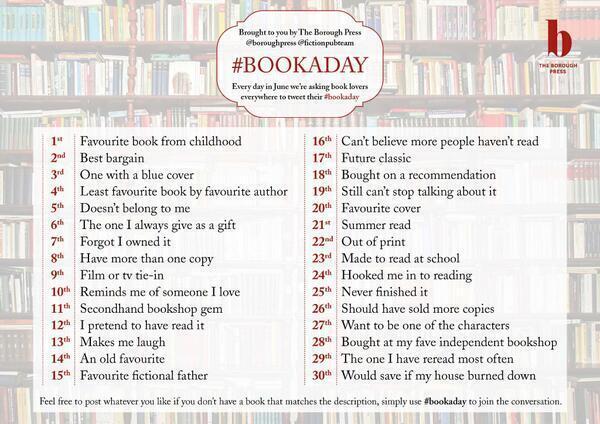
The Borough Press, a HarperCollins imprint, has started a daily meme asking people to name a book a day. You can see the full list of questions here. Not really worth writing a blog post about, but it's late, I'm a bit worn out after working very hard, and I don't want to break my writing streak, so an undemanding meme fits the bill very nicely.

Monday, 2 June 2014

The Goblin Emperor by Katherine Addison, reviewed by Stephen Theaker

In The Goblin Emperor (Tor, ebook, 6853ll) Katherine Addison (a name which is, as the dedication hints, a pseudonym) introduces us to Maia, an angry young man exiled to the middle of nowhere with a violent, oppressive guardian: his cousin Setheris. He wakes to the news that his father and older brothers have perished in an airship disaster, the Wisdom of Choharo having crashed with no survivors on the way back from a wedding.

His deadbeat dad was Varenechibel the Fourth, 208th emperor of the Elflands. His mother, Chenelo Drazharan, was a goblin, married off to the emperor for political reasons. Maia was the accident of the marriage’s single act of consummation. In looks, he takes after his mother, which would draw the distrust of the elves even if they weren’t faced with him becoming their new emperor.