Friday, 6 June 2014

The one I always give as a gift: Adventures in Oz by Eric Shanower #bookaday

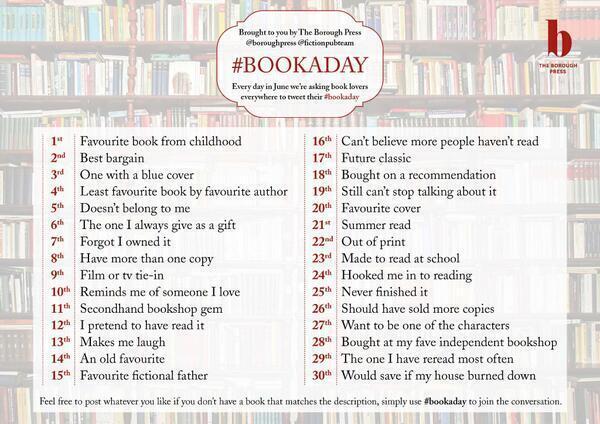
Today's #bookaday asks us to pick a book we always give as a gift. This was an easy one for me: Eric Shanower's Adventures in Oz. We must have bought this book six or seven times by now, once for our kids and then the rest for nieces, nephews and the children's schoolfriends.

This has many of the attributes of a great book present: I've read it and know how brilliant it is; it's not terribly well-known in the UK so the chances are small that anyone will already have it; it has the heft of a proper present; it's very colourful; it goes down well with parents because it looks quite fancy; and if the child likes this it could be their gateway into lots of other books.

It's currently available in two chunks, as Little Adventures in Oz Book 1 and Little Adventures in Oz Book 2.

Thursday, 5 June 2014

Doesn't belong to me: Doctor Who: The Encyclopedia #bookaday

The Borough Press, a HarperCollins imprint, has started a daily meme asking people to name a book a day. You can see the full list of questions here. Not really worth writing a blog post about, but it's late, I'm a bit worn out after working very hard, and I don't want to break my writing streak, so an undemanding meme fits the bill very nicely.

Monday, 2 June 2014

The Goblin Emperor by Katherine Addison, reviewed by Stephen Theaker

In The Goblin Emperor (Tor, ebook, 6853ll) Katherine Addison (a name which is, as the dedication hints, a pseudonym) introduces us to Maia, an angry young man exiled to the middle of nowhere with a violent, oppressive guardian: his cousin Setheris. He wakes to the news that his father and older brothers have perished in an airship disaster, the Wisdom of Choharo having crashed with no survivors on the way back from a wedding.

His deadbeat dad was Varenechibel the Fourth, 208th emperor of the Elflands. His mother, Chenelo Drazharan, was a goblin, married off to the emperor for political reasons. Maia was the accident of the marriage’s single act of consummation. In looks, he takes after his mother, which would draw the distrust of the elves even if they weren’t faced with him becoming their new emperor.

Friday, 30 May 2014

New Amsterdam by Elizabeth Bear, reviewed by Stephen Theaker

Technology has changed reading in many ways, and one of them is that it’s rarer now to read a book in ignorance; we frequently come to books having read, or at least glimpsed from the corner of our eyes, dozens of Amazon or Goodreads reviews, seen breathless recommendations from Twitter users, or even watched the trailer. And so New Amsterdam by Elizabeth Bear (Subterranean Press, ebook, 4797ll), which I bought in epub from the Weightless bookstore on the basis of its wonderful cover by Patrick Arrasmith, was able to give me a pleasure I had long-forgotten: beginning to read a book, and slowly realising it’s in the same series as another book I liked a lot! It took me back to reading The Last Battle as a child, and part-way in thinking, Hang on, wasn’t this Aslan guy in that cartoon I saw at Christmas?

Monday, 26 May 2014

Costume Not Included by Matthew Hughes, reviewed by Stephen Theaker

When last we left him, Chesney Arnstruther had set himself up as a superhero – The Actionary – found himself a nice girlfriend, Melda McCann, and caused significant problems for the bad guys, up to and including Lucifer himself. It was trouble twixt heaven and hell that got him his super-powers in the first place, a by-product of a negotiation between the two post-mortem destinations. That all happened in The Damned Busters, book one in the To Hell and Back series, reviewed in #37. Costume Not Included (Angry Robot, ebook, 4432ll) is book two, and it continues from the first book pretty much directly.

Monday, 19 May 2014

Godzilla (2014), reviewed by Stephen Theaker

By my count the new Godzilla, directed by Gareth Edwards, is the twenty-third I’ve seen, the first being King Kong vs Godzilla on Saturday morning television as a child, the most recent Godzilla, Mothra, King Ghidorah: Giant Monsters All-Out Attack, a week before this new American production came out. This is the first appearance of the monster since Godzilla: Final Wars, which underperformed at the Japanese box office but did give us the pleasure of seeing baby Godzilla ride in a truck and Roland Emmerich’s female Godzilla fighting her Japanese inspiration. (It wasn’t a long fight.) For the uninitiated: there are three runs of Japanese Godzilla films: the original Shōwa series, from Godzilla in 1954 to Terror of Mechagodzilla in 1975, the rebooted Heisei series, from Godzilla 1984 through to Godzilla vs Destroyah in 1995, and lastly, after the America Godzilla of 1998 failed to produce any sequels, the Millennium series of standalone films, from Godzilla 2000 in 1999 through to Godzilla: Final Wars in 2004. Most Godzilla films are entertaining (even the really bad ones, like Godzilla vs Hedorah), though the lack of variety does make you wonder why quite so many of them were made.

Thursday, 8 May 2014

Interzone #252 coming soon (featuring a page by me)

Interzone #252 is out soon, including my review of Nnedi Okorafor's Lagoon. Appearing in Interzone will never stop being exciting, even if it is jolly hard work - I can't quite blather, gush or rant like I do in my more self-indulgent reviews for TQF.

Other reviewers in this issue are Nick Lowe, Tony Lee, Andy Hedgecock, Jo L. Walton, Paul F. Cockburn, Paul Kincaid, Duncan Lunan, Simon Marshall-Jones, Matthew S. Dent, Maureen Kincaid Speller, Jack Deighton, Barbara Melville, Lawrence Osborn and Peter Tennant.

There are six stories in this issue: The Posset Pot by Neil Williamson, The Mortuaries by Katharine E.K. Duckett, Diving Into The Wreck by Val Nolan, Two Truths And A Lie by Oliver Buckram, A Brief Light by Claire Humphrey, Sleepers by Bonnie Jo Stufflebeam. And those are illustrated by Richard Wagner, Warwick Fraser-Coombe, Wayne Haag and Martin Hanford.

There's also the next instalment of Jonathan McCalmont's excellent and provocative Future Interrupted column, David Langford's Ansible Link, and an interview with Neil Williamson about his new novel The Moon King (which is already on my Kindle).

More information and subscription details on the TTA Press website.

PS. Look out too for Black Static #40. Doesn't feature me this time, but it's from the same publisher and is produced to the same high standard.

Monday, 5 May 2014

Theaker’s Quarterly Fiction #47 – out now!

Theaker’s Quarterly Fiction #47. Didn’t think we would get this far, did you? You thought we’d fall for your pathetic little traps. The giant toothpicks in the walls. The pits filled with rabid badgers. The radioactive bananas.

But we survived all of that, and here we are with another issue of probably the best fantasy zine in the world! (Though once again we missed out on a Hugo nomination. It’s almost as if the voters don’t know we exist! Either that or we seem so utterly professional that we must surely be a semiprozine, if not a fully-fledged magazine! Yes, that must be it.)

So here is Theaker’s Quarterly Fiction #47, unburdened by awards, and bouncing with glee, ready to make you slightly happier than you already are: free epub, free mobi, free pdf, print UK, print USA, Kindle UK storeKindle US store.

It features four stories. “Abandon” by Mitchell Edgeworth takes the Black Swan into spooky territory. Antonella Coriander, who almost definitely exists, and is almost definitely not a pseudonym used to disguise our woeful lack of female contributors, begins her new serial Les Aventures Fantastiques de Beatrice et Veronique with “Bike Ride to Peril”.

In Chris Roper’s story “Witchinga” a guy finds out that there are worse things than losing your job, even in the USA. And finally Anthony Malone’s satire “Zombie & Son” does its best to get us into legal trouble with a parody of beloved members of the British establishment which almost certainly does not reflect the real nature of any of the persons concerned.

The issue also includes reviews by Stephen Theaker, Douglas J. Ogurek and Jacob Edwards of: Divergent, Doctor Who: The Web of Fear, Elvenquest: The Complete Second Series, The Exploits of Engelbrecht by Maurice Richardson, Ghost Train to New Orleans by Mur Lafferty, The Glorkian Warrior Delivers a Pizza by James Kochalka, Her, The Hobbit: The Desolation of Smaug, I, Frankenstein, Justice League of America, Vol. 1, New Amsterdam by Elizabeth Bear, Paranormal Activity: The Marked Ones, Template by Matthew Hughes, Terra Obscura: S.M.A.S.H. of Two Worlds, The Winds of Gath by E.C. Tubb, and Wonder Woman Unbound by Tim Hanley.

These swanky shoes are brought to you by the following elves:

Anthony Malone’s fiction has been published in Murky Depths, The Delinquent, Lowestoft Chronicle, The Quotable, Mad Swirl, Litro Online, Bull Magazine and many others and his short stories are included in the anthologies Villainy (Halls Brothers Entertainment), Dieselpunk (Static Movement), Cup of Joe (Wicked East Press) and others. He has read at numerous Live–Lit events and recorded for London Link Radio. He lives in London. Website: www.anthonymalone.co.uk.

Antonella Coriander has not previously been published, to her great dismay. Her story in this issue is the first in what we hope will be a new ongoing Oulippean serial.

Chris Roper writes, teaches and takes photographs in Vietnam.

Douglas J. Ogurek’s work has appeared in the BFS Journal, The Literary Review, Morpheus Tales, Gone Lawn, and several anthologies. He lives in a Chicago suburb with the woman whose husband he is and their five pets. In this issue he reviews Divergent, The Hobbit: The Desolation of Smaug, I, Frankenstein and Paranormal Activity: The Marked Ones. His website: www.douglasjogurek.weebly.com.

Howard Watts is a writer, artist and composer living in Seaford who provides the lovely cover art for this issue, illustrating a hypothetical moment of rest from Antonella’s story. His DeviantArt page is here.

Jacob Edwards belongs in truth to Australia’s speculative fiction flagship Andromeda Spaceways Inflight Magazine, but we’re happy to be his bit on the side. This writer, poet and recovering lexiphanicist’s website is at: www.jacobedwards.id.au. In this issue he reviews Doctor Who: The Web of Fear and Her.

Mitchell Edgeworth has recently left Australia for pastures new. His fiction has been published in Pseudopod and SQ Mag, as well as here. He keeps a blog at www.grubstreethack.wordpress.com and tweets as @mitchedgeworth. “Abandon” is the latest in his Black Swan series to appear in these pages. Like everything we publish, it can be read quite happily in isolation, but if you want to find out how the Black Swan got off the ground and into business, see his stories in #40 (“Homecoming”), #42 (“Drydock”), #43 (“Flight”) and #46 (“Customs”).

Stephen Theaker reviews a bunch of interesting things in this issue: Elvenquest: The Complete Second Series, The Exploits of Engelbrecht, Ghost Train to New Orleans, The Glorkian Warrior Delivers a Pizza, Justice League of America, Vol. 1, New Amsterdam, Template, Terra Obscura: S.M.A.S.H. of Two Worlds, The Winds of Gath and Wonder Woman Unbound. He liked some of them very much. For those readers who care about such things, four of those were purchases, four were supplied by the publishers via NetGalley, one was supplied by the publisher via Audible, and one was a birthday present. Theaker’s work has also appeared in Black Static, Interzone, Prism and the BFS Journal.


Bonus! To celebrate this new issue, all our Amazon exclusive ebooks are absolutely free this week (the offers should kick in over the course of the day): Professor Challenger in Space, Quiet, the Tin Can Brains Are Hunting!, The Fear ManHoward Phillips in His Nerves Extruded, Howard Phillips and the Doom That Came to Sea Base Delta, Howard Phillips and the Day the Moon Wept Blood, The Mercury Annual and Pilgrims at the White Horizon.

All 46 back issues of Theaker's Quarterly Fiction are available for free download.

The Strange Talent of Luther Strode, reviewed by Stephen Theaker

You would be forgiven for thinking that The Strange Talent of Luther Strode (Image, tpb, 162pp) must be related to getting himself published despite the poorness of his book. As well as his megamuscles and talent for ultraviolence, he must be extremely persuasive. Either that or writer Justin Jordan and artist Tradd Moore know where the Image Comics skeletons are kept.

As the book begins, Luther has just been shot seven times in the chest, but he’s caught the bullets in his muscles, and works out how to push them back out. He’s also just killed half a dozen guys by kicking and punching them so hard they exploded. And he’s got X-ray vision, which helps when he’s looking for weak spots.

Wednesday, 30 April 2014

Ten Kindles I have known

I do love a Kindle, as I’m sure you know by now if you have ever visited this blog before. I think I’ve used at least ten different Kindles, but let’s see. I write this knowing it won’t interest anyone but me. But I will find it fascinating.

1. The iPad Kindle app, which by checking my iTunes receipts I can see I got in the week of 13 May 2010. In fact, it’s the very first item on my very first iTunes receipt. I’d had a pair of Sony Readers and though I used them a lot, I only bought a few books in that format (from WH Smith, weirdly), because they were so expensive, such a faff to get on there, and I had lots of review stuff to keep me occupied. I did give iBooks a try (another iTunes receipt tells me that on 12 June 2010 I bought Neal Asher’s Shadow of the Scorpion) on there, but the iPad was a bit big for reading at length, and I couldn’t conveniently take it with me anywhere to read. Even now that it’s 37 generations behind the times I’m still reluctant to get it out in public. Funny now to think that when it first came out, sensible people were calling the iPad a Kindle killer. More like a stalking horse.

2. International Kindle (version 2). After settling for that pair of Sony Readers while impatiently waiting for Amazon to release the Kindle here, and then using the iPad app, this was my first actual Kindle. At this point they were still being shipped from the US. There’s a lot to like about this Kindle, not least that it still, even now, has absolutely free 3G internet access, and unlike more recent iterations it’s not restricted to browsing the Amazon store and receiving publications. You can use it to browse the wider web, albeit fairly slowly. It also has a nice little pair of speakers and a keyboard (which was a big selling point for me after struggling to make notes on the Sony Readers), sits nicely in your hand because its width lets it balance, and it has nice big buttons for clicking forward and back between pages. I still use this one from time to time.

3. Kindle (version 3, wi-fi only). Retrospectively renamed the Kindle Keyboard, the first of these I bought was for Mrs Theaker, and I was jealous of its wi-fi, which for the first time let documents be emailed to it without incurring a charge, and the ability to change the contrast of text in pdfs – useful for many review pdfs. One thing I don’t like about Mrs Theaker’s Kindle version 3 is that the keyboard buttons are a bit scratchy.

4. Kindle (version 3, wi-fi only). This one was mine. I just got too jealous of Mrs Theaker’s and bought myself one. Not quite as easy to hold as the v2, and the keyboard lost the number row, but as well as the features mentioned above it had one that made it ideal for an internet addict for me: it could only access the internet if the wifi router allowed it, and I made sure it didn’t. That meant no breaking away from reading to check my email just one more time before sleeping. The v3 had nice speakers too, and plenty of room for audiobooks.

5. Kindle (version 3, wi-fi only). Being an idiot I once put my v3 under my pillow and then leant on it with my elbow. Amazon let me have a new one for £40 in return for sending them the broken one, and I still use it quite often, especially for reading comics (the panel view is glitchy on the Paperwhite) and listening to audiobooks and music (I keep the new Pixies MP3s on it).

6. Kindle Android app on Google Nexus. I want to like this, and it’s slowly getting better, but it has problems. It doesn’t use the full height of the Nexus screen, and you can’t turn the brightness of the screen down to a bearable level. If I’m reading on the Nexus, I tend to use Play Books instead, which doesn’t have those problems.

7. Kindle Android app on Samsung phone. I want to like this more than I do, but the phone is always running out of power and slow to respond and by the time the app has loaded itself and loaded a book I’m often past the point where I needed something to read.

8. Kindle Paperwhite. I wasn’t that impressed by this model at first: it certainly didn’t live up to the promise of its name, and was quickly dubbed the Kindle Ghostlight in our house. The backlight caused strange shadows at the bottom of the screen, and could never be switched entirely off, giving it an eerie green glow. But it grew on me very quickly, for a few reasons. Its case is lovely, and switches it on automatically. All the screen, except left and top bars, can be tapped for next page, so you can hold it in lots of different positions and there’s no need for irritating swipes. No internet browsing on 3G, only book shopping, which means I don’t waste time checking my email on it. The downside: from the day I got a Paperwhite I had to negotiate in order to read in bed with the lamp on, and that’s made me very, very slow to read paper books, to the point where I’ve told publishers to stop sending them to us for review.

9. Kindle Desktop. I would like this a lot more if you could access your personal documents on it, since review copies make up a lot of my reading. It’d be really handy to browse my notes on the Kindle Desktop, side by side with the reviews I’m writing. Instead I have to cross refer to a physical Kindle. Disappointing.

10. Kindle Cloud Reader. Quite handy, but again suffers from a lack of personal documents, for me at least.

That’s a lot of Kindles. There are quite a few Kindles I’ve never tried, but the two I wish I’d had were the original, and the big Kindle DX. I was desperate for a DX at one point, but the lack of wifi and the way it couldn’t annotate pdfs meant it was never going to be a sensible use of my money. Still want one though.

Kindles that don’t yet exist that I would like: Kindle on Xbox, a little phone-sized Kindle, and Kindle on Google Glasses. That’s what I’ve always dreamed of – to be able to read while walking around, without walking into lamp-posts.

Wednesday is occasionally list day on the blog, though not as frequently this year because I have been so busy, and this is list #17. I would describe this as our most boring yet, but I fear my muse would take that as a challenge.

Monday, 28 April 2014

La Vallée Infernale by Henri Vernes, read by Stephen Theaker

La Vallée Infernale (in Tout Bob Morane 1, Les Éditions Ananké, ebook, 10,308ll) by Henri Vernes is the first novel in the long-running Bob Morane series, which doesn’t seem to have made much of an impact in Anglophone countries. Post-WWII Bob is working as a courier pilot for a shifty operator who has him run some scallywags to Papua New Guinea.

It’s supposed to be an flyover, but upon arrival they demand to land, and when Bob declines they force a crash, into an area cut off by mountains, ruled by dangerous tribes, and far from safety. His honour forces Bob to attempt the protection of the idiots who have landed him in the mess.

Monday, 21 April 2014

Wonder Woman Unbound, by Tim Hanley, reviewed by Stephen Theaker

In Wonder Woman Unbound (Chicago Review Press, pb, c.322pp), subtitled The Curious History of the World’s Most Famous Heroine, Tim Hanley takes a look at the history of DC’s best-known female superhero, with a particular focus on her earliest stories and the man who created her, William Moulton Marston, and his interest in an idiosyncratic brand of bondage-led feminism. The book explores Hanley’s theory that “every version of Wonder Woman has been simultaneously progressive and problematic”, with parts devoted to the Golden Age, Silver Age and Bronze Age versions of the character.

Monday, 14 April 2014

Ghost Train to New Orleans by Mur Lafferty, reviewed by Stephen Theaker

Her travel guide to New York having done well, despite a series of supernatural calamities that occurred in the course of its writing, Zoë Norris is given a new assignment by her editor at Underground Publishing: the supernatural tourist’s guide to New Orleans. She takes a hand-picked team of writers with her: two vampires, one of whom would kill her now if it wasn’t against company policy, a goddess of death, a Valkyrie, and a baby dragon, Bertie.

Friday, 11 April 2014

Template by Matthew Hughes, reviewed by Stephen Theaker

There are few things I find more enjoyable than a Matthew Hughes novel, and it’s a struggle to stop myself gorging on them at the expense of everything else. Template (self-published, ebook, 4865ll) is a book from 2008, new to me, recently republished. Like most of the Hughes books previously reviewed here, it is set among the Ten Thousand worlds of the Spray, under the subtle rule of the Archonate.

Conn Labro is an exceptional sportsman, brilliant at everything from fencing to chess, and he takes on all-comers at Horder’s Gaming Emporium – which owns him. Hallis Tharp has paid in advance for a lifetime of his services: a weekly two-hour game of paduay. On one occasion, Tharp is not ready for the game, and Conn goes to investigate.

Monday, 7 April 2014

Divergent, reviewed by Douglas J. Ogurek

Chicago plows dauntlessly into young heroine-driven dystopia subgenre

We Chicagoans recently endured one of our worst winters in recorded history. I wonder how many of us, clomping through the slush-laden Loop streets or stuck on bleak highways, saw the Divergent ads on billboards and bus wraps as not only an exciting way to launch spring, but also as a potential to extend our city’s reputation for innovation.

Friday, 4 April 2014

BFS Journal #11: out now!

Sorry that things have been so quiet on the TQF blog this year – paying work has been keeping me very busy (can’t and won’t complain!) but work is progressing on the next issue of Theaker's Quarterly Fiction – and about 25 reviews I have at various stages of unreadiness.

One distraction has been that I was asked to help out on the BFS Journal for a couple of issues after it had stalled, to give the new managing editor time to train up. You can only get this 184pp paperback if you’re a BFS member, but we’ve ordered a handful of extra copies, so if you join today there’s still a chance of getting it.

Sarah Newton is the editor of this issue’s fiction:

  • The Switch, Mark Lewis
  • Electricity, Gary Couzens
  • Pawnarchy, Mark Huntley-James
  • The Eden Paradigm, Allen Ashley and Madeleine Beresford
  • A Barrow on the Border, Rima Devereaux
  • The Need to Create, Emma Newman
  • The Lost Name, Sandra Unerman
  • Baby 17, Jonathan Oliver
  • The Long Hard Road Out of Hell, M.E. Lerman

Stuart Douglas edits the non-fiction:

  • Jennie Gyllblad, interviewed by Max Edwards
  • Freda Warrington, interviewed by Alex Bardy
  • The Adventures of Brak, Mike Barrett
  • Tim Powers, interviewed by Stuart Douglas
  • Nick Campbell on The Child Garden
  • Forbidden Fruits, Ray Cluley

And Ian Hunter edits the poetry:

  • Cybernetic Mary, Deborah Walker
  • Protecting Veil, Megan Kerr
  • A Paranormal Romance, Allen Ashley

There’s also a controversial editorial by Max Edwards, a controversial chairman’s chat by Mark Barrowcliffe, and a BFS news section that has not yet attracted any controversy (but maybe no one has read it yet). Cover art by Jennie Gyllblad.

Monday, 17 March 2014

The Glorkian Warrior Delivers a Pizza by James Kochalka, reviewed by Stephen Theaker

The Glorkian Warrior Delivers a Pizza (First Second, hb/pb, 112pp; Netgalley pdf) is another superb, hilarious comic for children by James Kochalka. Well, I say for children, but it made me laugh out loud enough times to attract the children to my office, concerned they were missing out on some fun. And they were. The Glorkian Warrior is happy to doze on his sofa until he is woken by the sound of the emergency space phone. Someone has called to order a pizza. A pepperoni pizza. His Super Backpack is keen for adventure, but not too impressed with this one: “I’m not SCARED. I just don’t think ‘heroic destiny’ is usually this STUPID.” There’s no pepperoni pizza in the fridge, but there are leftover peanut butter and clams slices, so that’ll have to do. On the way to deliver the pizza they’ll meet, battle and make friends with battle-suited Gonk, attempt Glorkian kung fu on a spaceship, adopt a space invader baby, and meet the Magic Robot!

Monday, 10 February 2014

I, Frankenstein, reviewed by Douglas J. Ogurek

Juvenile, shallow, and highly recommended: Legendary monster romps with angel-gargoyles and suit-wearing demons in Underworldesque adventure

No. I will not join the critics who’ve ganged up to lambast I, Frankenstein, the film inspired by Kevin Grevioux’s graphic novel of the same title. I will not take sides with those who say that they did not enjoy this film because of its one-dimensional characters, poor dialogue, and rambling storyline.

Saturday, 1 February 2014

BFS Journal #10, out soon

During January I helped out on organising and typesetting #10 of the BFS Journal. It’s one hundred and sixty-eight pages of fantasy fun, weirdness and even a dash of controversy, edited by Max Edwards, Sarah Newton, Stuart Douglas and Ian Hunter.

Contributors include Al Kratz, Allen Ashley, Anne Lyle, Anne Shah, Anton Sim, Cav Scott, Clare Le May, David Buchan, David Gullen, Erik T. Johnson, Gary Budgen, Jaine Fenn, James Barclay, Juliet Boyd, Juliet McKenna, Mark Barrowcliffe, Mike Chinn, Paul Magrs, Pye Parr, Richard Farren Barber, Stuart Douglas, Tammy O’Malley, Zoe Gilbert and frequent TQF contributor Douglas Thompson.

The cover art, originally from Blood and Feathers: Rebellion by Lou Morgan, is by Pye Parr, who is interviewed by Cavan Scott about his work on that and other books.

BFS periodicals aren’t generally available to non-members. However, we ordered 25 spares and they will be sent out to new members and renewals as long as stocks last, along with two BFS exclusive hardback anthologies, The Burning Circus and Unexpected Journeys, edited by Johnny Mains and Juliet McKenna respectively. Contributors to those books include Kate Elliott, Stephen Volk, Muriel Gray and Adam Nevill. Join here.

Theakerly plans for 2014

We’ve been a bit quiet on here since the beginning of the year, with just the one blog post so far, a review from Douglas, but don’t fear! We’re still here! I’ve been writing quite a bit, but most of it has gone into interminable BFS discussions of one kind or another.

So, what are our plans for this year of Theaker’s? Well, we aim to publish four quarterly issues of the magazine as usual, in March, June, September and December, or thereabouts. We will also publish, at long last, John’s novel The Hatchling in paperback and ebook.

I’m aiming once again to have a new review here on the blog each Monday (I managed that about 35 times in 2013). The Wednesday lists may or may not make a comeback. In truth, I rather resent them for attracting more hits than the reviews which require so much more work to produce!

The Theakerly thoughts will definitely return. They provide a useful and moderately healthy way to empty the rubbish from my head. Their absence over the last month has principally been down to the frequency with which my thoughts have been unpublishable.

On the reviews front, I’ve been asking publishers to take us off their mailing lists for print review copies. I hardly ever read print books these days and when I try they take me three or four times as long as they should, however good the books.

It’s a shame, because there are few feelings as pleasant as receiving a mystery book package in the post. But nice as that is, and grateful as I was to receive them, I think they were a drag on my reviewing and reading.

Let’s see how it goes. Whatever your plans for the year, I hope they come to fruition!