Showing posts with label British Fantasy Awards. Show all posts

Sunday, 20 October 2019

British Fantasy Awards 2019: the Winners!

The British Fantasy Awards have just been announced, at FantasyCon 2019 in Glasgow. I had a go at reading this year's nominees and failed abysmally, only finishing three categories. All the other half-finished blog posts will be repurposed into reviews for a future issue!

The British Fantasy Awards are decided by juries, who before reading the nominees have the option of adding up to two additional items to those placed on the shortlist by the votes of British Fantasy Society members (including me) and FantasyCon attendees (not me this time).

Note that the jurors given below are those that were originally announced to BFS members. I haven't seen any announcements that anyone dropped out or was replaced, but it does happen sometimes, when people realise that there's a conflict of interest.

Here are the winners:

Anthology: Year’s Best Weird Fiction, Vol. 5, ed. Robert Shearman & Michael Kelly (Undertow Publications)

The jurors were Roz Clarke, Ian Hunter, Susan Oke, Steve J. Shaw and Joni Walker. Always a bit disappointing when year's best volumes win this award, after cherry picking the best of work that was already eligible the previous year, but despite much debate they are still eligible and so you can't blame the jurors, who have to pick the best of what's on the shortlist.

Artist: Vince Haig

The jurors were Astra Crompton, Alexandra Gushurst-Moore, Kaia Lichtarska, Catherine Sullivan and Paul Yates.

Audio: Breaking the Glass Slipper (www.breakingtheglassslipper.com)

The jurors were Alicia Fitton, Thomas Moules, Susie Pritchard-Casey, Abigail Shaw and Neil Williamson. I only got around to listening to one of the nominees in this category, Blood on Satan's Claw, based on the film. It had terrific sound design.

Collection: All the Fabulous Beasts, by Priya Sharma (Undertow Publications)

The jurors were Ben Appleby-Dean, Amy Chevis-Bruce, Marc Gascoigne, Laura Newsholme and ChloĆ« Yates. The only book I managed to read in this category was Lost Objects by Marian Womack, which was excellent. Looking forward to reading the winner and other nominees.

Comic/Graphic Novel: Widdershins, Vol. 7, by Kate Ashwin

The jurors were Kate Barton, Emily Hayes, Steven Poore, Alasdair Stuart and Kiwi Tokoeka. I read everything in this category and this is an utterly baffling decision. How could anyone possibly conclude that this nice enough book was better than Hellboy: The Complete Short Stories, Vol. 1? Suppose it could have been worse: one of the other nominees in this category was a prose novella.

Fantasy Novel (the Robert Holdstock Award): The Bitter Twins, by Jen Williams (Headline)

The jurors were Sarah Carter, Shona Kinsella, Devin Martin, Pauline Morgan and Andrew White. I only read Empire of Sand in this category.

Film/Television Production: Spider-Man: Into the Spider-Verse, Phil Lord & Rodney Rothman

The jurors were Rebecca Davis, Pat Hawkes-Reed, Rachelle Hunt, Robert S. Malan and Sammy Smith. My pick for this one, having watched them all, would have been Annihilation, but my guess was that Into the Spider-Verse would win. And for once I was right!

Horror Novel (the August Derleth Award): Little Eve, by Catriona Ward (W&N)

The jurors were Charlotte Bond, Emeline Morin, Gareth Spark, Mark West and Zoe Wible. Little Eve would have been my pick of the three I read in this category. I listened to the audiobook and Carolyn Bonnyman's reading of the audiobook added immensely to the atmosphere. The Way of the Worm is the one I haven't finished yet, but I'm enjoying it very much so far.

Independent Press: Unsung Stories

The jurors were Helen Armfield (chair of the BFS), Andrew Freudenberg, Daniel Godfrey, Elaine Hillson and Georgina Kamsika. I'm currently reading a new book from this publisher, Always North, by Vicki Jarrett.

Magazine/Periodical: Uncanny Magazine

The jurors were Jenny Barber, Peter Blanchard, Theresa Derwin, James T. Harding and Rym Kechacha.

Newcomer (the Sydney J. Bounds Award): Tasha Suri, for Empire of Sand (Orbit)

The jurors were Colleen Anderson, Rosie Claverton, Lee Fletcher, D Franklin and Peter Sutton. I'm stunned by this result: it's one of the most tedious, bloviated books I've ever read. My pick of the four books I read in this category would have been Marian Womack for Lost Objects, but my guess was that Tomi Adeyemi would win for Children of Blood and Bone, which was a lot of fun and packed solid with adventure. The books I hadn't read yet were Lost Gods and The Traitor Gods.

Non-fiction: Noise and Sparks, by Ruth E.J. Booth (Shoreline of Infinity)

The jurors were Laura Carroll, Megan Graieg, Katherine Inskip, Kev McVeigh and Graeme K. Talboys.

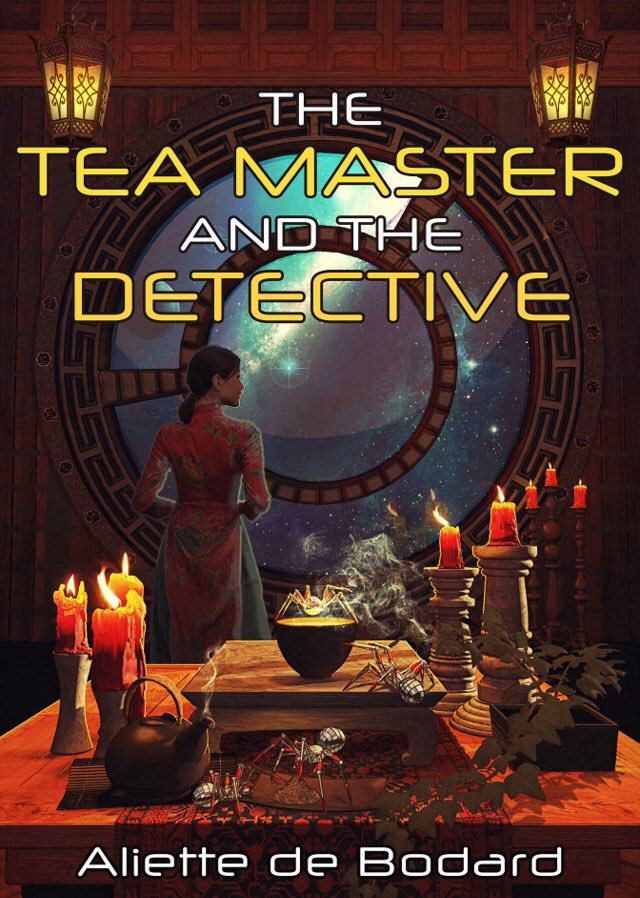
Novella: The Tea Master and the Detective, by Aliette de Bodard (Subterranean Press)

The jurors were Ruth E.J. Booth, Elloise Hopkins, Stewart Hotston, Steve Howarth and Laura Mauro. Unusual to have something I voted for actually win the award! And I guessed correctly that it would win, although my pick, after reading the other nominees too, would have been The Land of Somewhere Safe, by Hal Duncan. I'm glad the award didn't go to either of the ineligible nominees; that would have been awkward.

Short Fiction: "Down Where Sound Comes Blunt", by G.V. Anderson (F&SFMarch/April 2018)

The jurors were Donna Bond, Amy Brennan, Andrew Hook, Richard Webb and Mairi White.

The Special Award (the Karl Edward Wagner Award): Ian Whates

The jury for this award is the BFS committee (currently: Katherine Fowler, James Barclay, Andy Marsden, Lee Harris, Shona Kinsella, Tim Major, Helen Armfield, Karen Fishwick, Allen Ashley, Sean Wilcock and Christopher Teague; though not everyone necessarily participates and the decision could have been taken at any point in the course of the year). For the third year running, the BFS membership wasn't invited to make suggestions, contrary to the rules of this award, putting a question mark over its validity, but Ian Whates would be a deserving winner.

There was no mention on Twitter of a Legends of FantasyCon being awarded: I'm told the announcement was delayed as the recipient did not attend the convention.

The physical award has changed this year: rather than the handmade bookends used from 2014 to 2018, the new award, also handmade, looks like this. They were created by Morag Hickman, who describes them as "a bolted sandwich of laser-cut acrylic, containing the archway and rocks in birch plywood and layers of hand-cut green vellum ivy leaves".

Congratulations to all the winners, and all the nominees, and as a BFS member, thank you to the jurors who devoted so much of their summers to helping out with our society's awards, and also to Katherine Fowler, the British Fantasy Awards Administrator, for doing a fine job again.

I don't think I will try to read all the nominees again next year. It was interesting to do once, but it was quite expensive and took a lot of time. Next time I think I will just pick out a few nominees that look good and review those as normal.

BFA Shadow Juror: Film and Television Productions

One last post in this failed series before the actual awards are announced!

An odd thing about this category is that it is an all-male shortlist, meaning that the jury was presented with an all-male preliminary shortlist, and despite the idea of egregious omissions being to rectify such situations, they decided to add two more items written by men. Perhaps they felt that the items they added were just so good that they had to be considered egregious omissions, regardless of the creators’ sex. Anyway, here's what I thought of the nominees:

Inside No. 9, series 4. This is such a great show. Innovative in its structure and storytelling, and telling a wide variety of stories. There's a wonderfully-observed story about a former comedy duo that went bad. Another about a house full of dead bodies, told in reverse. The problem with regard to this award, though, is that only one of the six is a fantasy story, and this is a fantasy award. A Halloween special out in 2018 was a supernatural story (and a very good one too), but isn't part of series four. Even if included, that would still only be two episodes out of seven: a typical example of the tendency of BFS and FantasyCon members to treat these as awards for things and people they like, regardless of genre. My rating: five stars. To-win rating: 1/10

The Haunting of Hill House, season 1. I started watching this when it came out but stopped after a couple of episodes, not at all grabbed. Watching it now for this project, it was definitely better than I had thought at first. Watching on my own late at night gave the scares quite a boost, but also it all become more meaningful once I had a handle on which kids were which adults. It had some extremely effective scares, both jump scares and slow creeping terror scares. Episode six, with what gives the impression of being one long shot for its first half, is an absolute tour de force. Some of the ghostly appearances are made even more frightening by being so subtle and unnoticed by the protagonists. But the ending isn't great: it gets quite soapy, there isn’t much of a pay-off for some things, and by the end the house starts to feel rather like a retirement home. My rating: three stars. To-win rating: 5/10

Spider-Man: Into the Spider-Verse. I thought this was very good fun, though it felt like the Superior Spider-Man was missing – it might have been hard to work him into the film, but the tension he created in the original comic was one of the best things about it. Maybe they’re saving him for the future. And where were the monsters eating spider-people? As a comics fan, it did feel a bit like this was praised to the heavens for doing things that actual comics have been doing for decades. It was a nifty film, though, and all the spider-people in it were a lot of fun. My children have watched it lots of times and still want to watch it again. My rating: three stars. To-win rating: 6/10

Avengers: Infinity War. Most of you have probably seen it. It’s a stunning achievement in film-making. It’s the culmination of a decade of big budget storytelling on a scale that cinema has never seen before. And it’s fine. I enjoyed watching it a lot. It made me laugh lots of times. It had lots of my favourite characters. It had that astonishing ending, the kind of ending you can only have when you know that there’s going to be a sequel. I appreciate that it showed me things no other film could have managed. But Captain America: The Winter Soldier and Thor: Ragnarok were just that bit better. My rating: three stars. To-win rating: 7/10

Black Panther. After watching this, I said to my family that what Jack Kirby was to comics in the twentieth century, he might well be for cinema in the twenty-first. Now we also have New Gods, Eternals and one hopes a real Fantastic Four film on the way. I thought this was by far the most Kirby-esque of Marvel’s films I had seen at that point, in look and feel and kineticism, and as well as all that it was a good adventure with an excellent villain and supporting cast. Black Panther himself was maybe a bit overshadowed. My rating: three stars. To-win rating: 7/10

Annihilation. I loved this film. It was beautiful and strange, with a tremendous cast doing brilliant work. More than any of the other nominees it addressed our future, and the likelihood that there will come a point where we’ll lose control of our environment and be faced with the necessity of adaptation. I really would love this to win. My rating: four stars. To-win rating: 8/10

Will that win? I’m guessing it probably won’t. It’s been a bit of a marmite film, and some people really don’t like the last bit. It would be barmy for Inside No. 9 to win, and I don’t think Hill House was quite good enough to win, but I think it could go to any of the three Marvel films. I’ll guess Spider-Verse, because the people who love it really, really love it.

My children (having seen everything but Hill House and Annihilation) reckon that Spider-Verse should win, but that She-Ra and the Princesses of Power should have been on the shortlist and it is better than any of them. ("Obviously!")

Wednesday, 7 August 2019

BFA Shadow Juror: Comics and Graphic Novels

I've finished reading the items nominated for the British Fantasy Award 2019 for comics and graphic novels, and thought about how I would rate and rank them, if I were on the jury for this category.

The usual disclaimer: this is entirely unofficial and purely for fun. I have no involvement in the real awards this year, other than as a member of the society and thus a voter. I have no insight into what the current juries are saying, the criteria they will apply or the methods by which they will come to their decisions.

Also worth saying that if I were actually on the jury, I'd be talking to people who had also read the books and so I would go into more detail with regard to specific events, but here I want to avoid spoilers.

That said, here are my thoughts:

100 Demon Dialogues, by Lucy Bellwood. Enjoyable, for the ten minutes it takes to read it: rather than a comic or graphic novel, it's a book of single-panel cartoons, with no sequential storytelling, other than that each individual cartoon takes place on a different day. And it only barely counts as fantasy: it's an apparently autobiographical book where the demons are a metaphor for the author's more downbeat thoughts. There's nothing to suggest that they are actually real, that the protagonist is living in a fantastical world any different from ours. So although I thought it was good, perspicacious and wise, it's a bit surprising that it made the shortlist. Plus, it was first published in November 2017, according to its copyright page, so that makes it ineligible. My rating: three stars. To-win rating: 0/10

The Prisoner, by Robert Malan, illustrations by John Cockshaw. A guard interrogates an odd prisoner over thirty thousand words of miserable prose. Art is used to illustrate a few of his dreams. It would be ludicrous to call this a comic or a graphic novel, and downright offensive to vote for it as the best one of the year. From the suggestions list, it looks as if the publisher (or a supporter) submitted this for both the novella category and the comics category at the same time. It didn't make the novella shortlist, and it definitely shouldn't have made this one. It's not a comic, it's not very fantastical (what few fantasy elements there are could be explained away by the influence of drugs), and it's not terribly good. My rating: two stars. To-win rating: 0/10

Widdershins, Vol. 7: Curtain Call, by Kate Ashwin. Seems to begin in the middle of a story, with a large cast of rather too similar-looking characters dashing about the town of Widdershins, trying to catch the deadly sins. Inoffensive and pleasant, but a bit out of its depth here. Quite odd to see a book on the shortlist which is only available to buy from the author's own website. Probably much more enjoyable for people who have read the previous six volumes. To a new reader it feels like a lot of running around, all busy work without a lot of depth. My rating: three stars. To-win rating: 3/10

Saga, Vol. 9, by Fiona Staples and Brian K. Vaughan. About a family of people from both sides of an interplanetary war. It's usually hard to say much about this comic without giving away lots of spoilers for previous volumes, but in this one, basically, everyone waits for a news story to be published. I loved this comic when it began. Now it's not so much like it's gone off the boil, it's more like someone switched off the kettle. Art is still terrific, but I can only imagine that inertia is what's kept it on the shortlist for another year. My rating: three stars. To-win rating: 4/10

B.P.R.D. Hell on Earth, Vol. 1, by Mike Mignola and chums. After Hellboy got fed up of working with the Bureau for Paranormal Research and Development, he went on his way alone while his former colleagues (Abe Sapien, Roger the homunculus, firestarter Liz Sherman and ectoplasmic spiritualist Johann Kraus) spun off into their own comic, which rather like Xena ended up being even more epic than the original. This book sees them dealing with the aftermath of the Plague of Frogs storyline, and a proliferation of new monsters. Guy Davis's artwork is especially great. As with Hellboy, there were several more volumes of this out last year, all of them eligible and equally good. My rating: five stars. To-win rating: 9/10

Hellboy: The Complete Short Stories, Vol. 1, by Mike Mignola and chums. The collected work of one of comics' greatest geniuses. I considered, for a very brief moment, whether to rate this lower because of its contents having been previously published in other books, but that seemed unfair when the British Fantasy Awards didn't have a comics award at all when most of these stories were first published, or even when they were first published in books. In any case, new collections of previously published material are eligible for this award, and at least some of the other nominated works in this category could have been nominated for previous publications too. So although it's an omnibus, it's not a second bite of the cherry. Artistically, creatively, this and B.P.R.D. tower over the other nominees. It'll be a surprise if I read anything better in any of the categories. What's more, there were I think five more omnibus volumes of Hellboy out in 2018, all of them fantastic, all of them better than the rest of this shortlist. My rating: five stars. To-win rating: 10/10

Will that book win the award? It'll be a massive shock if Mike Mignola doesn't win the award for one book or the other. My bet is on HellboySaga is the only other serious contender, but it would be a surprise to see something so far off its peak win against the definitive editions of two of the greatest fantasy comics of all time. And Mike Mignola is due a win in this category: his combination of fantasy, horror and science fiction is as BFS-orientated as it is possible to be! But surprises do happen. After all, two of these books were added as egregious omissions (unless there was a draw after the members voted and more than four books went through): fair enough if they were Hellboy or B.P.R.D., but a jury that picked any of the others as egregious omissions might well choose an unexpected winner.

Next: Not sure which will be the next shortlist I finish. I'm currently reading one of the collections and one of the horror novels, both good so far.

Monday, 5 August 2019

BFA Shadow Juror: Novellas

I thought it might be fun this summer to read as many of the British Fantasy Award nominees as I could, as a kind of one-man shadow jury. That is, reading the nominees that the actual jurors do and applying the same criteria to them that I would if I were on the jury, but posting my (spoiler-free) thoughts here for people to read instead of keeping them secret.

Last time I did something similar was with the best novel category back in 2009, and the surprise then was how few of the nominees featured any fantasy at all, let alone being what anyone would call fantasy novels. One was a London detective novel, and another was a historical novel about Vincent Van Gogh, both by authors with strong ties to the BFS and FantasyCon.

BFA juries use a lot of different methods to come to their decisions: the awards constitution doesn't set out a specific way. Here I'll use one that consistently seems to work well, where each member (after a group discussion of the nominees) rates each out of ten for how much they want it to win the award, taking everything into account.

"Everything" would include how good the item is, of course, but also whether the nominee fits the category (e.g. is an item nominated for best magazine actually a magazine? is a publisher nominated for indie press actually independent?) and whether it is fantasy, given that these are fantasy awards.

The BFS takes a wide view of fantasy, taking in science fantasy, weird fantasy, dark fantasy, literary fantasy, and so on. Fantasy, science fiction and horror get specific mentions in the society's constitution, which explains why the latter two show up in the nominees more often than you might expect for a fantasy award.

For me, certain types of horror count as fantasy, but others don't. Friday the 13th (last few minutes aside): not fantasy, because the killer is human. Halloween: fantasy, because Michael Myers is said to have no soul (and hence also I guess lives in a world where souls are real). I would regard aliens, ghosts, demons, elves, gods etc as fantastical elements.

Just in case a disclaimer is needed: this is entirely unofficial and purely for fun. I have no involvement in the real awards this year, other than as a member of the society and hence a voter. I have no insight into what the current juries are saying, the criteria they will apply or the way that they will come to their decisions.

Anyway, I've started off by reading the nominees for best novella. Here are my thoughts on how I would vote if I were on that jury:

The Last Temptation of Dr Valentine, by John Llewellyn Probert. The highly entertaining story of a serial killer with a flair for the cinematic, and the people trying to catch him. I loved its wit and its structure: a chapter will often act as a macabre short story focused on a particular victim. I enjoyed this as much as any of the other books on the shortlist: it was a pure, over-the-top audience pleaser. And I'll definitely be going back to read the first two Dr Valentine stories. But this is a fantasy award and this isn't a fantasy story. It's about a serial killer who adopts unusual methods; there are no fantastical elements at all. So for me this wouldn't be in the running. Also, the ebook version seems to be about 45,000 words long, and this category is for stories up to 40,000 words, so unless the initial print version was much shorter I don't think it's eligible. My rating: three stars. To-win rating: 0/10

Binti: The Night Masquerade, by Nnedi Okorafor. Third adventure of the girl who leaves her home in Africa to attend a university on another planet, and then comes back again with an alien friend. It's just as good as the others. I'll keep reading these as long as the author keeps writing them. I would have given this quite a high rating, because although it might be a bit impenetrable for new readers it's full of ideas and very good. But by my reckoning it's over 47,000 words long, so it's ineligible for this category. Blame people like me who voted for it in the wrong category without checking the word count. My rating: four stars. To-win rating: 0/10

Breakwater, by Simon Bestwick. Kind of an unofficial sequel to The Kraken Wakes, this very short novella scrapes into this category by a couple of hundred words, and feels very slight compared to the rest. Two women try to escape an undersea base following the latest attack by an unseen ocean species, while taking the time to comment on each other's bottoms, e.g. "Move that sexy bum of yours, Doc." It's an old-fashioned way of writing about women given a pseudo-progressive spin by having another woman say it. This isn't really good enough to be on an awards shortlist, but at least it's eligible. My rating: two stars. To-win rating: 1/10

The Only Harmless Great Thing, by Brooke Bolander. Elephants are more intelligent than in our world, and were made to work with radioactive materials. This was the second Tor.com novella I've read this year that presents terrorists attacking a civilian target as righteous and justified. The idea of more intelligent elephants is interesting (and can also be found in Binti: The Night Masquerade), and the prose is good, but there's very little distance between where the story begins and where it ends, and a big part of it is driven by an idea that makes very little sense: to make elephants glow when they are near radiation, to warn future generations of humans to stay away. My rating: two stars. To-win rating: 3/10

The Tea Master and the Detective, by Aliette de Bodard. Sherlock Holmes and Watson recast in the far future as Long Chau and The Shadow's Child (the mind of a spaceship), team up for the first time to investigate a corpse found in the deep spaces. It's very good, though the mystery takes a back seat to the origin story of the partnership. I hadn't realised that the same author's In the Vanishers' Palace was also from 2018 when voting. This is good, and I'd be very happy to see it win, but that would have been an even stronger contender, being much more fantastical. My rating: three stars. To-win rating: 6/10

The Land of Somewhere Safe, by Hal Duncan. On a shortlist with four science fiction books and one horror novel, it's good that there is at least one outright fantasy novella. A boy and girl shipped out from London during World War II get involved in the adventures of a gang of eternal, archetypal urchins, mashing up Peter Pan, Narnia, the slippery slide from the Magic Faraway Tree and lots of other bits and bobs from children's literature. This author's Susurrus on Mars was my absolute favourite of all the novellas I read in the course of judging this category for real last year, but it didn't make the final shortlist. I'm glad this one did. But while the story is full of adventure and scrapes, derring-do and ideas, it's not an easy read, thanks to being told by one of the urchins, with a plethora of slang, phonetic spellings and neologisms. I thought it was worth the effort. I also thought it was the best of the novellas, and the one I would most want to win. My rating: four stars. To-win rating: 8/10

Will that book win the award? I don't know - bear in mind that even if I were on the jury, I would be just one person among five, and to win a book needs some degree of support from all or most of the jurors, and the narrative style of that one might put some people off. A previous Dr Valentine book won the award so that would clearly be in with a shout if it were eligible. I think my bet would be on The Tea Master and the Detective, but since two of the books on the shortlist seem to be ineligible we might well see two new novellas thrown into the mix before the jury makes its final decision.

Next up: comics and graphic novels!

Tuesday, 23 July 2019

British Fantasy Awards 2019: nominees

The nominees in my favourite awards were announced today!

A bit of boring stuff first: note that the announcement on the BFS website (not, I think, posted by the awards administrator, whose email to BFS members did not contain the same mistakes) is once again incorrect as regards the nomination procedure. What actually happens:

  1. Anyone, including authors, publishers, editors, fans and passers-by, can contribute to a list of suggestions. (It was only open quite briefly this year.)
  2. BFS, FantasyCon 2018 and FantasyCon 2019 members vote for their three preferred items in each category.
  3. The top four eligible items in each category (occasionally more if there’s an unbreakable tie) go through to the shortlist.
  4. The jurors are appointed and are able to add up to two further items as egregious omissions to the shortlist. This gives them the opportunity to fix the shortcomings of the list: a lack of any fantasy books, of any books by women, of (to be blunt!) any books that are actually good, etc, whatever the jury feels is missing. This has to be done unanimously, though the unanimous decision can be made by a vote.
  5. The administrator checks the eligibility of everything, and the shortlists are announced.

And here they are!

Best Anthology (jurors: Roz Clarke, Ian Hunter, Susan Oke, Steve J. Shaw and Joni Walker)

The Devil and the Deep: Horror Stories of the Sea, ed. Ellen Datlow (Night Shade Books)
Humanagerie, ed. Sarah Doyle & Allen Ashley (Eibonvale Press)
New Fears 2, ed. Mark Morris (Titan Books)
This Dreaming Isle, ed. Dan Coxon (Unsung Stories)
Year’s Best Weird Fiction, Vol. 5, ed. Robert Shearman & Michael Kelly (Undertow Publications)

Best Artist (jurors: Astra Crompton, Alexandra Gushurst-Moore, Kaia Lichtarska, Catherine Sullivan and Paul Yates)

Vince Haig
David Rix
Daniele Serra
Sophie E. Tallis

Best Audio (jurors: Alicia Fitton, Thomas Moules, Susie Pritchard-Casey, Abigail Shaw and Neil Williamson)

Bedtime Stories for the End of the World (endoftheworldpodcast.com)
Blood on Satan’s Claw, by Mark Morris (Bafflegab)
Breaking the Glass Slipper (www.breakingtheglassslipper.com)
PodCastle (podcastle.org)
PseudoPod (pseudopod.org)

Best Collection (jurors: Ben Appleby-Dean, Amy Chevis-Bruce, Marc Gascoigne, Laura Newsholme and Chloƫ Yates)

All the Fabulous Beasts, by Priya Sharma (Undertow Publications)
The Future is Blue, by Catherynne M. Valente (Subterranean Press)
How Long ’til Black Future Month?, by N.K. Jemisin (Orbit)
Lost Objects, by Marian Womack (Luna Press Publishing)
Octoberland, by Thana Niveau (PS Publishing)
Resonance & Revolt, by Rosanne Rabinowitz (Eibonvale Press)

Best Comic/Graphic Novel (jurors: Kate Barton, Emily Hayes, Steven Poore, Alasdair Stuart and Kiwi Tokoeka)

100 Demon Dialogues, by Lucy Bellwood (Toonhound Studios)
B.P.R.D. Hell on Earth, Vol. 1, by Mike Mignola, John Arcudi, Guy Davis, Tyler Crook & Dave Stewart (Dark Horse)
Hellboy: The Complete Short Stories, Vol. 1, by Mike Mignola and others (Dark Horse)
The Prisoner, by Robert S Malan & John Cockshaw (Luna Press Publishing)
Saga #49-54, by Brian K Vaughan & Fiona Staples (Image Comics)
Widdershins, Vol. 7, by Kate Ashwin

Best Fantasy Novel (the Robert Holdstock Award) (jurors: Sarah Carter, Shona Kinsella, Devin Martin, Pauline Morgan and Andrew White)

The Bitter Twins, by Jen Williams (Headline)
Empire of Sand, by Tasha Suri (Orbit)
Foundryside, by Robert Jackson Bennett (Jo Fletcher Books)
The Green Man’s Heir, by Juliet E McKenna (Wizard’s Tower Press)
The Loosening Skin, by Aliya Whiteley (Unsung Stories)
Priest of Bones, by Peter McLean (Jo Fletcher Books)

Best Film/Television Production (jurors: Rebecca Davis, Pat Hawkes-Reed, Rachelle Hunt, Robert S. Malan and Sammy Smith)

Annihilation, Alex Garland
Avengers: Infinity War, Christopher Markus & Stephen McFeely
Black Panther, Ryan Coogler & Joe Robert Cole
The Haunting of Hill House [season 1], Mike Flanagan
Inside No. 9, series 4, Steve Pemberton & Reece Shearsmith
Spider-Man: Into the Spider-Verse, Phil Lord & Rodney Rothman

Best Horror Novel (the August Derleth Award) (jurors: Charlotte Bond, Emeline Morin, Gareth Spark, Mark West and Zoe Wible)

The Cabin at the End of the World, by Paul Tremblay (Titan Books)
Little Eve, by Catriona Ward (W&N)
The Way of the Worm, by Ramsey Campbell (PS Publishing)
Wolf’s Hill, by Simon Bestwick (Snowbooks)

Best Independent Press (jurors: Helen Armfield, Andrew Freudenberg, Daniel Godfrey, Elaine Hillson and Georgina Kamsika)

Fox Spirit Books
Luna Press Publishing
NewCon Press
Unsung Stories

Best Magazine/Periodical (jurors: Jenny Barber, Peter Blanchard, Theresa Derwin, James T. Harding and Rym Kechacha)

Black Static
Gingernuts of Horror
Interzone
Shoreline of Infinity
Uncanny Magazine

Best Newcomer (the Sydney J Bounds Award) (jurors: Colleen Anderson, Rosie Claverton, Lee Fletcher, D Franklin and Peter Sutton)

Tomi Adeyemi, for The Children of Blood and Bone (Macmillan Children’s Books)
Cameron Johnston, for The Traitor God (Angry Robot)
R.F. Kuang, for The Poppy War (HarperVoyager)
Tasha Suri, for Empire of Sand (Orbit)
Marian Womack, for Lost Objects (Luna Press Publishing)
Micah Yongo, for Lost Gods (Angry Robot)

Best Non-Fiction (jurors: Laura Carroll, Megan Graieg, Katherine Inskip, Kev McVeigh and Graeme K. Talboys)

The Evolution of African Fantasy and Science Fiction, ed. Francesca T Barbini (Luna Press Publishing)
The Full Lid, by Alasdair Stuart (alasdairstuart.com/the-full-lid)
Ginger Nuts of Horror (www.gingernutsofhorror.com)
Les Vampires, by Tim Major (PS Publishing)
Noises and Sparks, by Ruth E.J. Booth (Shoreline of Infinity)

Best Novella (jurors: Ruth E.J. Booth, Elloise Hopkins, Stewart Hotston, Steve Howarth and Laura Mauro)

Binti: The Night Masquerade, by Nnedi Okorafor (Tor.com)
Breakwater, by Simon Bestwick (Tor Books)
The Land of Somewhere Safe, by Hal Duncan (NewCon Press)
The Last Temptation of Dr Valentine, by John Llewellyn Probert (Black Shuck Books)
The Only Harmless Great Thing, by Brooke Bolander (Tor.com)
The Tea Master and the Detective, by Aliette de Bodard (Subterranean Press)

Best Short Fiction (jurors: Donna Bond, Amy Brennan, Andrew Hook, Richard Webb and Mairi White)

"Down Where Sound Comes Blunt", by G.V. Anderson (F&SFMarch/April 2018)
"Her Blood the Apples, Her Bones the Trees", by Georgina Bruce (The Silent Garden: A Journal of Esoteric Fabulism)
"In the Gallery of Silent Screams", by Carole Johnstone & Chris Kelso (Black Static #65)
"A Son of the Sea", by Priya Sharma (All the Fabulous Beasts)
"Telling Stories", by Ruth E.J. Booth (The Dark #43)
"Thumbsucker", by Robert Shearman (New Fears 2)

Seems like a good list at a glance, but then I would think that: sixteen things I voted for made the shortlist, compared to only five last year! The m/f balance of the nominees is surprisingly good: about half of the nominees have male creators, slightly under half have female creators, and a few per cent have both male and female creators.

Looking at the jurors, there are a lot of names I don't recognise, though that isn't necessarily a bad thing if it keeps it fresh. It looks like about three-fifths of the jurors are female, and about two-fifths are male. The BFS chair is on the independent press jury, and I think that's inappropriate (have we forgotten 2011 already? the whole reason juries were introduced?), but at least there's only that one committee member on there this time, a big improvement on last year.

Though we aren't nominated ourselves, there is some interest for TQF readers, thanks to two contributors making the shortlist. Allen Ashley co-edited Humanagerie with Sarah Doyle, up for best anthology, and Tim Major's book Les Vampires is up for non-fiction. Best of luck to both of them! And as usual I wrote a tiny percentage of Interzone, up for best magazine.

Worth noting that all but nine of the nominees were on the suggestions list, so be sure to add the stuff you like (and your own stuff!) to that list next year. The nine not on the list were Bedtime Stories for the End of the World, The Future is Blue, 100 Demon Dialogues, Saga, Widdershins, The Children of Blood and Bone, Binti: The Night Masquerade, "Down Where Sound Comes Blunt" and "In the Gallery of Silent Screams". I'm guessing that quite a few of those were added as egregious omissions, but I could easily be wrong.

It’s a bit frustrating to see categories with only four nominees, meaning that those juries passed up the chance to add anything. But the decision has to be unanimous, and if one juror digs their feet in, there’s nothing that the rest of the jury can do about it. I remember one juror who thought it was in principle wrong to add egregious omissions, because it was overriding the will of the BFS membership, and I had to explain at no doubt boring length that it was the BFS membership who gave the juries that power, and explain why we did it: so that the juries could make up for our myopia.

To be fair, last year the juries were only given a couple of weeks to decide their egregious omissions. If that was the case this year, it meant that the jurors would have had a lot of work to do very quickly. Not adding anything is perhaps most understandable in the horror novel category, where only fifteen suggestions in total were put forward for the award this year.

Having made those excuses, the best artist category is a shocker. I admire David Rix of Eibonvale Press and the work he does very much, but he produces a handful of covers for his own books each year. In that context, a jury that couldn't come up with any full-time, professional artists who were egregiously omitted wasn't doing its job properly.

Anyway, the winners will be announced at FantasyCon 2019 on Sunday, October 20, in Glasgow. So that gives me ninety days to read, watch and listen to as many of the categories as I can, as my summer reading challenge, acting as a kind of one-man shadow jury. I’ll talk about the nominees, and what I’d be voting for and why if I were on the jury.

It won’t be in any order other than when I get my hands on the material. I won't be as brutal as the juries can be, given that the authors could read the blog. And it won't give you any indication at all of what might win, because jurors can have such wildly different tastes, and indeed the juries might choose entirely different ways to come to their decisions. But it should be fun for me to do. I've started reading the best novella nominees first.

Sunday, 21 October 2018

British Fantasy Awards 2018: the winners (and my guesses!)

The British Fantasy Awards have just been announced, at FantasyCon 2018 in Chester. I kept my thoughts about what might win to myself until now, since I might be thought to have inside knowledge about the juries I wasn't on. I didn't – there was no crossover between the jury I was on and any of the others – but better safe than sorry. Note that the jurors given below are those that were originally announced; I haven't seen any announcements that anyone dropped out or was replaced, but it is possible. So here, after the fact, are the guesses I made, and more importantly the actual winners:

Anthology
Winner: New Fears, ed. Mark Morris (Titan Books)
My guess: New Fears, ed. Mark Morris (Titan Books)
Jurors: Adam Baxter, Pauline Morgan, Pete Sutton, Maz Wilberforce, Virginia Wynn-Jones

Artist
Winner: Jeffrey Alan Love
My guess: Victo Ngai
Jurors: Ruth Booth, Alex Gushurst-Moore, Helen Scott, Catherine Sullivan, Tania Walker

Audio
Winner: Anansi Boys, by Neil Gaiman, adapted by Dirk Maggs for Radio 4
My guess: Tea & Jeopardy (Emma Newman and Peter Newman)
Jurors: Susie Prichard-Casey, William Shaw, Allen Stroud

Collection
Winner: Strange Weather, by Joe Hill (Gollancz)
My guess: Tender: Stories, by Sofia Samatar (Small Beer Press)
Jurors: Richard Barber, Peter Coleborn, Katherine Inskip, Shona Kinsella, Laura Langrish

Comic/Graphic Novel
Winner: Monstress, Vol. 2, by Marjorie Liu and Sana Takeda (Image)
My guess: Tomorrow, by Jack Lothian and Garry Mac (BHP Comics)
Jurors: Ed Fortune, Emily Hayes, Elaine Hillson, Kiwi Tokoeka, Susan Tarrier

Fantasy Novel (the Robert Holdstock Award)
Winner: The Ninth Rain, by Jen Williams (Headline)
My guess: The Ninth Rain, by Jen Williams (Headline)
Jurors: David Allan, Rebecca Davis, Michaela Gray, Caroline Hooton, Kirsty Stanley

Film/Television Production
Winner: Get Out, by Jordan Peele (Universal Pictures)
My guess: The Good Place, Season 1, by Michael Schur et al. (Netflix)
Jurors: Kimberley Fain, Theresa Derwin, Craig Sinclair, Gareth Spark, Paul Yates

Horror Novel (the August Derleth Award)
Winner: The Changeling, by Victor LaValle (Spiegel & Grau)
My guess: The Changeling, by Victor LaValle (Spiegel & Grau)
Jurors: Charlotte Bond, Sarah Carter, Amy Chevis-Bruce, Ross Warren, Mark West

Independent Press
Winner: Unsung Stories
My guess: Unsung Stories (George Sandison)
Jurors: Stewart Hotston, Georgina Kamsika, Aleksandra Kesek, Joni Walker

Magazine/Periodical
Winner: Shoreline of Infinity, ed. Noel Chidwick
My guess: Black Static, ed. Andy Cox (TTA Press)
Jurors: Colleen Anderson, Helen Armfield, Dave Jeffery, Alasdair Stuart, Chloƫ Yates

Newcomer (the Sydney J. Bounds Award)
Winner: Jeanette Ng, for Under the Pendulum Sun (Angry Robot)
My guess: R.J. Barker, for Age of Assassins (Orbit)
Jurors: Eliza Chan-Ma, Elloise Hopkins, Steven Poore, Erica Satifka, Neil Williamson

Non-fiction
Winner: Gender Identity and Sexuality in Science Fiction and Fantasy, ed. F.T. Barbini (Luna Press)
My guess: No Time to Spare: Thinking About What Matters, by Ursula K. Le Guin (Houghton Mifflin Harcourt)
Jurors: Laura Carroll, Lee Fletcher, D Franklin, Emeline Morin, Graeme K. Talboys

Novella
Winner: Passing Strange, by Ellen Klages (Tor.com)
No guessing required, I was on this jury, and it was a very enjoyable experience!
Jurors: Joel Cook, Alicia Fitton, Susan Oke, Rosanne Rabinowitz, Stephen Theaker

Short Fiction
Winner: Looking for Laika, by Laura Mauro (Interzone #273)
My guess: Four Abstracts, by Nina Allan (New Fears)
Jurors: Andrew Hook, Terry Jackman, Juliet Kemp, Tim Major, Sam Mohsen

The Special Award (the Karl Edward Wagner Award)
Winner: N.K. Jemisin
My guess: I had no idea.
Jurors: the BFS committee (currently Katherine Fowler (BFA admin), James Barclay, Phil Lunt, Andy Marsden, Lee Harris, Shona Kinsella, Tim Major, Allen Stroud, Helen Armfield, Neil Ford, Karen Fishwick, Allen Ashley and Christopher Teague; though not everyone necessarily takes part and the committee can change over the course of the year).

A Legends of FantasyCon award was also announced. This isn't a British Fantasy Award; it's awarded by the FantasyCon committee. The winners this year were Alasdair Stuart and Marguerite Kenner.

I haven't read N.K. Jemisin's work yet, but she seems like a perfect choice for the Karl Edward Wagner Award. I do think it's a problem, though, that the BFS membership wasn't invited to make suggestions, contrary to the award rules.

Last year I guessed six right, this time only four. The current system is based on people, usually BFS members or FantasyCon attendees but perhaps less so this year, sitting down to read the nominees and deciding the awards on that basis, and that makes it hard to predict (and indeed quibble with) the results unless you've read all of them too. And this year there were more jurors than usual that I didn't know, making it even harder than usual to predict what they would like. Next year I'm going to try reading a few of the categories: it'll be interesting to see if that helps my guesswork!

Anyway, congratulations to all the winners, and all the nominees, and as a BFS member, thank you to the jurors who devoted so much of their summers to helping out with our society's awards, and also to Katherine Fowler, the awards administrator, who once again pulled it all together. I think it is a very respectable list.

Thursday, 12 July 2018

Nominations for the British Fantasy Awards 2018!

This year's nominees in what are now my second-favourite set of awards, the British Fantasy Awards, were announced last Friday, July 6.

Don't get excited, we are not nominated, I'm afraid! I did however contribute in the tiniest of ways to three of the five nominees in the magazine/periodical category during the relevant period – to the magazines Interzone (three reviews, I think) and Black Static (four reviews), and to the website Ginger Nuts of Horror (they were kind enough to host my piece shilling our Red Nose Day fake reviews). So you know who to root for!

The BFS's announcement is here, although note that at the time of writing it isn't quite accurate regarding the voting process: same as in previous years since 2011, there was only one round of voting from the members of the British Fantasy Society and FantasyCon 2017 and 2018, not two.

That was preceded by anyone interested contributing to a crowdsourced suggestions list – mostly writers, editors and publishers, looking at the way it built up day by day, in little clumps of related books and stories. I spent quite a lot of time researching suitable suggestions, checking word counts and publication dates and things like that, and it's been cheering to see many of those make it through to the shortlists.

Make sure your work is on there next year, and make sure it's in the right category!

After the voting was over, the four best-placed eligible items in each category went forward as the provisional shortlist (or five where there was an unbreakable tie), and then juries had the opportunity to add up to two additional items as egregious omissions (which could be on the grounds of quality, genre relevance, gender balance, etc).

The resulting nominees are:

Best Anthology
2084, ed. George Sandison (Unsung Stories)
Dark Satanic Mills: Great British Horror Book 2, ed. Steve Shaw (Black Shuck Books)
Imposter Syndrome, ed. James Everington & Dan Howarth (Dark Minds Press)
New Fears, ed. Mark Morris (Titan Books)
Pacific Monsters, ed. Margret Helgadottir (Fox Spirit)

Best Artist
Ben Baldwin
Jeffrey Alan Love
Victo Ngai
Daniele Sera
Sophie E. Tallis
Sana Takeda

Best Audio
Anansi Boys (by Neil Gaiman, adapted by Dirk Maggs for Radio 4)
Brave New Words podcast (Ed Fortune and Starburst Magazine)
Breaking the Glass Slipper podcast (Lucy Hounsom, Charlotte Bond & Megan Leigh)
Ivory Towers (by Richard H Brooks, directed by Karim Kronfli for 11th Hour Audio Productions)
PseudoPod podcast (Alasdair Stuart and Escape Artists)
Tea & Jeopardy podcast (Emma & Peter Newman)

Best Collection
Norse Mythology, by Neil Gaiman (Bloomsbury)
Strange Weather, by Joe Hill (Gollancz)
Tanith by Choice, by Tanith Lee (Newcon Press)
Tender: Stories, by Sofia Samatar (Small Beer Press)
You Will Grow Into Them, by Malcolm Devlin (Unsung Stories)

Best Comic / Graphic Novel
Bitch Planet Vol 2: President Bitch, by Kelly Sue DeConnick, Taki Soma and Valentine de Landro (Image)
Grim & Bold, by Joshua Cornah (Kristell Ink)
Monstress, Vol. 2, by Marjorie Liu and Sana Takeda (Image)
Tomorrow, by Jack Lothian and Garry Mac (BHP Comics)
The Wicked + The Divine Vol 5: Imperial Phase Part 1, by Kieron Gillen and Jamie McKelvie (Image)

Best Fantasy Novel (the Robert Holdstock Award)
Age of Assassins, by R.J. Barker (Orbit)
The Court of Broken Knives, by Anna Smith Spark (HarperVoyager)
The Ninth Rain, by Jen Williams (Headline)
Under the Pendulum Sun, by Jeanette Ng (Angry Robot)

Best Film / Television Production
Black Mirror, Series 4, by Charlie Brooker (Netflix)
Get Out, by Jordan Peele (Universal Pictures)
The Good Place, Season 1, by Michael Schur (Netflix)
Star Wars: The Last Jedi, by Rian Johnson (Lucasfilm)
Stranger Things, Season 2, by Matt & Ross Duffer (Netflix)
Twin Peaks: the Return, by Mark Frost & David Lynch (Sky Atlantic)
Wonder Woman, by Zack Snyder, Allan Heinberg & Jason Fuchs (Warner Bros.)

Best Horror Novel (the August Derleth Award)
Behind Her Eyes, by Sarah Pinborough (HarperCollins)
The Boy on the Bridge, by M.R. Carey (Orbit)
The Changeling, by Victor LaValle (Spiegel & Grau)
The Crow Garden, by Alison Littlewood (Jo Fletcher Books)
Relics, by Tim Lebbon (Titan Books)

Best Independent Press
Fox Spirit
Grimbold Books
NewCon Press
Salt Publishing
Unsung Stories

Best Magazine / Periodical
Black Static, ed. Andy Cox (TTA Press)
Ginger Nuts of Horror, ed. Jim Mcleod
Grimdark Magazine, ed. Adrian Collins
Interzone, ed. Andy Cox (TTA Press)
Shoreline of Infinity, ed. Noel Chidwick

Best Newcomer (the Sydney J Bounds Award)
R.J. Barker, for Age of Assassins (Orbit)
S.A. Chakraborty, for The City of Brass (HarperVoyager)
Ed McDonald, for Blackwing (Orion)
Jeanette Ng, for Under the Pendulum Sun (Angry Robot)
Anna Smith Spark, for The Court of Broken Knives (HarperVoyager)

Best Non-Fiction
Gender Identity and Sexuality in Science Fiction and Fantasy, ed. F.T. Barbini (Luna Press)
Ginger Nuts of Horror, ed. Jim Mcleod
Luminescent Threads, ed. Alexandra Pierce & Mimi Mondal (12th Planet Press)
No Time to Spare: Thinking About What Matters, by Ursula K. Le Guin (Houghton Mifflin Harcourt)
Paperbacks from Hell: The Twisted History of 70s and 80s Horror Fiction, by Grady Hendrix (Quirk)
Twin Peaks: Fire Walk with Me, by Maura McHugh (Electric Dreamhouse Press)

Best Novella
Brother’s Ruin, by Emma Newman (Tor.com)
Cottingley, by Alison Littlewood (NewCon Press)
The Murders of Molly Southbourne, by Tade Thompson (Tor.com)
Naming the Bones, by Laura Mauro (Dark Minds Press)
Passing Strange, by Ellen Klages (Tor.com)
A Pocketful of Crows, by Joanne Harris (Gollancz)

Best Short Story
The Anniversary, by Ruth E.J. Booth (Black Static #61)
Four Abstracts, by Nina Allan (New Fears)
Illumination, by Joanne Hall (Book of Dragons)
The Little Gift, by Stephen Volk (PS Publishing)
Looking for Laika, by Laura Mauro (Interzone #273)
Shepherd’s Business, by Stephen Gallagher (New Fears)

Lots of cool stuff, even if this year only five out of forty-two things I voted for made it to the shortlist! I think that's my lowest score for a while. I had really hoped to see The Adventure Zone in the audio category, and the Coode Street Podcast. I thought Amatka by Karin Tidbeck might have squeaked into best fantasy novel. Same for Legion in film/television, though that category is very strong. I thought The Book of Swords might make it into the best anthology category, but I have to admit I haven't read it yet. Bit of a shame to see two two all-male shortlists, but many categories are well-balanced.

The one real oddity I'm aware of is that Stephen Volk's domestic thriller The Little Gift is up for best short story, because as far as I could tell there wasn't any fantasy in it at all (it's about a bloke who has an affair). Maybe other people thought the mean cat was a demon or a reincarnation or something? There is another thriller on the best horror novel shortlist, but I was assured by none other than Ramsey Campbell that there is a fantasy element to that one.

The jurors have also been announced:

  • Anthology: Adam Baxter, Pauline Morgan, Pete Sutton, Maz Wilberforce, Virginia Wynn-Jones
  • Artist: Ruth Booth, Alex Gushurst-Moore, Helen Scott, Catherine Sullivan, Tania Walker
  • Audio: Susie Prichard-Casey, William Shaw, Allen Stroud
  • Collection: Richard Barber, Peter Coleborn, Katherine Inskip, Shona Kinsella, Laura Langrish
  • Comic/Graphic Novel: Ed Fortune, Emily Hayes, Elaine Hillson, Kiwi Tokoeka, Susan Tarrier
  • Fantasy Novel (the Robert Holdstock Award): David Allan, Rebecca Davis, Michaela Gray, Caroline Hooton, Kirsty Stanley
  • Film/Television Production: Kimberley Fain, Theresa Derwin, Craig Sinclair, Gareth Spark, Paul Yates
  • Horror Novel (the August Derleth Award): Charlotte Bond, Sarah Carter, Amy Chevis-Bruce, Ross Warren, Mark West
  • Independent Press: Stewart Hotston, Georgina Kamsika, Aleksandra Kesek, Joni Walker
  • Magazine/Periodical: Colleen Anderson, Helen Armfield, Dave Jeffery, Alasdair Stuart, ChloĆ« Yates
  • Newcomer (the Sydney J. Bounds Award): Eliza Chan-Ma, Elloise Hopkins, Steven Poore, Erica Satifka, Neil Williamson
  • Non-Fiction: Laura Carroll, Lee Fletcher, D Franklin, Emeline Morin, Graeme K. Talboys
  • Novella: Joel Cook, Alicia Fitton, Susan Oke, Rosanne Rabinowitz, Stephen Theaker
  • Short Fiction: Andrew Hook, Terry Jackman, Juliet Kemp, Tim Major, Sam Mohsen

There are a lot of names I don't recognise, but that's not a bad thing. I don't subscribe to the idea that the jurors need to be famous writers – they just need to be keen readers. Great to see lots of female jurors involved. Interesting that there is a quartet of BFS committee members on the juries this time, something the society has often tended to avoid, given the conflict of interest concerns that led to the introduction of the jury system.

I'm there on the best novella jury. It's been an extremely enjoyable experience – an excuse to prioritise reading! We had only a fortnight or so to consider our egregious omissions, so I had a hectic time reading as many likely candidates as I could. Once that was over, it only took a couple of days to read all the nominees, so I've been idling rather since then. A big difference from last year, where I had a year's worth of 2000 AD to read at this stage!

Fun as it has been both times, I don't think I'll volunteer again next year. Other people should get a chance – if you have the same people on the juries over and over things can get stale – and also because I'd like to do what I did back in 2009, and read and review a category or two as a summer reading challenge on the blog next year.

Anyway, best of luck to all the nominees! The winners will be announced on October 21, at FantasyCon 2018. Ticket information here. If you would like to vote in next year's British Fantasy Awards, join the British Fantasy Society. A bargain at £20!

Thursday, 4 January 2018

Everyone can now suggest items for the British Fantasy Awards 2018

Having totally forgotten last month to put forward any items for the British Science Fiction Association awards, I was ready to go when rival organisation the British Fantasy Society opened the door yesterday to suggestions for its own awards, my very favourite awards, the British Fantasy Awards. I spent a good long time last night converting last year's ebook purchases to rtfs so that I could check the word count and put the books in the right category. As I said on Twitter, that's my idea of a party!

If you want to suggest items yourself, the form is here.

The suggestions list that produces is here.

And for easy reference, here's a table with the items sorted into alphabetical order.

It is well worth submitting your work published in 2017, and other work you found interesting. In previous years the suggestions list has had a big effect on voting (increasing it, and focusing it), and it has an effect later on too, with BFA juries often looking at the suggestions list for ideas in the course of deciding whether to add two extra items (known as egregious omissions) to the shortlist.

Like it says on the suggestions form, it "doesn't matter if you're a member or convention goer, or if it's your own work, or anything like that – the idea is to produce a useful, comprehensive eligibility list".  I had added dozens of items to the list before remembering to add the most important of all…!


Don't be embarrassed to add your own stuff – it's part of the reason the eligibility list was created in the first place, and it's generally a big help to the awards admin.

For one thing, as a writer you can easily look up the proper word counts of your work, so you know whether to put a piece in short stories (0 to 14,999), novellas (15K to 39,999) or novels (over 40K). You don't want to miss out on a nomination because your readers have voted for it in the wrong category. And you don't want to miss out on an award because your novel was voted onto the horror shortlist when despite the spooky cover it's really much more fantasy.

What's more, you'll also provide the correct title, spell your own name properly, be able to provide the publisher, and know whether it was first published in 2017 or not.

Following a vote at the 2017 BFS AGM, these already expansive and generous awards have added a new category: audio. This has been defined in the awards constitution very widely, which I think is brilliant:

"An audio work performed by one or more participants and published for the first time in the English language in any part of the world in any audio format during the relevant year."

So that would include fantasy-related podcasts, radio programmes, audiobooks, music, audio plays and even, one imagines, Alexa skills (anyone really, really into Ambient Sounds: Space Deck?), if first published during 2017. I think it's great that so many additional types of fantasy have been brought into the purview of the BFAs, and I think it could be an absolutely fascinating category.

Updated 5/1/18: Oddly, it looks like the awards constitution was rewritten today to provide different eligibility requirements (new bits in bold):

"A spoken word audio work (e.g. audio book, radio drama, podcast) performed by one or more participants and published for the first time in the English language in any part of the world in any audio format during the relevant year."
Presumably what happened was that someone saw music being added to the awards suggestions list and didn't like it, and so the constitution was rewritten to render music ineligible. This is rather strange, since the BFA constitution explicitly says it cannot be changed except by a vote of the AGM, and a "committee vote may not be used to reverse a decision of the AGM".

Maybe this is seen as a correction, i.e. that the original wording didn't reflect the proposal that was made. Unfortunately, members of the society weren't told about the original proposal beforehand, and haven't been provided with the text of it, and haven't seen minutes of the meeting either, so we don't know. If the AGM voted on a proposal that contained the first wording, that's what should be in the constitution.

Either way, this is why it's a good idea for people making an awards proposal to set out exactly the words they wish to appear in the revised document, and to tell members about the planned change in advance, so that they can discuss the ramifications in more depth than is possible when a surprise proposal is dropped on an AGM with a relatively small number of attendees.

Similarly, this is why it's a good idea, as soon as possible after an AGM, for the minutes to be released, and for the awards administrator to explain to members what changes have happened, and how they will be implemented in the awards constitution, so that any issues can be worked out before the new constitution goes live and the ball gets rolling on the next awards cycle.

It's also why we previously had the rule (bafflingly removed at the 2016 AGM after a proposal from the society's chair) that awards proposals should be supplied in writing to the awards administrator before the AGM, so that the awards administrator could ensure everything was ship-shape and explain to the proposer what the likely and often unexpected consequences of their proposal would be.

Anyway, what a shame to narrow the category so much. It's hard to see what is gained from excluding music from the awards (except I suppose to make it more likely that the eventual winner will be in the room at the awards ceremony). And what a blinking waste of my time it was looking for suitable items to add to the list in that category!

Sunday, 1 October 2017

British Fantasy Awards 2017: the winners (and my guesses!)

The British Fantasy Awards have just been announced, at FantasyCon 2017 in Peterborough. I kept my thoughts about what might win to myself until now, since I might be thought to have inside knowledge about the juries I wasn't on. I didn't – my fellow jurors on the comics/graphic novel jury quite properly didn't talk about their other categories at all – but better safe than sorry. So here, after the fact, are the guesses I made, and more importantly the winners!

Anthology
Winner: People of Colour Destroy Science Fiction ed. Nalo Hopkinson & Kristine Ong Muslim
My guess: People of Colour Destroy Science Fiction ed. Nalo Hopkinson & Kristine Ong Muslim

Artist
Winner: Daniele Serra
My guess: Daniele Serra

Collection
Winner: Some Will Not Sleep, Adam Nevill
My guess: Some Will Not Sleep, Adam Nevill

Comic / Graphic Novel
Winner: Monstress, Vol 1: Awakening, Marjorie Liu and Sana Takeda (Dark Horse)
No guessing required, I was on this jury, and it was a fascinating experience!

Fantasy Novel (the Robert Holdstock Award)
Winner: The Tiger and the Wolf, Adrian Tchaikovsky
My guess: The Tiger and the Wolf, Adrian Tchaikovsky

Film / Television Production
Winner: Arrival
My guess: Black Mirror, Series 3, by Charlie Brooker and chums (Netflix)

Horror Novel (the August Derleth Award)
Winner: Disappearance at Devil’s Rock, Paul Tremblay
My guess: The Searching Dead, Ramsey Campbell (PS Publishing)

Independent Press
Winner: Grimbold Press
My guess: Fox Spirit Books

Magazine / Periodical
Winner: Tor.com
My guess: Uncanny Magazine

Newcomer (the Sydney J. Bounds Award)
Winner: Erica L Satifka, for Stay Crazy (Apex Publications)
My guess: Erica L Satifka, for Stay Crazy (Apex Publications)

Non-fiction
Winner: The Geek Feminist Revolution by Kameron Hurley
My guess: Words Are My Matter: Writings About Life and Books, 2000-2016, Ursula K Le Guin

Novella
Winner: The Ballad of Black Tom, Victor LaValle
My guess: Arrival of Missives, Aliya Whiteley

Short Fiction
Winner: White Rabbit, Georgina Bruce
My guess: White Rabbit, Georgina Bruce

The Special Award (the Karl Edward Wagner Award)
Winner: Jan Edwards
My guess: Mark Morris

I'm surprised that I managed to guess six right. The current system is based on people, usually BFS members or FantasyCon attendees, sitting down to read the nominees and deciding the awards on that basis, and that makes it hard to predict (and indeed quibble with) the results unless you've read all of them too.

(I was terrible at predicting what would win even when I was running the awards and could read half the jury discussions!)

Anyway, congratulations to all the winners, and all the nominees, and to the awards administrator who carried it off so successfully, Katherine Fowler, who can now have a nice break all the way until, well, January, when it all starts again...!

[NB: I originally included in the list the first ever Legends of FantasyCon award, which was given to David Sutton and Sandra Sutton, after the BFS publicity officer confirmed on Twitter that it was a BFA. However, the BFS treasurer said shortly afterwards, "No, it's not a British Fantasy Award. It will be presented before the BFAs start, each year it is given out." So I've taken it off the list.]

Saturday, 15 July 2017

Nominations for the British Fantasy Awards 2017

The British Fantasy Awards nominees have been announced for 2017, and it's the first time since 2012 that our magazine and its contents have been eligible, thanks to me stepping down as awards administrator last September.

Sadly, though, fate did not hear our call, and we did not receive any nominations, although I do contribute on average a page per issue to one of the best magazine nominees, Interzone, edited by the apparently tireless Andy Cox, so I'll be celebrating that while the rest of the TQF team weep into their teacups. Andy's equally fine Black Static, to which I occasionally contribute a review (albeit not last year), also received a nomination.

The other magazine nominated was Uncanny Magazine, a first-time nominee which I haven't read, but which looks very interesting. There are also first-time nominations in this category for Tor.com and Ginger Nuts of Horror, both websites which don't style themselves as magazines or periodicals – they don't publish in issues, for example – so it's a bit of a surprise to see them on the list. But the BFAs often follow the voters' heads in this kind of thing: see for example how the best small press award morphed over the years from being an award for small press publications to being an award for the small presses themselves.

The full list of nominees is here. Congratulations to all of them!

Scroll down to the bottom and you'll see that I'm a juror on the best comic/graphic novel category, and the work for that kicked off when we were appointed on June 24. I was glad to find I'd already read 29 graphic novels and comics collections from the relevant year, and I read another dozen or so highly-recommended books in the course of us deciding whether to add egregious omissions to the list. In the end, we added two to the four put forward by the voters of the British Fantasy Society and FantasyCon. Now I'm reading and re-reading all the nominees, but I know already that it's going to be a very tough decision.

Not going to say much about the other categories, since there's a lot of overlap between juries, so I might be seen as having inside information about the juries I'm not on. (I don't – I didn't even know my fellow comics jurors were on a couple of other juries, or that my all-male jury wasn't the only one, until yesterday's announcement.) It does seem a bit of a shame that the best horror novel, best fantasy novel and best artist juries decided not to add any items to their shortlists, given all the work out there deserving of awards recognition, but maybe the jurors were deadlocked on what to add.

A Wizard's Henchman was my favourite book of last year, so I'd hoped it might get a nomination in best fantasy novel. I'd also had hopes for Glen Weldon's The Caped Crusade in best non-fiction and A Taste of Honey by Kai Ashante Wilson in best novella, and it was a big surprise to see that Central Station by Lavie Tidhar didn't make the best collection list – perhaps its votes were split between people voting for it as a novel, and people voting for it as a collection?

If I'm not picking out my favourite works from female writers there, that's because they made the shortlists: overall nine of the thirty-nine items I voted for made it on, a pretty good batting average! It's definitely worth using all of your votes. The plan is for winners to be announced at FantasyCon 2017, in Peterborough. Memberships of the convention and tickets for the awards banquet are available here. Good luck to everyone!

Wednesday, 12 August 2015

Pork pies in the gardens: my FantasyCon 2014

FantasyCon 2015 is coming up soon. Not sure yet if I'll be there this year, but if you're on the fence about going and wondering what it's like, here's my report on last year's event, originally written in November 2014 for the BFS Journal #13.

Eating a pork pie in the lovely grounds
of the Royal York Hotel.
Friday

I wasn’t in a great mood heading off for this year’s FantasyCon, which took place from September 5 to September 7. The plan had been to go with Mrs Theaker and both children, but a school entrance exam on Saturday torpedoed that plan, and so I made my way to York alone. The hotel (a charming Premier Inn five minutes from the convention hotel) already had the children’s beds ready, so that made me rather glum.

But the 75% reduction in Theakers at the convention had some benefits: I saved a good deal of money, and I didn’t have to wait till the kids were back from school to set off. So I arrived at the hotel in good time for the opening ceremony. It was overshadowed by the absence of Graham Joyce, obviously not a good sign given what we already knew of his health. FantasyCon chair Lee Harris filled in, and introduced us to Kate Elliott, Toby Whithouse, Charlaine Harris and Larry Rostant, each of them taking a turn to make a few comments.

The first panel I attended was the end of Doctor Who: Space Messiah, where Guy Adams, Mark Morris, Juliet E. McKenna, Caroline Symcox and Joanne Harris were being moderated by Jonathan Oliver. I wasn’t there long enough to hear much, but what I heard was interesting.

Paul Cornell and Caroline Symcox hosted a FantasyCon edition of Pointless, which was very good fun. Lots of audience participation, good-natured hosts, challenging questions – even the crying of a hungry baby couldn’t spoil things. It was nice to see an event at which regular attendees (as the contestants) were the main focus of attention.

I didn't spend much time in the dealers' room, not having much money free to spend or anywhere in the house to keep any books I might buy, but I was surprised to see one blogger selling off pristine, unread review copies and ARCs for a pound each. Selling ARCs is frowned upon at the best of times, never mind doing it in direct competition with booksellers and publishers in the same hall.

In the evening I was on my first panel since 2010 (panels not being something I ever volunteer for), my first ever as an actual panellist, on “Awards and their value. What are they good for? Which are the important ones? Who really benefits?” The moderator was Glen Mehn, who did a brilliant job of bringing everyone into the conversation. The other panellists were publisher Simon Spanton, agent Juliet Mushens, and author Charlaine Harris (who talks exactly like Sookie in True Blood), which meant there was a wide range of views on the panel. Apologies if I spoke too loud – I didn’t realise there were microphones!

What I learnt then about preparing for a panel is to focus on your own position and perspective; that’s why you’re there. The publisher, author and agent talked about how awards affected them, so all my notes covering those angles were useless. I should have concentrated on what awards mean to me as a reader, a fan and an awards administrator.

There wasn’t much programming at this convention for later in the evenings, certainly none of the entertainingly blotto midnight panels I’ve attended in the past. I spent a bit of time in the Joel Lane bar, where a karaoke began. Many attendees proved to be skilled in the art of making tuneful noises come out of their mouths, not least the FantasyCon chair himself.

Once it got to the point that most of the singers taking part were young women, I felt any further interest I showed in the event might be open to misinterpretation, and headed up to the main bar to send some maudlin texts to Mrs Theaker and make notes for the AGM. I got a delicious pizza from the bar, and had a good chat with the BFS’s new events organiser Richard Webb, who seems like a very sensible chap, as well as some other nice people whose names I failed to note.

Saturday

“The Pen vs the Sword” (“Writers who also happen to be swordfighters discuss the myths and realities of the sword in fiction – and demonstrate their skills with the blade!”) featured Marc Aplin as moderator, with Fran Terminiello, Juliet E. McKenna, Adrian Tchaikovsky and Clifford Beale on the panel. The discussion was fascinating, and extremely useful for anyone whose fiction features people fighting with melee weapons. (So pretty much everyone at FantasyCon!)

Fran Terminiello and Juliet E. McKenna
show us how to fight.
The only problem was that they left it a bit too late to get onto the meat of the practical demonstration, and took it into the adjoining room, which tempted away much of the potential audience for guest of honour Charlaine Harris’s conversation, and it made quite a racket until the doors were solidly closed.

Adele Wearing soldiered on, and did a great job of interviewing Harris, who cheerfully laid out the failures that led to her current success. It was good as well to hear that her political differences with Alan Ball, and the direction in which he had taken True Blood, hadn’t affected her respect for him as a writer.

I left the panel “Surprise!” (“Why do some shock twists leave an audience in awe and others make them feel cheated?”) as soon as a panellist said “I’m sure everyone knows the ending of…” because it was clearly going to be a spoiler-heavy hour, and I’m the kind of person who doesn’t read the Radio Times listings till after I’ve seen Doctor Who. My own silly fault: what was I expecting?

Charlaine Harris and Adele Wearing
in conversation.
“Beyond Grimdark” (“Is the trend for mud, misery and moral bankruptcy on the wane in SFF, and if so, what’s next?”) featured a certain amount of eyerolling on the panel as one panellist explained why his novel really did need a rape scene, because it was an integral part of his female character’s story.

“She Ain’t Heavy, She’s My Sister” was I think my least favourite event of the convention, with the moderator Roz Kaveney and one panellist talking at length between themselves, even to the point of leaning back to literally talk behind the back of the panellist sitting in the middle. It didn’t feel well-prepared, the moderator not having many questions, and the panellists unable to offer many examples of female friendships in fantasy and seeming to assume they don’t exist.

All seemed a bit odd to me, given that my television had been tuned by the children to the “female friendships in fantasy” channel for the whole of the school holidays: Winx Club, Monster High, Ever After High, the Tinker Bell movies, The Wizards of Waverley Place, Aquamarine, H20: Mako Mermaids, Rainbow Magic, Every Witch Way, etc.

I haven’t read any books by guest of honour Kate Elliott yet, but listening to her in conversation was enough to make me want to change that. (The forthcoming Very Best of… looks like a good place to start.)

I left the panel “Who’s Missing?”, a discussion about authors you should be reading, fairly soon after it began, because my stomach was threatening to drown out the panellists. After eating, I arrived late for “Tea and Jeopardy” with Toby Whithouse, and entrance was denied (or at least discouraged) because it was so full. A shame for me, but good that the event was so popular. I suppose if you asked the three hundred or so people at FantasyCon for their favourite writers, you’d get hundreds of different replies, but podcasts are more like television and films, in that they are not so numerous and there’s more commonality.

Latimer, the butler from Tea and Jeopardy, stayed on to be scoremaster for my favourite part of FantasyCon, “Just a Minute”, hosted by Paul Cornell. The guests were Kate Elliott, Stephen Gallagher, Gillian Redfearn and Frances Hardinge, and what made it so enjoyable is that this year they played it for real, with challenges flying thick and fast. Stephen Gallagher’s win was well-deserved.

If my fellow Theakers had been there, the FantasyCon Disco (sponsored by Gollancz) might have been another highlight of the convention. As it was, I looked on with a frown for a few seconds and scarpered upstairs.

That took me to the Super Relaxed Fantasy Club, a long, free-form event at which I felt rather like an intruder. At the beginning, everyone sat in a circle and took turns to say who they were, receiving a round of applause in return. It felt a bit culty, a bit happy-clappy, but it was a good event to have at FantasyCon, because it got lot of people talking and gave anyone (like me) who didn’t fancy the bar scene a chilled-out, friendly place to go. The interview with Gollancz’s Simon Spanton was fascinating, with readings from Laura Lam and Edward Cox being warmly received. The latter talked about how his novel had been completely rewritten to make it more commercial.

By the second break in SRFC I was pretty worn out and approaching a certain level of grumpiness, and I had the AGM in the morning, so I headed back to the hotel and watched Solomon Kane on TV. (Not a great movie, but better than expected.)

Sunday

Sunday morning we had a short meeting of the BFS committee in the bar, and it was good to meet the people I’ve been working with for the last year. The AGM (on a bit later this year, at 11 a.m.) was rather less fun, because I refused to change one of my proposals to suit everyone else, leading one attendee to yell, “They’re not your awards, Stephen!” No, but it was my proposal and I’m glad I didn’t change it, even if that meant it failed! I’d rather have the proposal I wanted fail than have a proposal I didn’t want go through in my name.

The awards ceremony was in the afternoon, after the banquet. I missed the beginning of the banquet, because I was gluing the names of the award-winners onto the awards – which were still a bit sticky. Next year we’ll know to get them unpacked sooner so that they have time to dry. But I soon caught up and the food was the best I’ve had at a FantasyCon banquet. The ceremony itself went a bit haywire at first, with the PowerPoint setup getting muddled up – at one point thumbnails of all the slides appeared on screen at once. But host Paul Cornell handled it all with grace and aplomb.

I had to go on stage to accept the prize for best comic or graphic novel, on behalf of Becky Cloonan for Demeter. Slight panic in that Paul, when reading out the nominees, did not say the name Demeter in the way I’ve said it all my life. What to do? Say it his way or mine? I assumed he was right and said it his way, but felt my inner nine-year-old scowling at my capitulation. He knows I’m always right, even when I’m wrong.

So that was my FantasyCon. I’m not really a convention person, I think. I’m not a pub person either, and the social side of a convention feels like a big pub to me. But there were lots of interesting panels to attend, lots of interesting panels I didn’t have time to attend, and a very pleasant, welcoming atmosphere. It was good to see so many new faces on the panels. Elsewhere, I was constantly amazed at how generous people were with their time (and how often talking to people would garner choice nuggets of gossip!). It’s not really my thing, socially, but approached as a work convention for my publishing hobby I found it very useful.

I was right about one thing, the Very Best of Kate Elliott was a very good place to start – I recommend it highly! FantasyCon 2015 will take place 23–25 October 2015, at the East Midlands Conference Centre and Orchard Hotel, Nottingham, UK. FantasyCon is one of the cheapest conventions around, especially for BFS members, and even more so if you book early. Even now, tickets are only £55 for BFS members. Join the convention here.

Saturday, 7 June 2014

British Fantasy Awards 2014: the nominees

I'm running the British Fantasy Awards again this year, which has been a fair bit of work, let me tell you! Here are the 2014 shortlists:

Best Fantasy Novel (the Robert Holdstock Award)
Between Two Thorns, Emma Newman (Angry Robot)
Blood and Feathers: Rebellion, Lou Morgan (Solaris)
The Glass Republic, Tom Pollock (Jo Fletcher Books)
The Ocean at the End of the Lane, Neil Gaiman (Headline)
A Stranger in Olondria, Sofia Samatar (Small Beer Press)

Best Horror Novel (the August Derleth Award)
House of Small Shadows, Adam Nevill (Pan)
Mayhem, Sarah Pinborough (Jo Fletcher Books)
NOS4R2, Joe Hill (Gollancz)
Path of Needles, Alison Littlewood (Jo Fletcher Books)
The Shining Girls, Lauren Beukes (HarperCollins)
The Year of the Ladybird, Graham Joyce (Gollancz)

Best Novella
Beauty, Sarah Pinborough (Gollancz)
Dogs With Their Eyes Shut, Paul Meloy (PS Publishing)
Spin, Nina Allan (TTA Press)
Vivian Guppy and the Brighton Belle, Nina Allan (Rustblind and Silverbright)
Whitstable, Stephen Volk (Spectral Press)

Best Short Story
Chalk, Pat Cadigan (This Is Horror)
Death Walks En Pointe, Thana Niveau (The Burning Circus)
Family Business, Adrian Tchaikovsky (The Alchemy Press Book of Urban Mythic)
The Fox, Conrad Williams (This Is Horror)
Golden Apple, Sophia McDougall (The Lowest Heaven)
Moonstruck, Karin Tidbeck (Shadows & Tall Trees #5)
Signs of the Times, Carole Johnstone (Black Static #33)

Best Collection
For Those Who Dream Monsters, Anna Taborska (Mortbury Press)
Holes for Faces, Ramsey Campbell (Dark Regions Press)
Monsters in the Heart, Stephen Volk (Gray Friar Press)
North American Lake Monsters, Nathan Ballingrud (Small Beer Press)

Best Anthology
End of the Road, Jonathan Oliver (ed.) (Solaris)
Fearie Tales, Stephen Jones (ed.) (Jo Fletcher Books)
Rustblind and Silverbright, David Rix (ed.) (Eibonvale Press)
Tales of Eve, Mhairi Simpson (ed.) (Fox Spirit Books)
The Tenth Black Book of Horror, Charles Black (ed.) (Mortbury Press)

Best Small Press
The Alchemy Press (Peter Coleborn)
Fox Spirit Books (Adele Wearing)
NewCon Press (Ian Whates)
Spectral Press (Simon Marshall-Jones)

Best Non-Fiction
Gestalt Real-Time Reviews, D.F. Lewis
Doors to Elsewhere, Mike Barrett (The Alchemy Press)
Fantasy Faction, Marc Aplin (ed.)
Speculative Fiction 2012, Justin Landon and Jared Shurin (eds) (Jurassic London)
"We Have Always Fought": Challenging the "Women, Cattle and Slaves" Narrative, Kameron Hurley (A Dribble of Ink)

Best Magazine/Periodical
Black Static, Andy Cox (ed.) (TTA Press)
Clarkesworld, Neil Clarke and Sean Wallace (ed.) (Wyrm Publishing)
Interzone, Andy Cox (ed.) (TTA Press)
Shadows & Tall Trees, Michael Kelly (ed.) (Undertow Books)

Best Comic/Graphic Novel
Demeter, Becky Cloonan (Becky Cloonan)
Jennifer Wilde, Maura McHugh, Karen Mahoney and Stephen Downey (Atomic Diner Comics)
Porcelain, Benjamin Read and Chris Wildgoose (Improper Books)
Rachel Rising, Terry Moore (Abstract Studio)
Saga, Brian K. Vaughan and Fiona Staples (Image Comics)
The Unwritten, Mike Carey and Peter Gross (Vertigo)

Best Artist
Adam Oehlers
Ben Baldwin
Daniele Serra
Joey Hi-Fi
Tula Lotay
Vincent Chong

Best Film/Television Episode
Doctor Who: The Day of the Doctor, Steven Moffat (BBC)
Game of Thrones: The Rains of Castamere, David Benioff and D.B. Weiss (HBO)
Gravity, Alfonso Cuarón and JonÔs Cuarón (Warner Bros)
The Hobbit: The Desolation of Smaug, Fran Walsh, Philippa Boyens, Peter Jackson and Guillermo del Toro (Warner Bros)
Iron Man 3, Drew Pearce and Shane Black (Marvel Studios)

Best Newcomer (the Sydney J. Bounds Award)
Ann Leckie, for Ancillary Justice (Orbit)
Emma Newman, for Between Two Thorns (Angry Robot)
Francis Knight, for Fade to Black (Orbit)
Laura Lam, for Pantomime (Strange Chemistry)
Libby McGugan, for The Eidolon (Solaris)
Samantha Shannon, for The Bone Season (Bloomsbury)

The winners will be announced at an awards ceremony at FantasyCon 2014 in York in September.