Sunday, 31 March 2013

British Fantasy Awards 2013: last chance to vote!

If you are a member of the British Fantasy Society (congratulations on your wise choice of association!) or if you attended the glorious celebration of fantasy that was FantasyCon 2012 in Brighton (wasn't the weather good for October?), today is the final day to cast your votes in the British Fantasy Awards (which I'm running again now).

Every vote matters! In every category!

If there is nothing you wish to vote for this year, or if you are not keen on awards in general (because, let's face it, the idea of pitting one book against another in mortal combat is, while fun, not without its ridiculous aspects), I would be grateful even for empty voting forms, just so I know we reached you.

Be strong, be vigilant, be voting!

VOTE HERE!

Monday, 25 March 2013

Adam Robots, by Adam Roberts – reviewed by John Greenwood

Adam Robots is a real book - I have it here next to me on the desk in paperback format. Adam Roberts is, as far as one can trust the many internet witnesses to his physical existence, a real writer (although he has been known to use pseudonyms for the several literary parodies he has perpetrated). And despite rumours to the contrary, I am not myself one of Stephen Theaker's pseudonyms. I say this simply to forestall the possibility of meta-fictional regression. In the tradition of Borges, Calvino and Lem, Roberts has included in his first collection of short stories, a meta-review of Denis Bayle: A Life, the fictional account of an imaginary book dealing with the life of a non-existent science-fiction author, from the standpoint of a made-up reviewer Thomas Hodgkin (not to be confused with his namesake, the very real Oxford don and Marxist). So we are putting a stop to that right now.

Monday, 18 March 2013

Doctor Who: The Crimson Hand – reviewed by Stephen Theaker

Doctor Who: The Crimson Hand by Dan McDaid, Martin Geraghty, Mike Collins and chums (Panini, pb, 258pp) is the long-awaited (especially by those of us who didn’t notice its publication in 2012) follow-up to The Betrothal of Sontar and The Widow’s Curse, finally completing the reprints of the tenth Doctor’s comic strip adventures from Doctor Who Magazine. This volume collects the strips from issues 400 to 420, plus one from 394 and another from an annual. According to the introduction by Russell T Davies, rights issues held up its publication, presumably related to the not-entirely-awful Who comics being produced by IDW over the pond or the graphic novels being produced for younger readers by BBC Books. Whatever it was, the roadblock is gone, and this book has been followed swiftly by the first collection of eleventh Doctor DWM strips, The Child of Time (#421–441), with a seventh Doctor collection forthcoming: Nemesis of the Daleks, featuring the return of Abslom Daak, Dalek Killer! I’m only an occasional purchaser of the source magazine – it’s a terrific, well-written publication, but I’m not quite such a fan of the show that I need to read a magazine devoted to it every four weeks – so these Panini volumes are full of fresh stories for me, all fourteen of them to date instant, unthinking purchases up there with new Nick Cave albums, Jack Vance novels, or Muji to-do-list pads.

Friday, 15 March 2013

Mere Anarchy, by Woody Allen – reviewed by Stephen Theaker

Mere Anarchy (Ebury Press, ebook, 1816ll) is a collection of Woody Allen’s humour pieces for the New Yorker, some of which have fantastical elements. A slight glitch in the ebook has the annoying effect of indenting all the text to the same extent as the introductory extracts that inspired Allen’s pieces: a New York Times article about Veerappan, a magazine article on technologically enhanced clothing, items in church newsletters – the everyday things that set him thinking.

It’s not a book in which you’ll get every joke, and they can be relentless, but if you catch enough to make them count it can be a funny book; just one that’s best read a chapter at a time. In all honesty, two thirds of the way through I was sick to death of it. I took a break, gave it another chance, and I was in fact thoroughly sick of it! But I plugged away to the end and it was a decent book. Not one I’d outright recommend buying, but give the Kindle preview a try.

Friday, 8 March 2013

Warm Bodies – reviewed by Douglas J. Ogurek

Introspective zombies? Hell yeah! R, the zombie protagonist of Warm Bodies (directed by Jonathan Levine), moves his finger in a circular motion and mumbles “more real” (I think it was) to explain to love interest Julie (a human) his preference for vinyl records. In this simple gesture, R captures the message of the zombie apocalypse/romantic comedy crossover Warm Bodies.

In an era of texting and tweeting and so many other technological temptations, this film gives credence to something that has taken a backseat in recent years: the face-to-face, technology-free relationship.

Monday, 4 March 2013

9 Tales of Henghis Hapthorn / The Gist Hunter, by Matthew Hughes – reviewed by Stephen Theaker

9 Tales of Henghis Hapthorn (self-published, ebook, 4412ll) collects eight adventures that were not included in the superb trilogy of novels about that character – Majestrum, The Spiral Labyrinth and Hespira, all previously and gushingly reviewed in these pages – and one story that was. He is a detective of the far future, a Sherlock of the Old Earth, whose investigations invariably lead to entertaining banter with his integrator and his outspoken intuition, and direct him to the unavoidable conclusion that the rumours are true: the underlying principle of the universe is on the cusp of changing from science to magic. How can he eliminate the impossible from his investigations when he has seen the impossible happen with his own eyes? The stories interweave with the novels, and include crucial moments in Hapthorn’s life, making them essential (and very pleasurable) reading for his fans.

Friday, 1 March 2013

The God Engines by John Scalzi – reviewed by Stephen Theaker

The God Engines by John Scalzi (Subterranean Press, ebook, 1223ll, originally published in 2009) opens with a classic first line: “It was time to whip the god.” That job falls to Captain Ean Tephe. The Righteous is powered by an enslaved god who must be punished if recalcitrant, with a whip whose handle is carved from the bone of a god, whose leather is godskin embedded with “first-made” iron, born in the heart of a star and never buried in the ground of a planet. Wounded gods can be healed with blood of the faithful, and thus each ship bears a complement of priests and acolytes; the book has no mention of engineers. The god worshipped by Tephe and his people long since enslaved his rivals, establishing dominion over this part of the galaxy, but the god powering the Righteous is not unique in his rebellion. The Righteous is thus sent on a mission to a world of people who do not yet worship any god (despite my groans when this world was first mentioned, it isn’t Earth!), whose faith will thus be of the most powerful kind: first-born, freely given. Mission success will gain Tephe a promotion but take him away from his sweetheart; a happy outcome for him seems unlikely.

Monday, 25 February 2013

Counter-Measures, Series 1 – reviewed by Stephen Theaker

Doctor Who spin-off Counter-Measures, Series 1 (Big Finish, digital audiobook, c.4 hrs, plus 65 mins of bonus features) follows on from one of the seventh Doctor’s best television adventures, Remembrance of the Daleks. Some of the soldiers and scientists who helped him face down two Dalek armies, in particular Group Captain Ian Gilmore (Simon Williams), Professor Rachel Jenson (Pamela Salem) and Alison Williams (Rachel Gledhill), come together again to form a special counter-measures group for responding to such “insurgencies”. As you might expect from that, it’s quite reminiscent of Torchwood, if it were set in the sixties, or English black and white science fiction films of that period.

Friday, 22 February 2013

Cloud Atlas – reviewed by Jacob Edwards

Drawing together and falling apart through six degrees of separation. Cloud Atlas (directed by Lana Wachowski, Tom Tykwer and Andy Wachowski), released 26 October 2012 (US); 22 February 2013 (UK).

1. Returning to slavery-era San Francisco from the Chatham Islands, a convalescent Adam Ewing (Jim Sturgess) must put his faith in either the sickly smiling Dr Goose or a Moriori stowaway; he keeps a diary while wrestling with his conscience… 2. Acting as an assistant to a famous but cantankerous old composer, bisexual wunderkind Robert Frobisher (Ben Whishaw) finds Ewing’s diary and is inspired to complete his own great work; when Frobisher commits suicide, he leaves the finished composition to his lover, Rufus Sixsmith… 3. Now an old man and a nuclear physicist, Sixsmith (James D’Arcy) shares a broken elevator with journalist Luisa Rey (Halle Berry), who then becomes embroiled in a plot to cover up a nuclear accident-in-waiting; she subsequently drafts a novel based on the conspiracy… 4. Ne’er-do-well publisher Timothy Cavendish (Jim Broadbent), having dismissed Rey’s manuscript, receives his karmic comeuppance when he finds himself on the run and imprisoned in a bogus nursing home; later, he writes a screenplay based on his ordeals… 5. Sonmi-451 (Doona Bae), a clone manufactured to work in a fast food joint, watches a snippet of Cavendish’s film after being liberated by union rebels; awakened to her plight, and that of her fellow clones, Sonmi broadcasts a public incitement to rebellion… 6. Living in a society where Sonmi-451 now is seen as a divine entity, post-apocalyptic goat herder Zachry (Tom Hanks) must choose between “Old Georgie” – a devilish vision whose whispered goads once saved him from cannibals – and Meronym, a “prescient” who would use her knowledge of the old technologies to send a distress signal to distant planets; ultimately, Zachry’s fate is determined by ripples spreading through time…

Monday, 18 February 2013

Moscow But Dreaming by Ekaterina Sedia – reviewed by Stephen Theaker

The recurring themes of Moscow But Dreaming (Prime Books, pb, 286pp) by Ekaterina Sedia are not happy ones. These are stories of drudgery, degradation and misery, of people with nothing to live for, and women worn away to nothing, like the ghosts of murdered young women in “Tin Cans”, or the unnamed protagonist of “Zombie Lenin”, numbed by misery, followed by a zombie Lenin since she was a little girl, and institutionalised for talking about it, or the protagonist of “Citizen Komarova Finds Love”, an aristocrat before the Russian Revolution, who now works in a consignment shop in the town of N. and gets involved with a cavalryman. “With him, he brought the cutting wind and the sense of great desolation”, not to mention a horse’s leg in a burlap sack, but compared to most men we meet in this book he’s George Clooney carrying a Marks & Spencer’s ready meal for two.

Friday, 15 February 2013

Dan Dare, by Garth Ennis and Gary Erskine – reviewed by Stephen Theaker

Rather than a reboot or a re-imagining, Dan Dare (Dynamite, ebook, 198pp), by Garth Ennis and Gary Erskine, is a sequel in seven chapters to the original adventures of Frank Hampson’s Eagle character. Dare has retired to a virtual country village on a piece of class six spatial debris (asteroid #2333419, to be precise). His peace won’t last. Old friends like Digby miss him, and soon they’ll need him. Professor Peabody is Home Secretary, working for a Prime Minister with echoes of Blair (based in Millbank, “he’s been in too long … he’s shrugged off too much bloody wrongdoing”) who took charge of the world after the USA and China blew each other to bits. There are treens on the western approaches of the solar system, and they’ve brought two devastating weapons with them: a black hole, and the malign intelligence of the Mekon.

Friday, 8 February 2013

Clementine by Cherie Priest – reviewed by Stephen Theaker

As Clementine by Cherie Priest (Subterranean Press, ebook, 2508ll) begins, the American Civil War has ground on for twenty-four years or so, rather than lasting from 1861 to 1865 as it did in our history. Airships sail the American skies: from huge armoured battleships down to speedy two-seaters (for passengers who don’t mind a stiff breeze). Slavery persists in the south, and strange things are going on up in Seattle. Across these disunited States, in a tiny, nameless airship, flies Captain Croggon Beauregard Hainey – one of the twelve Macon Madmen, who “made a big, nasty show of escaping from the prison there in ’64” – and his two men Simeon and Lamar, in pursuit of the Free Crow. His ship has been stolen by the scoundrel Felton Brink, renamed the Clementine, and sent cross-country with a mysteriously heavy load. Southern lady Miss Maria Isabella “Belle” Boyd has been sent to stop him by the Pinkerton Agency, but an encounter with an old friend will bring her older loyalties to the fore.

Friday, 1 February 2013

The White City by Elizabeth Bear – reviewed by Stephen Theaker

The White City by Elizabeth Bear (Subterranean Press, ebook, 1669ll, originally published in 2010) stars Sebastien de Ulloa. Though that’s just one of many names used by this “wampyr, hobbyist detective, peculiar old soul”, it’s the one he’s using in 1903, at the time of this trip to Moscow. He is travelling with what we are told is an unusually small court: “lady novelist” Mrs Phoebe Smith and “forensic sorcerer” Lady Abigail Irene Garrett Th.D. (Abby Irene for short). There is a murder in a house where he was planning to feed, quite consensually, on Irina Stephanova, an old friend; though he is found on the scene by police, suspicion gives way to his reputation as “The Great Detective” and he and Abby are enlisted in the search for the murderer. A second strand describes events six years earlier in the same city, where Jack Priest, a young member of Sebastien’s court who has since been killed, gets involved with Irina and the circle of artists among which she moves; again, there is a murder.

Wednesday, 30 January 2013

What contributors did next #2

Last April I interviewed Rhys Hughes for the British Fantasy Society’s journal. Due to production problems the journal wasn’t published until September, and Rhys finally received his contributor copy this month. All a bit frustrating, but the interview turned out well and Rhys blogs about it here.

Ace reviewer Jacob Edwards takes a turn as Andromeda Spaceways Inflight Magazine editor with #55, and includes fiction from Tom Holt, Stephen Gallagher, Deborah Kalin and Lisa A. Koosis, among others, as well as an interview with Glen Duncan and a “musical interlude” with Richard O’Brien. More details here.

David Tallerman’s novel Crown Thief is now out, a sequel to the very enjoyable Giant Thief (reviewed by me here), and a third in the series will follow soon. He’s written an interesting article on his late realisation that the first two books failed the Bechdel test: read it here.

(I realised a while ago that there was a similar problem with my Howard Phillips novels, and became quite maudlin till I realised it gave me an excellent plot for the fifth book. Well, I say excellent – excellent by the standards of my Howard Phillips novels..!)

Richard Ford, who contributed “Dead Gods” to Dark Horizons #55, has a new novel Herald of the Storm coming from Headline. It’ll be out in April this year. For more info see his blog: www.richard4ord.wordpress.com.

Our cover artist extraordinaire Howard Watts has set up a DeviantArt page, including some TQF cover pieces. Prints available! Here’s the link: http://hswatts.deviantart.com/

Monday, 28 January 2013

A Red Sun Also Rises, by Mark Hodder – reviewed by Stephen Theaker

A Red Sun Also Rises, by Mark Hodder (Del Rey, hb, 274pp). Vicar Aiden Fleischer adopts an initially unkempt young woman, Clarissa Stark, as his curate. The favourite of an English Lord whose dissolute son ran her over, breaking her back and legs and killing her father, she was thrown out when the father died and the son inherited. A warm friendship grows between the two, a shared love of reading and science its crucible. When the vicar’s almost innocent infatuation with a local rufty-tufty girl goes horribly wrong, Clarissa accompanies him on a Christian mission to Papua New Guinea.

Friday, 25 January 2013

The Ebb Tide by James P. Blaylock – reviewed by Stephen Theaker

The Ebb Tide by James P. Blaylock (Subterranean Press, ebook, 1093ll, originally published in 2009) is (or was, when first published) a new adventure for Langdon St. Ives and his friends, taking place, as the not entirely reliable afterword explains, seven years after the events of the novel Homunculus, on 6 May 1822. It begins with an urgent delivery to the Half Toad Inn in London, which unfortunately precludes the consumption of a delicious meal. The result: “there wasn’t a man among us who didn’t have the look of a greedy dog”! One feels for them, but the latest edition of Merton’s Catalogue of Antiquities demands their immediate attention. Its listings include a tatty hand-drawn map showing roughly where the wagon of an ally sank beneath Morecambe Sands. The race is on to recover a treasure that went down with their chum, but less savoury types are also in the hunt, led by Ignacio Narbondo – also known as Frosticos!

Monday, 21 January 2013

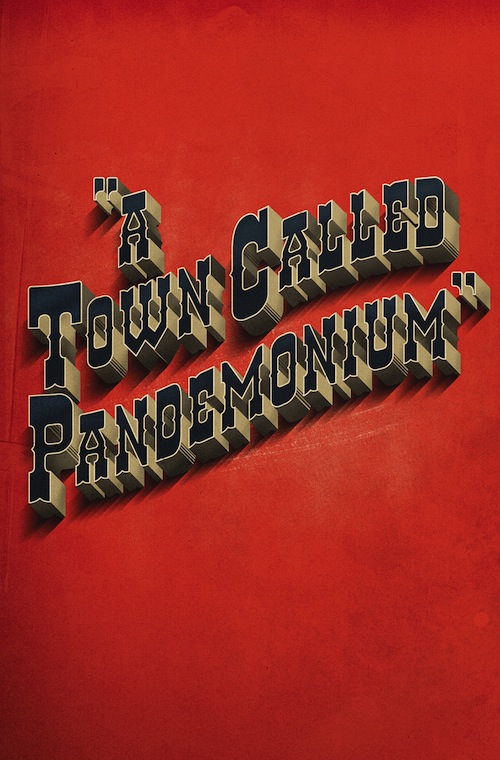
A Town Called Pandemonium, edited by Anne C. Perry and Jared Shurin – reviewed by Stephen Theaker

A Town Called Pandemonium (Jurassic London, ebook, 3576ll), edited by Anne C. Perry and Jared Shurin (of Pornokitsch fame) is a shared world anthology along the lines of Thieves’ World and Wild Cards. It’s odd now to think how exciting those books were when they first appeared, that excitement having been long-buried under inferior instalments and imitations. Thankfully, the stories in this book aren’t overburdened with continuity, and all would work perfectly well outside the context of the book; this is a collection of short stories rather than a mosaic novel. Set in and around the Wild West town of Pandemonium, they are roughly arranged in chronological order, and most feature an element of fantasy.

Friday, 18 January 2013

The Hobbit – reviewed by Douglas J. Ogurek

Before Frodo Baggins and other members of the Fellowship of the Ring undertook the journey that made cinematic epic fantasy cool (and brought it to the Oscars), Frodo’s uncle Bilbo had an adventure of his own. It is this adventure that comes to life in The Hobbit: An Unexpected Journey (directed by Peter Jackson). Although it was published nearly twenty years before his Lord of the Rings (LOTR) trilogy, J.R.R. Tolkien’s The Hobbit comes to the 21st century theatregoer as a prequel.

Thursday, 17 January 2013

My Top Fifteen Reads of the Last Thirteen Months by John Greenwood

I realise I haven't been all that active on the Theaker's blog recently, so I thought I would take a break from accumulating rejection slips and put together this very rough round-up of some of the better books that happened to drift through my transom over the past year and a bit.

1. "The Weird: A Compendium of Strange and Dark Stories" edited by Ann and Jeff Vandermeer

I'm less than halfway through, but at over a thousand pages of weird short stories, I think I've done pretty well. I've discovered some of the most interesting writers through this anthology: Algernon Blackwood, Margaret Irwin, Hagiwara Sakutaro, Leonara Carrington, William Sansom, Shirley Jackson. Authors I would have never come across in my normal reading habits. Many of these writers have been translated for the first time for this volume. I enjoyed reacquainting myself with some favourite stories (Borges's "The Aleph" and Kafka's "In the Penal Colony") and confirmed to myself how much I have grown to dislike the writing of H.P. Lovecraft (such fussiness, so much needless verbiage disguising his unique ideas). But above all, Bruno Schulz's "Sanatorium under the Sign of the Hourglass", Robert Aickman's "The Hospice" and Thomas Ligotti's "The Town Manager" were some of my most stimulating reading experiences for years, and have led me to reconsider my attitude towards what is possible in fiction. All three have led me to explore these writers further.


2. "God is Not Great" by Christopher Hitchens

Sometimes the choir need to be preached to, and there are few more entertaining preachers than Hitchens in his stride. There were too many favourite moments to mention, but in particular I recall his repeated insistence on religion as a medieval mindset. He points up the absurdity of taking at face value the metaphysical gropings of pre-scientific tribes engaged in vicious local political struggles. He introduced me to the useful and neat word "discrepant" too.


3. "Darwin's Dangerous Idea" by Daniel C. Dennett

Dennett is my intellectual hero, and on the subject of religion he is a wittier and more discriminating a thinker than Dawkins (which is saying something). "Breaking the Spell' and "Consciousness Explained" have influenced my thinking hugely. One of the most difficult books I have managed to get to the end of, and there were still some chapters I didn't feel I understood fully. If only I had time to reread it! I'm now on the lookout for "Freedom Evolves".


4. "Mr Norris Changes Trains" by Christopher Isherwood

Extremely amusing novel about a charming, bumbling, entirely venal English con-man in Berlin in the thirties. I was recommended this on the strength of my love of Evelyn Waugh's books. They have their similarities, but Isherwood (or his narrator, also called Chistopher Isherwood) seems totally un-judgmental.

5. "Goodbye to Berlin" by Christopher Isherwood

More of the same, wonderfully funny. Less of a novel than a series of sketches.


6. "Everything Ravaged, Everything Burned" by Wells Tower

I picked this up in a charity shop in Brighton just before Fantasycon, purely on the strength of the title of the book, never having heard of the author. I loved this from start to finish. Such vigour, such inventive language, such harsh wit. And this is his first collection of stories. Apparently he's been in McSweeney's, The New Yorker and elsewhere. He doesn't do the internet. He's working on a novel, it's rumoured. That's all there is to know about him. All but one of these stories are about modern Americans making squalid catastrophes of their lives. The title story is a Viking raid told in a modern American vernacular, which shouldn't work, but does. It's a little depressing to measure just how far I am from being able to write anything like as good as this.

7. "Runaway" by Alice Munro

8. "No's Knife: Collected Shorter Prose 1945-1966" by Samuel Beckett

"Impotence and incompetence" as Beckett once said, were his central concerns. In a moment of madness last year I donated most of my Beckett novels to charity. Now I am trying to buy them all back. He's such a funny writer, and his humour was my way into his writing, which can sometimes seem forbidding, all those pages of dense text without even a paragraph break. "The Expelled" is such a funny story, which is not to belittle it. I have started to wonder whether I have ever really loved a book that was not, in some way, a comedy. All my favourite novelists: Flann O'Brien, Beckett, Waugh, Proust, Sterne, Austen, Eliot, etc., all refuse to take themselves or their worlds and characters entirely seriously. It was instructive too to come across the first of the "Texts for Nothing", first introduced to me by a sympathetic English literature teacher when I can have been no older than 14. I remembered it very differently. I had a very strong visual image of the narrator, trapped in a peat bog on a moor, but I think some of these details were imagined by me rather than given in the text.


9. "Amsterdam Stories" by Nescio

Nescio was a Dutch writer, beloved by his countrymen but little known outside Holland (at least little known by me!). He wrote under a pseudonym in the period just before the First World War (Nescio is Latin for "I don't know"), little stories about a group of young, idealistic, penniless artists and intellectuals in Amsterdam. Then he joined the establishment, ran a commercial export company, and wrote nothing for twenty odd years until the Nazis occupied Holland, when he wrote one or two more stories, rather elegiac. "The Freeloader" was one of my favourite stories of last year. I think the New York Review of Books Classics edition is the only English translation available - they have a very interesting list which I am keen to explore further.

10. "The Unsettled Dust" by Robert Aickman

Having discovered Aickman in "The Weird" (and heard Jeremy Dyson's documentary about him on Radio 4), I was extremely pleased to get two volumes of his stories (from the Faber Finds reprints series) for Christmas presents. They are not very carefully edited, I have to say. Question marks in square brackets pop up in odd places where they don't belong, and in one story a child is called Agnes, then changes to Agnew part way through. I don't think these have been proofread by Faber. But the stories themselves are startling and odd and frightening, and yes, funny sometimes too. From this collection I was most struck by "Ravissante", in which a rather snobbish English artist is debauched by the elderly French widow of one of his artistic heroes. There's a hysterical moment in which the narrator sees a black poodle come into the room, and afterwards cannot be sure that what he saw might actually have been a spider. "The Next Glade" is also fascinating as an exploration of madness. There is something about Aickman's typical protagonist that both attracts and repulses me: the sort of competent, buttoned-down, salaried Englishman who was just old enough to have lived through the sixties and missed it all. In most of these stories Aickman puts these men into situations where they begin to unravel.


11. "The Man in My Basement" by Walter Mosley

12. "The Beast in the Jungle" by Henry James

13. "The Sense of an Ending" by Julian Barnes

14. "Out of Sheer Rage" by Geoff Dyer

An amusing account of Dyer's utterly dilatory and hopeless attempts to discipline himself into writing a book about D.H. Lawrence. By the end, however, it began to feel like there was a trick to writing this sort of thing, a trick that could be learned, which is never a good thing for a reader to discover.


15. "Teatro Grottesco" by Thomas Ligotti

Probably, along with the Aickman, my most keenly anticipated read of the year, and so hardly surprising that I was partially disappointed. I still think "The Town Manager" is the best story in this collection, partly because it is so funny, and almost perfect in its self-contained, demented universe. "Gas Station Carnivals" and "The Clown Puppet" were also very memorable. In fact, I enjoyed them all, but I have begun to enjoy the online character of Thomas Ligotti even more, which I see as a fictional persona created and elaborated for various email interviews. In one interview he mentioned that he'd just re-read the whole of E.M. Cioran's oeuvre. Having once encountered the Romanian philosopher's works many years ago, this made me laugh out loud. To read Cioran was absurd enough, but to read him again...