Monday, 16 September 2024

Weird Fiction Old, New, and In-Between IV: Detecting the World-Without-Us – Rafe McGregor


The fourth of six blog posts exploring the literary and philosophical significance of the weird tale, the occult detective story, and the ecological weird. The series suggests that the three genres of weird fiction dramatize humanity’s cognitive and evolutionary insignificance by first exploring the limitations of language, then the inaccessibility of the world, and finally the alienation within ourselves. This post introduces the world-without-us.


Search and Solve

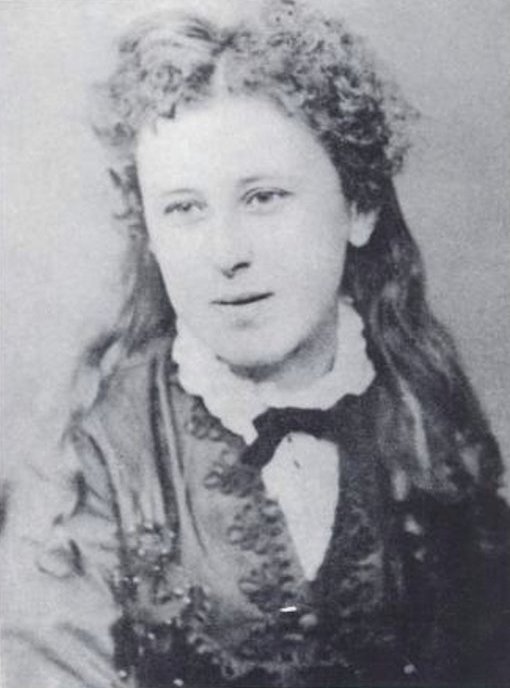
In part III, I defined occult detective fiction as subgenre of weird fiction and suggested that the easiest way to understand it was as stories that place a detective character in a supernatural setting. The detective can be identical to a crime fiction detective, such as Detective John Hobbes (played by Denzel Washington) in Gregory Hoblit’s Fallen, or a crime fiction detective with esoteric knowledge, heightened sensitivity to the supernatural, or both, such as Sarah Monette’s (b.1974 and also writes under the penname Katherine Addison, pictured) Kyle Murchison Booth. The detective may have some supernatural powers himself, such as Mike Carey’s Felix Castor, or be a supernatural being, such as Cassandra Khaw’s John Persons. The setting can similarly be almost – but never actually – identical to the real world, as in Mark Valentine and John Howard’s Connoisseur, or one in which the illusion of the everyday conceals a supernatural reality, as in ABC and Showtime’s Twin Peaks (1990-2017). Alternatively, the setting can be one in which the supernatural is a ubiquitous to the real world, as in David Tallerman’s Detective Fièvre, or a different world entirely, itself a speculative fiction, as in Simon Kurt Unsworth’s Hell in his Thomas Fool series. The combination of a more or less realistic detective with a less or more supernatural setting provides the subgenre with its great variety, from Kat Richardson’s Greywalker (2006-2022) to the Millers’ Philosopher Rex (2010) to Fox’s Sleepy Hollow (2013-2017) to Brian Taylor’s Hellboy: The Crooked Man (2024). Regardless of the variations in detective protagonist and occult world employed by authors, studios, and directors, occult detective stories usually follow the plot structure associated with detective fiction, which involves that protagonist either searching for a murderer or searching for a missing person (one of the reasons Monette’s Kyle Murchison Booth stories are so striking is that she rarely deploys either).

In explaining the difficulty of creating compelling occult detective fiction in part III, I noted that detective fiction stages the tension between the sequence of events that underpin the narrative and the story that we read or watch. Cultural critic Fredric Jameson (b.1934) takes this tension further, describing the structure of detective stories in terms of two complementary formal devices: the first, which he refers to as temporal or objective, is the solution to the murder or disappearance; the second, which he refers to as spatial or subjective, is the search itself. For Jameson, the search is more significant than the solution and is the focal point for authors because they need to delay the solution as long as plausibly possible (otherwise all murder mysteries would be short stories or television episodes). In combining sequence of events and story, solution and search, the creators of occult detective fiction have a little more flexibility than their crime fiction counterparts and the protagonist-driven-plot can take one of three forms. Detectives are standardly employed to investigate someone else, which is also true of occult detectives. In Paul Crilley’s Poison City (2016), for example, Lieutenant Gideon Tau of the South African Police Service’s Delphic Division is called to investigate the murder of a ramanga, a low-level vampire. The first variation is two detectives investigating one another, which is not necessarily restricted to the work of the occult detective, but easier to achieve with an occult element. In the first season of Amazon Prime Video’s Carnival Row (2019), Inspector Rycroft Philostrate (played by Orlando Bloom) and Piety Breakspear (played by Indira Varma), the Chancellor’s wife, investigate a murder and missing person’s case respectively. Unbeknown to one another, Breakspear is the murderer Philostrate is seeking and Philostrate the missing person Breakspear is seeking (‘missing’ because of his identity as the Chancellor’s natural son). The second variation is the detective investigating herself, a paradox which is almost impossible to represent without an occult element. Alan Parker’s Angel Heart (1987) is a rare and rich success: private investigator Harry Angel (played by Mickey Rourke) is hired to find a missing person, only to discover that he himself is that person (though the plot is considerably more complex, the starting point is that Angel has amnesia following a war injury).


Horror of Philosophy

If the occult detective story stages a series of tensions – rationality and extra rationality, sequence and story, solution and search – but is also, in virtue of being first and foremost a weird tale, essentially rather than accidentally philosophical, the obvious question is the purpose to which all of these carefully curated tensions are put. My definition of weird fiction in part II and, by extension, of occult detective fiction in part III, was that it typically foregrounds the difference between the world as we think it is and the world as it actually is. Occult detective fiction explores this difference in its search and grapples with what philosopher Eugene Thacker (year of birth unavailable, but appointed to his first academic position in 2000, pictured) calls the world-without-us in the Horror of Philosophy, a trilogy of short nonfiction. His overarching aim is to first introduce the concept of the world-without-us and then demonstrate that supernatural horror is better equipped to explore that concept than traditional philosophy. As such, In the Dust of This Planet (2011) is primarily focused on conceptualising the world-without-us, which is an articulation of human limitations and contrasted with two related concepts, the world-for-us and the world-in-itself. Starry Speculative Corpse (2014) focuses on reading works of philosophy as if they were horror fiction, which reveals philosophy as a self-defeating activity, undermining its own foundations and paralysing its own thinking. Tentacles Longer Than Night (2015) reverses direction, focusing on reading horror fiction as if it was philosophy. Thacker refines his concern with supernatural horror to the cosmic horror that H.P. Lovecraft (1890-1937, pictured) popularised, analysing his apparent futilitarianism to identify the indifferentism at the core of his weird tales. Indifferentism provides the best possible approximation and appropriation of the world-without-us and horror thus succeeds where philosophy fails.

The best way to approach the world-without-us, which will also be of use in explaining Jacques Lacan’s metapsychology in part VI, is to start with philosopher Immanuel Kant’s (1724-1804) transcendental idealism. Kant differentiates between appearances on the one hand and things in themselves on the other. Appearances constitute subjective reality (the reality of the perceiver) and things in themselves objective reality. Transcendental idealism is an epistemological position maintaining that humans only ever gain access to the phenomenal world of appearances (the world of human experience) and that the noumenal world (the world as it is) remains necessarily inaccessible. What is important to recognise is that Kant’s epistemology is neither pessimistic nor nihilistic. The technological advances made by humanity evince a significant overlap between the phenomenal and noumenal worlds (much like that mentioned in part II), but no scientist (or priest or artist) can make a claim to truth beyond the phenomenal. Thacker begins with the world-for-us, abbreviated to World, which is ‘the world that we, as human beings, interpret and give meaning to, the world that we relate to or feel alienated from, the world that we are at once a part of and that is also separate from the human.’ When the World ‘resists, or ignores our attempts to mold it into the world-for-us’, we conceive of it as the world-in-itself or Earth and the parallels between World and phenomena and Earth and noumena are obvious. Like noumena, Earth is a paradoxical concept – because as soon as we conceptualise it, we transform it into the world-for-us.


World, Earth, and Planet

Thacker’s third and most significant concept is the world-without-us, or Planet, an attempt to articulate human limitations while avoiding the paradox of trying to comprehend the Earth from a human perspective (and thus transforming it into World). He describes it as ‘the subtraction of the human from the world.’ The Planet and the Earth are both inaccessible to humanity, but where the Earth coexists with the World, the Planet does not. Thacker’s idea is that the Planet is a way of conceiving of the Earth without collapsing it into the World. What Thacker is not doing is extending Kant’s epistemology from two parts to three, from phenomena and noumena to World, Earth, and Planet. He is, rather, replacing the original dichotomy with a novel one, World and Planet. The Planet is a negative concept – the subtraction of the human – and will remain after the human, although it has also preceded and been contemporaneous to and with the human. In the Anthropocene, the age of humanity, the Planet is a more useful concept than noumena and Thacker describes his taxonomy as conceptualising humanity’s home in an era where global climate change has raised the possibility of our extinction. The overarching thesis of his trilogy is that horror fiction (and weird fiction in particular) provides the best exploration of the world-without-us (or at least a much better one than philosophy does).

Drawing on the work of philosopher Martin Heidegger (1889-1976, mentioned in part I in connection with the unhomely), Jameson regards the tension between the solution and the search in detective fiction as staging, enacting, or dramatizing the rift between World and Earth (Thacker’s terminology is a development of Heidegger’s). I think a good way of understanding the philosophical element of occult detective fiction is as staging, enacting, or dramatizing of the rift between World and Planet. In one sense this is problematic because Thacker’s whole effort in replacing noumena with Planet is directed at articulating the fact that the latter cannot co-exist with the World and can never be apprehended or appropriated by humanity – whether by science, religion, philosophy, or art. On the other hand, approaching occult detective fiction in this way draws attention to its own limits, to the essential incompatibility of the detective as the instrument of reason and the supernatural as defiant of reason. The World does not, in Heidegger’s terms, ground itself on the Planet nor does the Planet jut through the World. Planet is a thingness of things (noumena) that resists assimilation, remains opaque, and can only be grasped as an absence of World. As opposed to the relation between World and Earth, the absence of a relation between World and Planet means that the glimpse of irreconcilability is a glimpse of nothingness, subtraction, and absence. It is this glimpse – of what is essentially rather than accidentally unknown – that fuels a fear more compelling than frightening objects, as Lovecraft was well aware, opening his tour de force, Supernatural Horror in Literature (first published in The Recluse in 1927) with: ‘The oldest and strongest emotion of mankind is fear, and the oldest and strongest kind of fear is fear of the unknown.’


Recommended Reading & Viewing

Fiction

Victor LaValle, The Ballad of Black Tom, Tor.com (2016).

Carnival Row, Season 1, Amazon Prime Video (2019).

Angel Heart, directed by Alan Parker, Tri-Star Pictures (1987).

Nonfiction

Eugene Thacker, In the Dust of this Planet, Zer0 Books (2011).

Rafe McGregor, The Complex Art of Murder, Journal of Aesthetic Education (2022).

Robert H. Waugh, Lovecraft’s Rats and Doyle’s Hound: A Study in Reason and Madness, Lovecraft Annual 7 (2013).

Friday, 13 September 2024

Unholy Land by Lavie Tidhar (Tachyon Publications) | review by Stephen Theaker

This review originally appeared in Interzone #278 (November–December 2018).

Lior Tirosh, an author of pulp detective novels, leaves Berlin and travels home, where he grew up with a famous, militaristic father. His niece has gone missing: she’s a student who was investigating the construction of a great wall around the nation. Home for Tirosh is Palestina, a Jewish homeland established near Uganda, on land offered by the British. In our world, this offer was turned down in the 1900s; in this world, it was accepted, and so the Jews escaped the Holocaust. But this is not a utopia, and a familiar problem remains: how to handle the claims of others to the same land, and maintain security, when the surrounding territory was long since relinquished by the British.

Tuesday, 10 September 2024

Try the New Candy by Aron Beauregard (Maggot Press) | review by Douglas J. Ogurek

Exceptional entertainer assembles grab bag of depravity and butchery that leaves a few minor cavities.

In Aron Beauregard’s “Still Under Construction”, newlyweds with a “ghoulish curiosity” visit The Museum of Death where they encounter repulsed spectators fleeing a theatre showing gruesome footage. Like the strange (and potentially dangerous) proprietor who runs the ghastly museum, Beauregard challenges readers of Try the New Candy to witness his repugnant subject matter without turning away. 

Although this gore-spattered short story collection from one of the hottest names in splatterpunk bursts with innovative concepts, it suffers from mistakes (particularly in the use of commas), strange point of view shifts, and an overreliance on narrative summary. Moreover, Beauregard’s choice of language can be jarring. It seems strange, for instance, that a non-intrusive omniscient narrator would use the word “asshole” to describe that body part. 

However, except for one story involving a debaucherous night club (an oversaturated topic in this subgenre), I found the collection disturbingly entertaining. The material, filled with bleakness and characters both engaging and unlikable, is so enthralling that the above shortcomings fade into the background. The collection shows that there’s a fate far worse than freezing to death in a broken-down car and that we should be cautious about what we download from the internet.

Gore extravaganza “House Sitting with Dad” drills its way into the reader’s mind. The sadistic adolescent protagonist and his drug-addled, chauvinistic father watch a house for the latter’s friend Joyce. The duo soon discovers Joyce is collecting something much less innocuous than dolls. Part of the story’s appeal is the way the first-person narrator nonchalantly describes the extreme violence he enacts on victims for no other purpose than sexual gratification. 

In the titular story, protagonist Stanley is shy and oafish yet dependable to a fault. His overbearing boss Red tells Stanley he will eventually transfer his business to him, but then seductress Candy enters the picture. What happens when lust triumphs over loyalty? Carnage.  

“The Donor” is an ultraviolent piece about a woman who gets artificially inseminated. The supposed father mutilates her, and the baby grows up to be a disabled and hideous man-child. 

The collection even has two tamer stories. “Five O’clock Shadow” is a touching tale about friendship and belonging in which a barber shop regular finally decides to get his beard shaved. In “More Than a Feeling”, a beloved aunt with a special ability senses something negative about a partygoer’s glove. Nevertheless, when one buys a Cannibal Corpse album, that individual probably isn’t looking for ballads.  

The candy sits in your lap, and the show is about to start. Is there a point at which you’re willing to stop? If not, you may end up in boiling water. Douglas J. Ogurek ****

Friday, 6 September 2024

The Invisible Man | review by Stephen Theaker

This review was originally written in March 2020 for a previous iteration of the British Fantasy Society website. See also Douglas Ogurek's previous review of this film for TQF.

It was not so very long ago that many boys and men, when asked to choose a superpower, would without any hint of shame pick invisibility, with the express purpose of denying women and girls the right to privacy and dignity. The last big adaptation of the H.G. Wells novel, Paul Verhoeven's Hollow Man in 2000, leant heavily into this aspect, Kevin Bacon playing a voyeur and a rapist.

This time the invisible man is not naked as he goes about his business and he is not, so far as we can tell, a voyeur. He doesn't sexually assault his victim in the course of the film, though it's established that he has in the past. This is instead a story about coercive control, illustrating how women trapped in such abusive relationships can be driven to actions that seem utterly irrational to society at large.

Monday, 2 September 2024

Weird Fiction Old, New, and In-Between III: The Occult Detective Story – Rafe McGregor

The third of six blog posts exploring the literary and philosophical significance of the weird tale, the occult detective story, and the ecological weird. The series suggests that the three genres of weird fiction dramatize humanity’s cognitive and evolutionary insignificance by first exploring the limitations of language, then the inaccessibility of the world, and finally the alienation within ourselves. This post introduces the occult detective story.


Ghosts and Detectives

In the late nineteenth century, magazine contributors on both sides of the Atlantic began to explore ways in which the relatively new and incredibly popular figure of the private detective could be merged with the much older but still entertaining milieu of the ghost story. One of the progenitors of this exploration was Sheridan Le Fanu (1814-1873), with Dr Martin Hesselius in In a Glass Darkly (1872). The combination of detective protagonist and ghostly setting saw the initial blossoming of a subgenre of ghost-finders, paranormal physicians, and occult psychologists, with notable contributions by: Arthur Machen (1863-1947), with Mr Dyson in ‘The Inmost Light’ (published as The Great God Pan and The Inmost Light in  1894); Elizabeth Thomasina Meade Smith (1844-1914, writing under the penname L.T. Meade) and Eustace Robert Barton (1869-1943, writing under the penname Robert Eustace),  with John Bell in The Master of Mysteries (1898); Kate O’Brien Ryall Prichard (1851-1935, writing under the penname E. Heron) and Hesketh Hesketh-Prichard (1876-1922, writing under the penname H. Heron), with Flaxman Low in ‘The Story of the Spaniards, Hammersmith’ (published in Pearson’s Magazine in 1898); Algernon Blackwood (1869-1951), with Dr John Silence in John Silence (1908); William Hope Hodgson (1877-1918, pictured), with Thomas Carnacki in ‘The Gateway of the Monster’ (published in The Idler in 1910); and Aleister Crowley (1875-1947), with Simon Iff in ‘Big Game’ (published in The International in 1917). The first woman occult detective was probably Ella Mary Scrymsour-Nichol’s (1888-1962, writing as Ella Scrymsour) Sheila Crerar, whose adventures began with ‘The Eyes of Doom’ (published in The Blue Magazine in 1920). The most striking feature of this list is the overlap with the canon of weird fiction. Le Fanu was a precursor to both genres and many of H.P. Lovecraft’s (1890-1937) best-known stories could be described as occult detective fiction (although his protagonists rarely survive sufficiently unscathed for further investigations). Of the five authors I identified as canonical in part I, this leaves only Edward Plunkett (1878-1957, writing under his aristocratic title Lord Dunsany), but several of his Jorkens short stories (the first collection of which, The Travel Tales of Mr. Joseph Jorkens, was published in 1931) combine mystery with fantasy.

The occult detective became a staple of the cheaper weekly and monthly magazines of the Golden Age of the pulp era, particularly Cassell’s Magazine and Weird Tales. As that era came to an end interest in the subgenre waned, being sustained through the nineteen fifties, sixties, and seventies by three main sources: Dennis Wheatley’s (1897-1977) series of eleven novels featuring the Duke De Richleau (published from 1933 to 1970 and including The Devil Rides Out in 1934); the dogged persistence of short story writers such as Seabury Quinn (1889-1969), whose Jules de Grandin appeared in Weird Tales from 1925 (‘The Horror on the Links’) to 1951 (‘The Ring of Bastet’) and were frequently reprinted and collected during the sixties and seventies; and the successful migration from short story to small screen evinced by the popularity of BBC1’s Adam Adamant Lives! (1966-1967), ITV’s Randall and Hopkirk (Deceased) (1969-1971), and ABC’s Kolchak: The Night Stalker (1974-1975). The revival of interest in the occult detective at the end of the twentieth century was heavily influenced by migration to another medium, the graphic novel, specifically the Hellblazer and Hellboy comic series, the first created by Jamie Delano and featuring John Constantine (which began in 1988, pictured) and the second created by Mike Mignola and featuring the eponymous half-demon investigator (which began in 1994). The last decade of the twentieth century saw the subgenre regain some of its mainstream appeal, appearing in novels, television series, and feature films. The most commercially successful of these are likely: Laurell K. Hamilton’s Anita Blake (the series subtitled Vampire Hunter, with thirty novels 1993-2023); the CW’s Supernatural (fifteen seasons 2005-2019); and M. Night Shyamalan’s The Sixth Sense (1999). 

Character and Setting

The essence of occult detective fiction has remained largely unchanged since its initial popularity, the combination of a crime fiction character with a horror fiction setting. This combination creates an immediate tension because ever since Edgar Allan Poe introduced C. Auguste Dupin in ‘The Murders in the Rue Morgue’ (published in Graham’s Magazine in 1841) the detective has been the man or woman of reason, a rational agent who restores the moral and social order following its disruption by harm or crime. Poe referred to all three of Dupin’s cases as ‘tales of ratiocination’ and the same could be said of the investigations of Dupin’s most illustrious descendants, Sherlock Holmes and Hercule Poirot. In contrast, the setting of horror fiction may be more or less like the real world, but there is at least one aspect of that world into which the irrational in the form of the divine, the supernatural, or the paranormal intrudes. One may catch only the briefest of glimpses of it or it may be supervenient on science, but the divine, supernatural, or paranormal is always in excess of human reason, rationality, and ratiocination. One of the advantages of occult detective fiction is that creators can introduce an additional layer of suspense in having the detective investigate both criminal and supernatural cases and Hodgson employed this device with Carnacki very successfully. The world of the occult detective must nonetheless be one in which the supernatural intrudes into the natural in some way, whether or not that intrusion is revealed in every case.

The crucial tension between the rational detective and the extra-rational setting is difficult to master and demands a rigorous internal logic, which may also be more or less revealed in the narrative. There is a special relationship between detective fiction, including occult detective fiction, and narrative. In every narrative there is a real or imaginary sequence of events that takes place in the storyworld. In an autobiography, this sequence of events would begin with the author’s birth or – more commonly – the birth of her parents or grandparents and end shortly before the decision to write the autobiography or with the publisher’s decision to publish the manuscript. In a detective story, the sequence of events begins with the murderer planning the murder or with a person’s decision to disappear and ends with the murderer being identified and usually (but not always) brought to justice or with the missing person found (whether dead or alive). Typically, the story will start after the discovery of a corpse and end before the trial begins. Even within that limited period, however, the represented events will be a selection of all of those that take place in the storyworld. In both documentary and fictional narratives, the narrative is thus a superstructure underpinned by the base of the real or imaginary sequence of events. Detective fiction standardly dramatizes, stages, or thickens the relationship between story and sequence of events by presenting both the story of the crime (the sequence of events) and the story of the investigation (the story itself) together, with the progression of the detective involving her repeating, retracing, or revisiting the progression of the criminal. The tension between the story and the sequence of events is in addition to the tension between the rational detective and extra-rational setting and the combination of the two is, I think, a large part of why occult detective fiction has proved so difficult to master.


Archivists, Musicians, and Priests

I concluded part II by defining weird fiction as philosophical in virtue of presenting or representing a fully-fledged and fleshed-out worldview, generically hybrid in character, and foregrounding the difference between the world as we think it is and the world as it actually is. This definition would include most of the occult detective stories I have mentioned so far and my take on the genre is that it is most accurately categorised as a subgenre of weird fiction rather than a subgenre of either crime or horror fiction. If one is seeking a more specific definition, then there is no need to reinvent what has already been established: occult detective fiction is philosophical in virtue of presenting or representing a fully-fledged and fleshed-out worldview and foregrounding the difference between the world as we think it is and the world as it actually is and featuring a detective protagonist in an apparently supernatural setting. I shall have more to say about the instantiation of the second part of this definition in occult detective as opposed to other weird fiction in part IV. Like the weird tale, the occult detective story is best-suited to shorter formats, such as the short story, novella, graphic novel, and feature film. I include feature film rather than television series because television in the twenty-first century has taken a narrative turn, by which I mean that each season of a series (if not the whole series) tends to tell a single story rather than a different story each episode. One of the great exceptions to this rule of thumb about occult detective fiction is Amazon Prime Video’s Carnival Row (two seasons 2019-2023), specifically the first season, which is vastly superior to the second.

The most exemplary short story series is by Sarah Monette (b.1974 and also writes under the penname Katherine Addison) and features Kyle Murchison Booth, an occult detective who is an archivist at the Samuel Mather Parrington Museum. Booth’s first case, ‘The Wall of Clouds’, was published in 2003 (in Alchemy) and his first ten cases were collected in The Bone Key: The Necromantic Mysteries of Kyle Murchison Booth (2007, with a second edition published in 2011). Seven more short stories and a novella, A Theory of Haunting (2023), have been published since (for a total of eighteen cases), although the stories can be difficult to find online. I mentioned the most accomplished occult detective novella in part II, Victor LaValle’s (b.1972, pictured) The Ballad of Black Tom (2016), a deconstruction of Lovecraft’s less accomplished occult detective story, ‘The Horror at Red Hook’ (published in Weird Tales in 1927). While my graphic novel recommendation is somewhat outré, I trust it will resonate with readers of my generation (particularly those from the UK), Mark Millar and Chris Weston’s all but forgotten Canon Fodder (published in 2000 AD 1993-1995). Like Carnival Row, the first instalment is followed by a disappointing sequel, but the digital versions of both are still available from Rebellion. For a feature film, one can do no better than Alan Parker’s Angel Heart (1987), starring Mickey Rourke, Lisa Bonet, Robert De Niro, and Charlotte Rampling, which is an adaptation of William Hjortsberg’s Falling Angel (1978) and one of the few cinematic adaptations that is unquestionably better than the novel on which it is based.


Recommended Reading

Fiction

William Hope Hodgson, The Casebook of Carnacki – Ghost Finder, Wordsworth Editions (2006).

Sarah Monette, The Bone Key: The Necromantic Mysteries of Kyle Murchison Booth, Prime Books (2011).

Rafe McGregor, The Adventures of Roderick Langham, Theaker’s Paperback Library (2017).

Nonfiction

No comprehensive or authoritative study of occult detective fiction has been published to date and the best sources of information are the editor’s introductions in these three anthologies (I began writing such a study in 2020, during the pandemic, but as soon as I understood what a mammoth task it would be, realised I’d rather spend the time continuing the cases of my own occult detective):

Peter Haining (ed.), Supernatural Sleuths, William Kimber (1986).

Mark Valentine (ed.), The Black Veil and other tales of Supernatural Sleuths, Wordsworth Editions (2008).

Stephen Jones (ed.), Dark Detectives: An Anthology of Supernatural Mysteries, Titan Books (2015).

Friday, 30 August 2024

Zero Bomb by M.T. Hill (Titan Books) | review by Stephen Theaker

This review originally appeared in Interzone #280 (March–April 2019).

At the time of writing we are thirty-eight days away from the date on which Britain will currently, as David Allen Green puts it, leave the European Union "by automatic operation of law". An interesting time, then, to be reading and reviewing a novel that portrays how calamitous and corrosive this could end up being – economically, socially and personally. That my adopted home city of Birmingham gets the worst of things in this book only increased its impact for me.

Tuesday, 27 August 2024

Renfield | review by Douglas J. Ogurek

Action/horror flick sinks its teeth into the contemporary fascination with visceral violence and rips apart cinematic stereotypes.

What do you get when you cross an actor renowned for stagy performances and a classic movie monster typically portrayed with restrained elegance and economy of movement? In the case of Renfield, you get a character who commands your attention. Nicholas Cage’s trademark theatricality spawns a Count Dracula who delights in displaying not just incisors but a mouth full of sharp choppers. He exaggerates his facial expressions, body movements, and vocal style to trounce on our conception of the Dark One. It’s all over the top, and it’s all great.

For nearly a century, the unageing titular character (Nicholas Hoult), inspired by a character of the same name in Bram Stocker’s novel Dracula, has been the count’s “familiar” (aka slave) responsible for corralling victims for the blood-drinking fiend. Now Renfield is attending a therapy group whose members are victims of toxic relationships so he can bring his convalescing boss the bad people he learns about. Alas, what Dracula craves is morally upstanding innocents.

Initially, Renfield appears as a brooding, Tim Burtonesque character. The viewer soon learns, however, that Renfield’s master has endowed him with superhuman strength and reflexes… provided that he eats bugs. This brings us to the film’s second big draw (beyond Cage’s performance): the ultraviolent fight scenes. Renfield doesn’t just throw punches – he tears off arms, cuts people in half, stomps on heads, and uses limbs as weapons. If Renfield does throw a punch, his target’s head explodes. And with all of this comes a torrent of blood. 

By the film’s end, all the kicking, jumping, and throwing starts to grow a bit tedious. Each fight, however, highlights at least one ridiculously violent fatality. In one gloriously unnecessary scene, the screen shifts to an x-ray view to show how Renfield’s attack impacts his target’s organs and bones. 

Another interesting facet of the film is the relationship that the protagonist develops with straightlaced cop Rebecca (Awkwafina). Renfield admires her because she isn’t afraid to die (like he is) and she refuses to let the powers that be corrupt her mission to avenge her father’s death by bringing down the Lobos gang responsible for his death.

Awkwafina commendably avoids the hackneyed female cop, often portrayed as either a know-it-all trying to be cool or a pottymouthed loose cannon trying too hard to be funny. There is no pretension with Rebecca — she tells it how it is while showcasing Awkwafina’s patented dry sense of humour.  

The trailer for Renfield slowly builds up to introducing Cage as the infamous count. Conversely, within the first couple of minutes of the actual film, his whole face, replete with toothy grin, dominates the screen. The contrast pierces the jugular – Nicholas Cage has injected some life into the undead and pulled Count Dracula from the shadows. Douglas J. Ogurek **** 

Friday, 23 August 2024

Secret Passages in a Hillside Town, by Pasi Ilmari Jääskeläinen (Pushkin Press) | review by Stephen Theaker

This review originally appeared in Interzone #277 (September–October 2018).

Inspired in part by Enid Blyton's child adventurers, a Finnish five had adventures of their own in the Tourula district of Jyväskylä, back in the 1970s: Olli, Leo, Riku, Anna and Karri. They had a dog, too, Timi, though no one can remember what happened to him. They caught a burglar and appeared in the newspaper. Decades later, Olli Suominen has gone on to be a reasonably well-off publisher. But he's disaffected with his life, loses a remarkable number of umbrellas, and struggles to sleep because the angles in his house aren't quite right.

Monday, 19 August 2024

Weird Fiction Old, New, and In-Between II: Weirding the World We Know – Rafe McGregor

 The second of six blog posts exploring the literary and philosophical significance of the weird tale, the occult detective story, and the ecological weird. The series suggests that the three genres of weird fiction dramatize humanity’s cognitive and evolutionary insignificance by first exploring the limitations of language, then the inaccessibility of the world, and finally the alienation within ourselves. This post introduces the mismatch between conception and reality.


Weird Tales

I concluded part I by endorsing literary critic S.T. Joshi’s definition of the weird tale as essentially rather than superficially philosophical in virtue of presenting or representing a fully-fledged and fleshed-out worldview and identifying the canon of weird fiction as the work of: Arthur Machen (1863-1947), Algernon Blackwood (1869-1951), William Hope Hodgson (1877-1918), Edward Plunkett (1878-1957, writing under his aristocratic title Lord Dunsany), and H.P. Lovecraft (1890-1937). Joshi’s definition also restricts the weird tale to fiction published within a sixty-year period that begins in 1880 and ends in 1940 and he deals with subsequent publications in The Modern Weird Tale: A Critique of Horror Fiction. The ‘modern’ or ‘new’ weird and its relation to the ‘ecological’ weird will be discussed in part V. Benjamin Noys and Timothy Murphy concur with Joshi’s dating and identify the source of the name of the genre as the pulp magazine Weird Tales. Before introducing this magazine, I want to mention three of Lovecraft’s less-talented contemporaries. Edgar Rice Burroughs (1875-1950, writing under the penname Norman Bean) is best known for Tarzan of the Apes (serialised in The All-Story in 1912), but also authored the John Carter series, which began with Under the Moons of Mars (serialised in The All-Story in 1911). Similarly, Robert E. Howard (1906-1936) is best known for Conan the Barbarian (short stories published in Weird Tales from 1932), but is also the creator of Solomon Kane (short stories published in Weird Tales from 1928). Finally, Fritz Leiber (1910-1992), is best known for Fafhrd and the Gray Mouser (short stories published in Unknown from 1939), but published some outstanding weird fiction, beginning with the collection Night’s Black Agents (1947).

Weird Tales was founded in 1922, during the peak of the pulp era and two years after its famous crime fiction counterpart, Black Mask (which launched the career of Raymond Chandler). Its first issue (pictured) was published in March 1923 and within a decade the magazine was publishing the Lovecraft Mythos, Solomon Kane, Conan, and Seabury Quinn’s Jules de Grandin, an occult detective series that would run to nearly one hundred instalments. The first Lovecraft Mythos story published was ‘The Hound’, in February 1924. Aside from the significance of the magazine in naming and consolidating the type of narrative we now refer to as the weird tale, it is also significant in indicating the need for a supplement to Joshi’s definition. Weird fiction not only explores, expresses, and experiments with the worldviews of its authors, but is also essentially rather than superficially hybrid in character, crossing, slipping, and bending between and among genres. The Carter, Kane, and Fafhrd and Mouser series are all weird fiction, but Fredric Jameson regards Carter as the origin of American science fiction, Fafhrd and the Mouser are (along with Conan) acknowledged as inaugurating fantasy fiction, and Kane is as much history as fantasy. The pulp era died a slow death after the Second World War, initiated by first a wartime paper shortage and then the rise of television as the dominant medium of light entertainment in the nineteen fifties. Weird Tales published its final issue in September 1954.

In-Between Old and New

The five decades between the folding of Weird Tales and the coining of the label ‘New Weird’ (by John M. Harrison in 2002 or 2003) are complex when it comes to the development of weird fiction and I make no pretence to insider knowledge or even of being able to produce convincing evidence of my take on this period. That take has two key features: the influence of August Derleth and a second division of the genre into US and UK traditions. Derleth was a pulp fiction author and correspondent of Lovecraft who, along with Donald Wandrei (another pulp fiction author and Lovecraft correspondent), founded Arkham House in 1939 in order to publish Lovecraft’s work posthumously and self-publish their own work. Joshi is particularly critical of Derleth, who invented the ‘Cthulhu Mythos’, and his misrepresentation of Lovecraft’s work and worldview. I am once again largely in agreement, but we must also accept that if Derleth had not appropriated Lovecraft’s legacy he would be as unknown now as, for example, Quinn is. While Lovecraft imitators thrived on both sides of the Atlantic following the Weird Tales era, I think it helpful to identify two traditions of canonical weird fiction, understood as having unquestionable literary merit (however one chooses to define that quality).

In the UK, a tradition influenced less by Lovecraft and more by Machen and Blackwood – as well as Walter de la Mare – emerged in the work of John William Wall (1910-1989, writing under the penname Sarban) and Robert Aickman (1914-1981). Wall published very little and is best known for his novella, The Sound of His Horn (1952). Aickman is best known for the forty-eight stories he referred to as ‘strange’ tales, the first three of which were published in We Are for the Dark: Six Ghost Stories (1951, the other three in the collection were by the novelist Elizabeth Jane Howard). To these two, I shall add J.G. Ballard (1930-2009). Although Ballard, to whom I shall return in part V, is usually considered to be a literary rather than popular fiction author (a dichotomy I regard as not only erroneous, but malicious), he began his career as a science fiction writer, part of the ‘New Wave’ of experimental and political science fiction in the nineteen sixties and seventies. The novella The Wind from Nowhere (1961) and the collection The Terminal Beach (1964) are exemplary weird fiction. 

In the US, a tradition more obviously influenced by Lovecraft and either explicitly part of his mythos or self-consciously an extension or revision thereof emerged in the work of Thomas Ligotti (b.1953), Caitlín R. Kiernan (b.1964, pictured), and Victor LaValle (b.1972). Ligotti has published relatively little and I return to his work in the next section. In contrast, Kiernan has published a vast oeuvre since 1995, including more than ten novels and over two hundred and fifty works of shorter fiction. Their Tinfoil Dossier (2017-2020) trilogy of novellas is my favourite at the time of writing, but The Drowning Girl: A Memoir (2012) demonstrates an all-too-rare ability to extend the weird tale to novel length without stretching either quality or credibility. LaValle has published a dozen or so novels, novellas, graphic novels, and short story collections since 1999. His novella, The Ballad of Black Tom (2016), is a magnificent reimagining of Lovecraft’s ‘The Horror at Red Hook’ (first published in Weird Tales in January 1927) and, in my opinion, far superior to Matt Ruff’s similarly-themed Lovecraft Country, published in the same year.


Conception and Reality

In my review of Songs of a Dead Dreamer and Grimscribe (2016), I described Ligotti as exploring, expressing, and experimenting with a worldview that could be called deconstructive, after the French philosopher Jacques Derrida (1930-2004, pictured). There has been a great deal of nonsense written about (and some would say by) Derrida, who developed the approach in the nineteen sixties and was a global public intellectual by the time of his death, but the basic idea behind deconstruction is simple: human beings (subjective experience) can only gain access to the real world (objective reality) through concepts, which are articulated through language. The worry, which stems from curiosities such as the fact that languages not only use different words for the same concept, but have different concepts that cannot be translated in their entirety, is that no human language and therefore no human conception maps perfectly onto reality. There is obviously plenty of overlap – otherwise we would not be able to build bridges, cure diseases, invent the internet, and fly to the moon – but there is no identity relation between concept and reality. This insight about the limitations of language, the way in which words fail to make the concrete and abstract objects they identify present, originated with the Swiss linguist Ferdinand de Saussure (1857-1913). Derrida’s innovation was to demonstrate that the system of signs constituting a particular language (such as Modern English) is unstable because that system is inconsistent over both space (such as the differences between contemporary UK and US English) and time (such as the difference between Shakespeare’s early Modern English and contemporary Modern English in the UK).

The upshot of this is that there is a difference between the world as we think it is and the world as it really is, where aspects of the latter remain permanently inaccessible to us. I shall have more to say about this inaccessibility in part IV. In consequence of language failing to provide direct access to reality, the world in which we live is co-constructed by human intelligibility and inaccessible reality, a dichotomy very roughly equivalent to the distinction between culture and nature. This space between the world we create for ourselves and the real world is both frightening and liberating. If much more of our reality than commonsense suggests is a question of culture rather than nature, then much more of our reality can be changed for the better. I emphasised this emancipatory potential in my own introduction to literary theory, but Ligotti focuses on the fear and disgust the mismatch between conception and reality evokes. He scrapes away at the difference between subjective perception and objective reality to make it larger and more frightening and this is the worldview that emerges in Songs of a Dead Dreamer and Grimscribe, My Work Is Not Yet Done: Three Tales of Corporate Horror (2002), Teatro Grottesco (2006), The Spectral Link (2014), and his other work. Ligotti’s short stories are not only the most disturbing I have ever read, but distil and hone something was present to a lesser extent in Machen, Blackwood, Hodgson, Plunkett, and Lovecraft. With Ligotti in mind, I propose a further amendment to define weird fiction as: philosophical in virtue of presenting or representing a fully-fledged and fleshed-out worldview, generically hybrid in character, and foregrounding the difference between the world as we think it is and the world as it actually is. This latter quality is precisely what the references to the uncanny or unhomely mentioned in part I are trying to convey, but ‘weird’ seems a much more accurate description to me.


Recommended Reading 

Fiction

Thomas Ligotti, Teatro Grottesco, Durtro Press (2006).

Caitlín R. Kiernan, The Drowning Girl: A Memoir, Roc Books (2012).

J.G. Ballard, The Crystal World, Jonathan Cape (1966).

Nonfiction

H.P. Lovecraft, Notes on Writing Weird Fiction, Amateur Correspondent (1937).

Alan Moore, Preface, The Call of Cthulhu and Other Weird Stories, The Folio Society (2017).

Mark Bould & Steven Shaviro (eds.), This is Not a Science Fiction Textbook, Goldsmiths Press (2024).

Friday, 16 August 2024

The Sky Woman by J.D. Moyer (Flame Tree Press) | review by Stephen Theaker

This review originally appeared in Interzone #279 (January–February 2019).

Earth was abandoned long ago, as we learn from a series of interesting and all too plausible essays by Lydia Heliosmith, aged 17, for her Terrestrial Anthropology class. In 2387, the eruption of a supervolcano in the Phlegraean Fields annihilated Italy, Greece, Slovenia and Western Turkey, darkened the skies worldwide, brought the Holocene to an end, and saw the glaciers return, but the population of Earth had been in long-term decline ever since the Corporate Age. Half a million lucky people escaped to the ringstations, while the population of Earth continued to dwindle, from a peak of eleven billion down to ten thousand.

Tuesday, 13 August 2024

Wayward Witch by Zoraida Córdova (Sourcebooks Fire) | review by Douglas J. Ogurek

New powers and age-old struggles: young adult novel embeds real-world message in fantasy setting.

In this third and final instalment in her Brooklyn Brujas series, Zoraida Córdova transposes the typical teen identity struggle onto a fantasy setting. Latina bruja (witch) Rose Mortiz is unhappy at her sixteenth birthday, which is also her Deathday, when her magical powers are bound to her. Rose is also, the author would have us know, a size 18. This detail seems random and unnecessary; rarely does it surface, and arguably, it does not shape Rose’s worldview.

Rose and her long-absent father get transported from Brooklyn to the Kingdom of Adas, on a colourful yet dangerous magical Caribbean island that tends to make people forget who they are. Will Rose remember who she is? 

Rose discovers she’s one of six young Guardians with special powers. There are squabbles among them, but Rose aligns herself with a gender-fluid Guardian. Accompanied by islander siblings Iris and Arco, the Guardians go on a quest to stop a black substance called the Rot from turning rainforests into deserts. If they don’t stop this Rot, it not only destroys Adas but also impacts Rose’s world.

Though Wayward Witch exploits common themes found in young adult literature, the originality of the setting is enough to keep the reader engaged. During her journey, Rose will encounter everything from flowers that eliminate sores and walking mermaids who drink rivers to translucent frogs whose poison causes people to express their fears, but she’ll also discover something even more important: self-confidence via an understanding of her powers and their usefulness. Wayward Witch also endorses cooperation and environmental preservation – these young people want to save the fantasy world, and they eventually work toward that goal together. 

Rose is known as Lady Siphon because of her special power: the ability to hack others’ powers, weaken them, and use those powers against them. Alas, she considers this a substandard power, and the nicknames – hacker, leech, devourer – don’t help. She must learn to accept and control this power, which could translate to any skill a young woman has. 

Iris and Arco, whose father king supposedly seized the throne from his corrupt father, offer a diverting side story. Though Rose has a crush on the latter (an attractive horned scribe), it’s Iris, with her freckles, pink hair, pointed ears, and eyes like pink jewels, who’s the more absorbing sibling. Initially, Iris appears harsh, but Rose gradually discovers more about the warrior princess and why she seems so angry at her father and brother. Douglas J. Ogurek ***

Friday, 9 August 2024

American Gods, Vol. 3: The Moment of the Storm, by Neil Gaiman, P. Craig Russell and Scott Hampton (Headline) | review by Stephen Theaker

This review was originally written in September 2020 for a previous iteration of the British Fantasy Society website, and then appeared in TQF69 (April 2021).

The third in a series of graphic novels adapting Neil Gaiman’s novel American Gods. An old god has been murdered. Shadow has been invited to meet the new gods at the putative centre of the USA, to take possession of the body. Once that is done, he will serve a vigil, tied to a tree next to the body, for nine days and nine nights without water. Meanwhile, the old gods and the new are massing for battle, to fight over a country that hardly cares about any of them.

Monday, 5 August 2024

Weird Fiction Old, New, and In-Between I: The Weird Tale – Rafe McGregor

The first of six blog posts exploring the literary and philosophical significance of the weird tale, the occult detective story, and the ecological weird. The series suggests that the three genres of weird fiction dramatize humanity’s cognitive and evolutionary insignificance by framing first the limitations of language, then the inaccessibility of the world, and finally the alienation within ourselves. This post introduces the weird tale.


Wyrd, Weyrd, Weird

‘Weyrd’ came to Middle English in the fifteenth century from the Old Norse urðr via the Anglo-Saxon wurd and Old English ‘wyrd’. Its meaning in the ancient languages was twofold, denoting both personal destiny and the personification of personal destiny in the three deities that tended Yggdrasil (the Norse tree of life), who were known as the Norns. A thinly-disguised version of the Norns appears in Shakespeare’s Macbeth (first performed in 1606), where they are called the ‘weyrd’ or ‘weyward’ sisters, i.e. witches (like his contemporaries, Shakespeare had little interest in consistent spelling, including the writing of his own name). The Oxford English Dictionary identifies four distinct but related meanings of ‘weird’ in Modern English:

1.     Having or claiming to have the power to control the fate or the destiny of human beings.

2.     Suggestive of unearthly character or strangeness that is unaccountable or uncomfortable.

3.     Having a strange or unusual appearance.

4.     Out of the ordinary, odd, fantastic.

We can summarise these by conceiving of ‘the weird’ as supernatural rather than natural and uncommon rather than common, but this isn’t particularly helpful when it comes to identifying a category or genre of fiction. Almost all speculative fiction, from Mary Shelley’s Frankenstein; or, The Modern Prometheus (1818) to Denis Villeneuve’s Dune series (2021, 2024), could be described as supernatural and/or uncommon.

A popular route out of this impasse is to identify the weird with the uncanny. Writing for The New Yorker, Joshua Rothman compares King, Lovecraft, and Kafka: ‘Still, when you’re in the presence of the genuine, uncanny article, you know. Stephen King is tremendously imaginative, but H.P. Lovecraft is weird; Kafka is probably the ultimate weird writer.’ The concept of the uncanny as it is commonly used today, particularly with respect to literary criticism, is a translation of Sigmund Freud’s Das Unheimliche, which was introduced in an essay published in 1919. Directly translated, ‘unheimlich’ means ‘not from the home’ and some critics prefer to use the more direct ‘unhomely’. In Freud’s essay, the uncanny is the return of the repressed and he explains it by means of E.T.A. Hoffmann’s short story, ‘The Sandman’ (1817), and Otto Rank’s The Double (published in 1925, but written in 1914), a psychoanalytic exploration of the doppelgänger. The core of Freud’s conception of the unhomely is that something can be simultaneously familiar and alien. In his authoritative The Uncanny (2003), Nicholas Royle identifies Martin Heidegger as providing the most intense philosophical exploration of the concept. The very premise of Heidegger’s magnum opus, Being and Time (1927), is that what we take to be ordinary is in fact extra-ordinary and uncanny. Dasein (which can be translated as ‘being-here’ or, to use less abstruse terminology, ‘agency’ or ‘selfhood’) is fundamentally ‘not-at-home’ in the world and Dasein itself is thus uncanny, in consequence of which we experience Angst (anxiety). Like China Miéville and Mark Fisher, however, I don’t think that the uncanny gives us the answer to what weird fiction is.


Romanticism to Modernism

Unlike Miéville, I do think that the origins of weird fiction can be found in Gothic Romanticism. In medieval art, Gothic style was distinguished from Classical style by its abandonment of restraint and subtlety, deploying caricature and exaggeration to evoke strong emotions and created with the intention of expressing the artist’s emotion rather than representing the reality in which the artist lived. As an artistic movement, the Gothic survived the transition from the medieval to the modern in the form of architecture, specifically the Gothic Revival or Neo-Gothic that became popular in the seventeenth century. The Gothic focus on emotion, expression, and evocation meant that interest was revived once again with the development of Romanticism a century later. The Romantic movement elevated the significance of emotion, expression, and individualism and prioritised the natural over the industrial and the medieval over the modern. Unsurprisingly, the Romantic movement saw the development of the English novel from an experimental to an established art form and Horace Walpole’s The Castle of Otranto (1764) is regarded as the first work of Gothic fiction. The genre reached its apotheosis with Shelley’s Frankenstein which, in turn, influenced two distinct sets of nineteenth century precursors to weird fiction, one on each side of the Atlantic. I should mention at this point that this series will focus exclusively on the Anglophone weird, in consequence of the combination of my own ignominious monolingualism, the consolidation of the genre in America’s pulp magazines in the first half of the twentieth century, and the continued dominance of English as the preferred language of its authors. This restriction means that I exclude at least one exemplary author of weird fiction, Franz Kafka (1883-1924). As one of the leading lights of Modernist literature, Kafka is rarely linked to pulp, popular, or genre fiction, but I agree completely with Rothman’s characterisation.

In the US, the crucial link between Gothic Romanticism and weird fiction is, of course, Edgar Allan Poe (1809-1849, pictured). Poe was one of the first masters of the short story and I regard his ‘The Murders in the Rue Morgue’ (published in Graham’s Magazine in 1841) as the origin of both crime fiction and weird fiction. Poe was succeeded by Ambrose Bierce (1842-c.1914), Madeline Yale Wynne (1847-1918), and Robert W. Chambers (1865-1933). The tradition in the UK (actually Ireland, which was part of the UK at the time) emerged with the work of Sheridan Le Fanu (1814-1873), who retains a reputation as one of the greatest ghost story writers in English. Le Fanu was succeeded by Violet Paget (1854-1933, writing under the penname Vernon Lee, pictured), Conan Doyle (1859-1930), and M.R. James (1862-1936). Doyle is often underrated as a writer of horror and I have attempted to redress this imbalance in The Conan Doyle Weirdbook (2012). Ramsey Campbell claims that H.P. Lovecraft (1890-1937) united and advanced the traditions in which Poe and Le Fanu were working and Lovecraft acknowledged his debt to both traditions in his literary criticism. Campbell regards Lovecraft’s Mythos (which he prefers to call the Lovecraft rather than Cthulhu Mythos) as evidence of his lifelong attempt to perfect the weird tale, which involved an experimentation with prose comparable to his more lauded contemporaries in Modernist literature, such as Virginia Woolf, James Joyce, and Kafka. If not a part of Modernism, the weird tale is, at the very least, an epiphenomenon of it.


Weird Worldviews

I still haven’t answered the question of what weird fiction is or what it was Lovecraft spent his life trying to perfect. There was little critical or academic interest in the weird until the turn of the century and that interest is largely the result of the efforts of literary critic S.T. Joshi, who spent the last decade of the twentieth century pioneering the field of weird fiction criticism. In 1990, he published The Weird Tale, which was the first of his many monographs on the genre and remains the most authoritative critical study published to date. Joshi identifies the weird tale as a retrospective category of speculative fiction that was published from 1880 to 1940 and is essentially rather than superficially philosophical in virtue of presenting or representing a fully-fledged and fleshed-out worldview. Although alternative definitions of the weird in terms of the sublime, the uncanny, and the disgusting have been proposed, Joshi’s remains the most compelling. Lovecraft was a prolific – perhaps even compulsive – letter writer and defined his own oeuvre as cosmic horror, in which ‘common human laws and interests are emotions that have no validity or significance in the vast cosmos-at-large’. What distinguishes Lovecraft from his contemporaries, such as Algernon Blackwood (1869-1951, pictured) and Edward Plunkett (1878-1957, writing under his aristocratic title Lord Dunsany), is thus the absence of the supernatural. Lovecraft’s monsters are not werewolves, vampires, or ghosts, but aliens (although humanity is unable to distinguish the two). In his out-of-print biography of Lovecraft, L. Spraque de Camp referred to the worldview on which Joshi places so much emphasis as ‘futilitarianism’. Lovecraft denied that he was a pessimist in another of his letters: ‘I am not a pessimist but an indifferentist – that is, I don’t make the mistake of thinking that the resultant of the natural forces surrounding and governing organic life will have any connexion with the wishes or tastes of any part of that organic life-process.’

With the exception of James, Joshi argues that each of the six exemplars of the weird tale – Bierce, James, Arthur Machen (1863-1947), Blackwood, Plunkett, and Lovecraft – had their own worldview, which was explored, expressed, and experimented with in their weird tales. I have already suggested that Bierce and James are more accurately considered as precursors to the weird and I think Joshi errs in omitting William Hope Hodgson (1877-1918) from his list. My adjustment thus presents the canonical weird tale as being the work of: Machen, Plunkett, Blackwood, Hodgson, and Lovecraft. Although the prototypical weird tale and the genre of weird fiction more generally are almost always associated with Lovecraft above all others, the best weird tale itself is widely acknowledged to be Blackwood’s ‘The Willows’, which was first published in his collection of short stories, The Listener and Other Stories (1907, Alfred A. Knopf). I came to Lovecraft much later than most – in my thirties – and have read his work in three cycles in the last two decades. In the first, I was amazed, enthralled, and even shocked by his singularity, innovativeness, and complexity. My second reading was much more critical, identifying flaws in both his form (structure and dialogue) and content (pathological racism and casual sexism) and wondering how and why he remains so popular. More recently, I’ve come to see him as a genius for all his moral and artistic flaws, a literary equivalent of philosopher Friedrich Nietzsche: two awkward, unhappy, and rather unpleasant men whose talent was unrecognised while they were alive, but whose posthumous influence is too great to calculate with any accuracy.


Recommended Reading

Fiction

Edgar Allan Poe, The Murders in the Rue Morgue, Graham’ s Magazine (1848).

Algernon Blackwood, The Willows, The Listener and Other Stories (1907).

H.P. Lovecraft, The Call of Cthulhu, Weird Tales (1928).

Nonfiction

S.T. Joshi, The Weird Tale, Hippocampus Press (1990).

Kate Marshall, Novels by Aliens: Weird Tales and the Twenty-First Century, The University of Chicago Press (2023).

Michael Dirda, Introduction, Weird Tales, The Folio Society (2024).


Friday, 2 August 2024

Hazards of Time Travel by Joyce Carol Oates (Fourth Estate) | review by Stephen Theaker

This review originally appeared in Interzone #278 (November–December 2018).

Found guilty on seven counts of Treason-Speech and Questioning of Authority, school valedictorian and Patriot Scholar Adriane Strohl has been sentenced to four years in Exile. She counts herself lucky. She could have been deleted, or exiled forever, or her family could have been arrested as collaborators. Instead, she has been sent to the past, to study at the University of Wisconsin. The USA of 1963, with its sexism, secondhand smoking, girdles and no internet, is almost as bad a place to be a clever woman as her twenty-first century, and by implication our present is dystopic too, in so far as it reflects them.