Monday, 10 July 2017

Sherlock, Series 4, by Mark Gatiss and Steven Moffat (BBC One) | review by Rafe McGregor

Like Conan Doyle, who famously tired of his creation, the BBC seem curiously reluctant to represent Sherlock Holmes on the small screen. Compare Sherlock, which began in 2010, with CBS’s Elementary, which began in 2012: the former has a total of thirteen episodes across four seasons (I’ll use the American term to distinguish an individual season from the series as a whole); the latter is, at the time of writing, in its fifth season and will have aired a total of 109 episodes by the time this review is in print. In addition to the British tendency to disguise mini-series as series, writers Mark Gatiss and Steven Moffat seem intent on frustrating our enjoyment of the Benedict Cumberbatch (Holmes) and Martin Freeman (Watson) partnership in a way that Robert Doherty does not with Jonny Lee Miller (Holmes) and Lucy Liu (Watson) in Elementary. Season 1 ended with Holmes and Watson about to blow up, season 2 with Holmes’ faked suicide leaving Watson bereft, and season 3 with Holmes exiled to certain death. Ominously, the final episode of season 4 is called “The Final Problem” and it is telling that Doyle’s story of the same name – his half-hearted attempt to kill off Holmes after 26 episodes – is the only original case to have inspired two of the TV adaptations.

Thursday, 6 July 2017

Spectral, by George Nolfi (Netflix) | review by Stephen Theaker

James Badge Dale (24, The Pacific) here plays Clyne, a character quite similar to the chap he played in the underwatched spy show Rubicon. There he was an extremely intelligent analyst who grew concerned about the patterns he was beginning to see, and he stayed for the most part in his office. Here, on the other hand, he is an extremely intelligent engineer who gets pulled away from his usual work at a DARPA lab to address a problem in the field. There is a civil war in Moldova, at some point in what appears to be the near future, and American peacekeepers on the ground have been seeing things through the special goggles he created: spectral things. And now the things have started to kill, leaving victims flash frozen. Once there, he meets CIA analyst Emily Mortimer and chap in charge Bruce Greenwood, and applies himself to the job. He confirms that whatever they are, they aren’t glitches in his goggles, just in time for a massive surge in their numbers. As the city falls to their attack, Clyne must work with the surviving troops to track the spectrals to their source. This is a really good little film, with an excellent cast, sort of what you might expect the Syfy channel to produce if they weren’t pumping out deliberate rubbish (enjoyable as that can sometimes be). It’s directed very nicely by Nic Mathieu, and could easily have justified itself as a cinema release, although you know that if it had been, bigger stars would probably have been cast, their pay packets requiring the movie to be more of a traditional blockbuster, and it wouldn’t have been the same. It never feels cheap (it feels not unlike a big budget Asian film), the spectrals have a interesting origin, and James Badge Dale makes a very likeable lead. It’s great that the economics of Netflix made a film like this possible, and I hope there’s more of the kind to come. ***

The Drowning Eyes, by Emily Foster (Tor.com) | review by Stephen Theaker

The Windspeakers, weird weather wizards who have their eyes replaced with stones in order to gain control of their powers, have been attacked by the marauding Dragon Ships, and the seas are no longer safe. This means less work for sailors, since no one wants to travel. Chaqal, Tazir and Kodin, who sail on the good ship Giggling Goat, have found a job: Shina, a rich young woman who seems to be on the run from her family. They might be overcharging for their services, but she has secrets of her own, and they are all going to get in much more trouble than expected. Being a fan of short books in general, I like the Tor.com series of ebook novellas, not least for their diversity and for having original artwork on the covers (Cynthia Sheppard provides the art for this one), and this is another fine example. It does feel like more of a novella than a short novel, covering for the main part just one journey, though it is an important one with serious consequences for their passenger. The ebook has a slightly annoying quirk – at least on Kindle, each incidence of italics is followed by a line break – but that wasn’t anywhere near enough to spoil my enjoyment of a very entertaining book about a dashing group of characters. ***

Monday, 3 July 2017

The Mummy | review by Douglas J. Ogurek

Just leave your brain at the door and enjoy it. 

When Tom Cruise takes on a role, no matter what it is, he’s going to put his all into it—his characters are believable. In less capable hands, The Mummy, directed by Alex Kurtzman, could have been lifeless. Instead, we get a likable protagonist who smiles and sprints his way through (as Cruise so often does) a solid action film wrapped in all the creepy-crawlies, monsters, grand displays of destruction, and narrow escapes for which the most entertaining entries in the Mummy canon are known.

The Man in the High Castle, Season 2, by Frank Spotnitz and friends (Amazon Video) | review by Rafe McGregor

Philip K. Dick’s The Man in the High Castle (1962) is one of the most disappointing books I’ve ever read and it’s no spoiler to say that the novel simply doesn’t end. It’s not even as if Dick deliberately withheld closure to fascinate or frustrate his readers, but more a case of found himself in a narrative corner from which he saw no escape, stopped writing, and moved on to the next project. He could have used a disappointing device like that employed by Sarban (the nom de plume of John William Wall) in his similarly dystopian The Sound of His Horn (1952) or declined to publish, but left what I suppose is a rare artefact in itself, an unfinished novel published during an author’s lifetime. What is even more baffling is that it won the Hugo Award for Best Novel in 1962. The work is of course rich in Dick’s trademark complexity, weaving several subplots together and combining literary themes with genre conventions, transporting the reader to a strange and very unpleasant world where the Axis powers were victorious in the Second World War. It was perhaps the careful crafting of this alternative twentieth century that won Dick the award, although that world is not represented with quite as much verisimilitude as the subsequent efforts of Len Deighton in SS-GB (1978) and Robert Harris in Fatherland (1992). I mention the novel in such detail for two reasons: first, as a spoiler alert (alert: Dick spoiled the novel by not finishing it), and second, because the suggestion that there are two different realities in season 1 (that of the story world and the real world revealed in the films of the real world that appear in the story world) was cause for concern that season 2 would follow Dick in failing to explain the very question it had raised.

Monday, 19 June 2017

It Comes at Night | review by Douglas J. Ogurek

Uncertainty and mistrust take the lead in post-apocalyptic realism at its best.

A sickness is on the loose. It kills quickly. Paul, Sarah, son Travis and dog Stanley hide out in an austere home within the woods. Though they’ve seen the toll the disease can take, they have no idea of the extent to which it has affected the world. And it seems like something else could be lurking out there. Then another desperate family (Will, Kim and young son Andrew) enters the home. Everyone hopes for a mutually beneficial relationship. Alas, this is a horror movie.

Tuesday, 13 June 2017

Wonder Woman | review by Douglas J. Ogurek

Resolutely she enters the fray.

Finally, a female has joined the contemporary pantheon of high-profile cinematic superheroes . . . not as a peripheral wisecracking vixen or troubled outcast, but rather as an ass-kicking, yet empathetic lead.

Wonder Woman is tearing up the charts—fourth highest opening weekend for a solo superhero origin film, and the highest-grossing opening weekend for a female-directed (Patty Jenkins) film—with good reason.

Monday, 5 June 2017

Pirates of the Caribbean: Dead Men Tell No Tales | review by Douglas J. Ogurek

Shallow content, deep fun.

Seeing a Pirates of the Caribbean (POTC) film is kind of like spending time at an all-inclusive tropical resort—you don’t have to think, there are lots of drunken antics, and you walk away with a smile on your face. In the series’ fifth instalment, directed by Joachim Rønning and Espen Sandberg, the party continues.

Dead Men Tell No Tales offers no profound life lesson. The bickering young lovers and comic book goal (i.e. find Poseidon’s trident) are shameless echoes of the previous films and the talk of maps and stars grows tedious. However, after indulging in the film’s strengths, the viewer who doesn’t need a serious film to be entertained can brush aside these shortcomings with all the nonchalance of Captain Jack Sparrow (Johnny Depp).

Sparrow at the Crux
Every major player (i.e. Captain Salazar, the British Empire, Royal Navy sailor Henry Turner, horologist (listen for the pirate banter on this one) Carina Smyth, and Captain Barbossa) is intertwined with Jack Sparrow.

Chief protagonist Henry wishes to use Sparrow’s magic compass to lift the curse that has indentured his father Will (Orlando Bloom) to servitude on a ghost ship. Primary antagonist Captain Salazar (aka “Butcher of the Sea”), played superbly by Javier Bardem, wants not only to unleash the curse that renders him and his crew ghosts, but also to kill Sparrow, who he blames for this misfortune. The power-hungry Salazar takes rasping breaths and his hair constantly undulates as if underwater. “Every time that I’ll stamp my sword,” he tells one adversary, “one man of your crew will die.” And Salazar’s ship rears up animal-like before slamming down on its victims.

Action and Eccentricity
The two-and-a-half hour escape that is Dead Men Tell No Tales immerses the viewer in lighthearted entertainment: humour, drama, a bit of horror, special effects, beautiful scenery, an entertaining villain, and that adventurous score. But that’s all on top of the two strengths that have propelled the POTC franchise: over the top action scenes, and the sometimes (physically and mentally) bumbling, sometimes graceful Captain Jack Sparrow.

Among the key action sequences are an escape from a botched robbery, a diverted execution, and, most gloriously absurd, an attempt to outrow a group of zombie sharks and pirate ghosts who run on water. Often, Sparrow’s clumsiness transforms into extraordinary acts of agility. When the film goes slo-mo at key moments, resist the temptation to roll your eyes, and instead just cheer! Yes, a zombie shark jumping over Sparrow and Henry’s rowboat is completely pointless, but it underscores the schoolboy spirit of the entire film.

Jack Sparrow, with his swaying movements and rum-infused, yet snappy commentary, secures his spot among the most engaging characters in the contemporary action-fantasy genre. This time, he seduces a politician’s wife, falls asleep (standing and pantless) while someone talks to him, fights while attached to a board, and asks his crew members to pay a tribute as they’re saving him. And what other character would tell zombie sharks to “shoo” while flapping a hand at them?

Justified Extravagance  
Like all the gems in the POTC treasure chest, Dead Men Tell No Tales recognizes itself for what it is: a high-action, high-special effects film that isn’t overly serious.

Admittedly, I watched this one in a “4DX” theatre replete with moving seats, fog, flashing lights, and sprays of water. But wouldn’t Captain Jack Sparrow applaud such extravagance? With the pirate Sparrow, overboard is the way to go. – Douglas J. Ogurek ****

Tuesday, 30 May 2017

Alien: Covenant | review by Rafe McGregor


Scott forgets female leads and the human species in a strange sequel.

Alien: Covenant is the second in a proposed trilogy of prequels to Ridley Scott’s Alien (1979), following Prometheus (2012), which was also directed by Scott and reviewed for TQF by myself, Howard Watts, and Jacob Edwards. The titles of the prequel trilogy have been selected by the spaceships whose stories they tell and the story of the Covenant is set ten years after the disappearance of the Prometheus. The Covenant is en route to Origae-6, a distant planet designated for human colonisation, and is carrying several thousand settlers and embryos and a small crew, all of whom are in stasis with the exception of the ship’s synthetic, Walter (Michael Fassbender). The ship is caught in a neutrino blast, which kills the captain and prematurely wakens the crew. The captain’s loss proves significant for two reasons: it introduces his widow, Daniels Branson (Katherine Waterston), who will turn out to be the only human character to make full use of her agency, and it places the second in command, Christopher Oram (Billy Crudup), in charge. Oram is not cut out for his unplanned promotion and makes a series of disastrous decisions, beginning with a diversion to investigate a signal that appears to provide evidence of a human presence on a nearby planet. The signal, as anyone who has watched Prometheus will realise, is from Elizabeth Shaw (Noomi Rapace), the sole survivor of the doomed mission to find the origins of human life.

Monday, 15 May 2017

Prometheus | review by Rafe McGregor

Scott sacrifices the superficial to the substantive in disappointing prequel.

Sequels and more recently prequels constitute something of a genre of their own in that the play between similarity and difference is at least as important as the director’s inventiveness and imaginativeness.  Viewers familiar with any one of the Alien quartet expect to see gut-wrenching body horror and a gutsy heroine who overcomes adversity, but will be content with neither a re-run of Kane’s exploding chest nor a mere replication of Ripley.  The demand for resemblance without replication is exacerbated in Prometheus, which is both a prequel to the quartet and a prequel to the remaining pair of prequels in the prequel trilogy.  One of the concerns of the quartet was the opposition of the capitalist imperative to what one might call basic human values or the more charitable of the religious virtues.  Some of the trouble in Alien was caused by the profit motive and all of the trouble in the rest of the series was caused by the military-industrial complex’s interest in capturing a live alien to create yet another weapon of mass destruction.  In this respect, Prometheus takes the series to new heights because the quest around which the narrative revolves, the search for the origin of human life, is completely commercial.  The venture is not only sponsored by the Weyland Corporation, but undertaken at the whim of its owner and commanded by his representative, Meredith Vickers (Charlize Theron), who treats the Prometheus’s captain like a lackey and is openly contemptuous of the scientist passengers.

Monday, 8 May 2017

Murder on the Einstein Express and Other Stories, by Harun Å iljak (Springer Science and Fiction) | review by Stephen Theaker

This title is part of a range intended to bring science and fiction together, which has familiar sf names Gregory Benford and Rudy Rucker on the editorial board. Their ethos is highly appealing: “Authored by practicing scientists as well as writers of hard science fiction, these books explore and exploit the borderlands beteen accepted science and its fictional counterpart.” Unfortunately this book, a short collection of four stories – “Normed Trek”, “Cantor Trilogy”, “In Search of Future Time” and “Murder on the Einstein Express” – doesn’t seem to have been copy edited or proofread. Articles definite and otherwise are frequently absent and tenses are often wobbly, making it a trial to read. If it hadn’t have been short enough to read in a couple of hours I would have given up on it. The author is clearly very clever and an expert in his field, but he is trying to get across ideas that would at times be very difficult for the general reader to follow in even the clearest prose, and that isn’t what we get. Not infrequently I was enlightened more by Kindle’s lookup feature providing the appropriate Wikipedia page (e.g. for the Monty Hall problem) than by the explanations in the book itself. As for the stories themselves: I understood very little of “Normed Trek”, but mathematicians may enjoy puzzling out its functions. “Cantor Trilogy” imagines a future where computers take over the writing and peer-reviewing of academic articles. I stumbled through “In Search of Future Time” without really understanding much more than that it seemed to concern the Turing Test. And “Murder on the Einstein Express” uses an extremely thin fictional frame to support a socratic canter through various thought experiments and puzzles. The author seems to acknowledge the book’s flaws in this story, joking that “criticism of the author’s literary style is strictly forbidden”, and having a character say: “I have always enjoyed writing. The fact that I am not good at it couldn’t stop me, since I had the will and thought it’s enough.” Stephen Theaker *

Monday, 1 May 2017

The Book of Kane, by Karl Edward Wagner (SF Gateway) | review by Stephen Theaker

Kane is a warrior, big as two of his friends put together, three hundred pounds of bone and corded muscle, tremendously strong, startlingly agile, able to see in the dark, red-haired and left-handed. He is very long-lived, supposedly the son of the original Adam, and has in the course of that life accumulated many useful abilities, some of them mystical. Time to him has no meaning, “a dozen years or as many minutes – once past, both fitted into the same span of memory”, and when he makes his entrance in a story, it is often a surprise to those who thought him long-dead, or just a legend. The five stories in this collection all find him in a pseudo-medieval setting, the longest, “Reflections for the Winter of My Soul”, stranding him in an isolated castle threatened by highly organised wolves. Reading that story, one could think Kane a hero, but later stories make it clear than he is a thoroughly bad person, a rapist (“Raven’s Eye”) and a mass murderer of men, women and children (“The Other One”). In “Misericorde” we see him at at work as an assassin, while in “Sing a Last Song of Valdese” he plays a minor role in revenge being taken upon another gang of rapists and murderers. He isn’t a character you can admire, and of course you don’t have to always admire characters to enjoy reading about them, but “Raven’s Eyrie” in particular makes for uncomfortably problematic reading, being apparently more dismayed by how Kane’s victim let the trauma affect her than by the crime itself. Perhaps this story appears out of chronological order because as the first story it would have left readers much less sympathetic to its protagonist. The ebook does have rather odd pagination, with the first story beginning on page 187, the second beginning on page 83, the third on page 143, but is mostly free of the scanning errors that have plagued other SF Gateway titles. A book of fairly decent stories with a loathsome protagonist. Stephen Theaker ***

Monday, 24 April 2017

Preacher, Season 1, by Seth Rogen, Evan Goldberg and chums (Amazon Prime Video) | review by Stephen Theaker

The comic Preacher was in development for so long, first as a film and then as a television series, that you might easily have concluded that there was something fundamentally unfilmable about the project. You – okay, I – might have thought there was no way this programme, having finally made it to the screen, could possibly live up to the standards of the comic. And it’s quite an old comic now. Would it still work? Well, anyone who had those thoughts, me included, has been proven utterly wrong by a programme that rollicked with an energy rarely seen on television, that has left every other programme since feeling muted and low-key. But not everyone has read the comic, and the show is not quite the same as the comic, so I should say something about the story. Jesse Custer (Dominic Cooper) is a half-assed preacher in a dirty, rotten town. His church helper Emily (played by Lucy Griffiths, the former Maid Marian in the BBC’s Robin Hood) has a crush on him, but he’s in no fit state to notice. Then three lightning bolts strike his life. Genesis, the offspring of an angel and a demon, embeds itself within his body, giving him the power to command. The vampire Cassidy (Joseph Gilgun) drops out of an aeroplane and pals up with Jesse in a bar. And old flame Tulip O’Hare (Ruth Negga) roars back into town, wanting Jesse to help her get revenge on an old colleague who left them in the wind. All of a sudden Jesse’s in the middle of a lot of trouble, so it’s a good thing he is surprisingly handy in a fight. It seems as if this show might, like The Walking Dead, cluster its seasons around particular locations, as this one is mainly set in the town of Annville, but it works very well, and at the end of a very satisfying season it’s a treat to know how much more from the comics is still in store. The cast is brilliant, coping with the shifts in tone from horror to comedy as if it was all the same thing, and without exception perfectly portraying the characters we’ve loved and loathed from the comics. Credit to Jeanie Bacharach, casting director, who must have clapped herself on the back for a job well done after watching each episode. One minute it reminds you of Justified or Fargo, the next it’s Monty Python or Hitch-Hiker’s Guide to the Galaxy, all while successfully reclaiming its storylines from Supernatural in a way that Constantine didn’t quite manage. Altogether it adds up to something totally new. Confident, brash and bloody, I reckon it’s my favourite programme on television right now. *****

Saturday, 22 April 2017

THEN: Science Fiction Fandom in the UK: 1930–1980 by Rob Hansen #rednosereviews

I recently had the pleasure and the privilege of attending the British Science Fiction Association (BSFA) Awards for the first time, mere hours after having had the publisher of this book hold the door open for me as I left the hotel toilets. The ceremony itself was marvellous, despite the Powerpoint problems that so often beset these events, and despite only four awards being handed out (a mere amuse-bouche compared to the epic fourteen given out by the British Fantasy Awards during the period when it was my good fortune to run them). I had a marvellous time watching them. So full of good-humour, friendliness, and bonhomie.

What a tragedy it was, though, to see this astonishing, informative and amazing book lose out to Geoff Ryman's writing about one hundred African science fiction writers. Yes, Ryman made everyone laugh the instant he came to the stage by kneeling down to the low microphone, and yes, he provided a brilliant example of "paying it forward" by taking his moment in the sun to announce the nominees for best novel in the new Nommo award to celebrate African writers, but what does any of that matter when the victim was THEN: Science Fiction Fandom in the UK: 1930–1980 by Rob Hansen, so cruelly deprived of that glorious transition from nominee to winner that is reserved for a fortunate few.

Perhaps I am to blame? I think I voted in the BSFA awards, being a member of that fine and august institution, but the screen went blank after I submitted the form so who can say? Surely, for all the wondrous writers covered in Geoff Ryman's articles, those articles were not the revised, expanded and corrected edition of a history that originally appeared in four fanzine-format volumes from 1988 to 1993. And surely, however popular the winner of the non-fiction award was, it did not include over three hundred photos of contemporary fans of all eras, nor dozens of scans of fanzine covers from each decade, nor an index of those photographs.

Did Ryman's work feature an introduction by Peter Weston, was it published by David Langford, and did it feature chapters enticingly entitled "Man and Supermancon", "Aardvarks, Wombats, Gannets and Rats" or "The Bastard Offspring of Science Fiction Monthly"? I think not. If it did, I apologise for my mistake. But I suspect that the only place you will find these things is in THEN: Science Fiction Fandom in the UK: 1930–1980 by Rob Hansen, which might not have won the award that night, but wins a place in all our hearts, just like the genre and the fans it chronicles. What else could it get but five red noses? So it does.

Buy the book here and count yourself lucky that you can! It's available in paperback, hardback and ebook.


This is the last of our Red Nose Reviews, written for fun (about a month after the event) without reading the book.

Friday, 21 April 2017

Children of Eden, by Joey Graceffa (and Laura L. Sullivan) (Simon and Schuster Audio) | review

This is the Audible edition of Joey Graceffa’s first novel. I enjoyed his previous memoir and I was just as pleased with this book. Although it is published under his name, he didn’t actually write it. He probably came up with the ideas, but I think that it might be written by Laura L. Sullivan because she is thanked at the start. He is more well-known as a YouTuber and this is why I was interested in the book. He is very funny in his videos and he comes up with very creative and exciting ideas. I’m a big fan of his.

Monday, 17 April 2017

The X-Files, Season 10, by Chris Carter and chums (Ten Thirteen Productions et al.) | review by Stephen Theaker
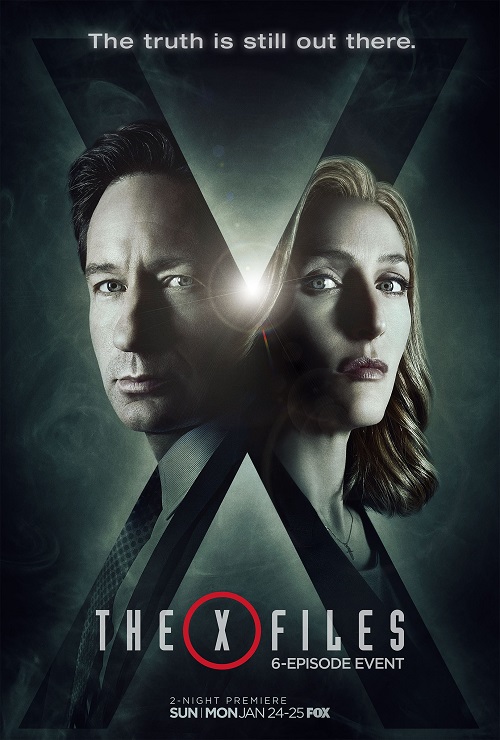
It took me a little while to warm up to The X-Files when it first began. Round about the episode “Deep Throat” is where I started to become a fan, rather than someone who watched it because my girlfriend was watching it. Before then I had a big problem with the way Mulder would throw lots of so-called evidence at Scully in support of his irrational crackpot theories, evidence that in our world had been totally discredited, and then be proven right by what came next. That led to a resurgent real-world interest in the paranormal, just before mobile phones and their cameras laid ghosts, nessies and bigfeet to rest forever, but I made my peace with it after realising that on Mulder’s Earth there is good evidence, because in his world monsters and aliens do exist. Of course I then became frustrated with the idea of Scully being the rational, scientific one, when she ignores all the evidence – the implication being that in our world that’s what our scientists do with regard to the paranormal. This new season, following hard on the heels of Gillian Anderson and David Duchovny’s showstopping performances in shows like Hannibal and Californication, severely tested the grudging peace I had made with all that. A two-part story, “My Struggle”, where the worst nightmares of anti-vaxxers and rightwing talk show hosts come true, for example, left me very cold, to the extent that I’d call it irresponsible. If it had been good dramatically and creatively, that would have been one thing, but it was like a Syfy original movie written by the kind of people you block on Twitter. Similarly, “Babylon” explores the aftermath of an apparent terrorist bombing, and you wait for the supernatural twist, for our stereotyped assumptions to be undercut... and it doesn’t come. The paranormal element is that Mulder is apparently now able to enter people’s minds, Dreamscape-style, if he takes the right drugs. And don’t get me started on the “everything you know is a lie” bit they try to pull, yet again. Those were three of the worst episodes of the programme to date. But I’m still glad it’s back. I’d rather have Mulder and Scully back for bad episodes than none at all – and the three other episodes of this short series were good enough to outweigh the bad. “Founder’s Mutation” and “Home Again” both delivered a series of good scares, while “Mulder & Scully Meet the Were-Monster”, featuring the hilarious Rhys Darby as a man who turns into a lizard creature, or so it seems, was a delight from start to finish, one of my favourite ever episodes. So a mixed season, but that’s how it often was with The X-Files, and even the bad episodes had their share of startlingly weird imagery. What worked, worked very well. I hope there are more seasons to come. ***

Friday, 14 April 2017

The Dispatcher, by John Scalzi (Audible) | review by Stephen Theaker

This is a two hour twenty minute story, told in the first person and read with gusto by Zachary Quinto (Spock from Star Trek films eleven to thirteen). He plays Tony Valdez, the dispatcher of the title. We first meet him in a hospital, where his presence in the operating theatre is required by the insurers. He’s quite cagey about the precise nature of his job at first, and we know the surgeon isn’t happy about having him in there. Is he there to kill people if the treatment gets too expensive? Is the patient someone of such significance that the staff will be punished if he dies? Or is this like Nick Mamatas’s The Last Weekend, where someone has to drill the deceased before they turn into zombies? We don’t find out until the operation takes a turn for the worse and Tony has to step in to do his thing. His job is interesting, as is the reason it is needed. The story soon segues into a hardboiled search for a missing dispatcher, while exploring throughout the implications of the difference between Tony’s world and ours. The two-hour length reflects how much this resembles the pilot for a television series, with Tony teaming up with a tough female co-star for an adventure that establishes a strong premise, while leaving plenty more to be investigated. It’s good, and very well read. It was free to Audible members at the time of writing, but if it’s not by the time you read this it is well worth one of your Audible tokens. ***


This review originally appeared in Theaker's Quarterly Fiction #59, which also included stories by Rafe McGregor, Michael Wyndham Thomas, Jessy Randall, Charles Wilkinson, David Penn, Elaine Graham-Leigh and Chris Roper.

Friday, 7 April 2017

The Adventures of Roderick Langham: now out, in print and ebook!

free epub | free mobi | free pdf | print UK | print USA | Kindle UK | Kindle US

Roderick Langham is a retired soldier, disgraced police inspector, and reluctant occult detective. He inhabits the world of Sherlock Holmes, investigates cases with John Watson and Sebastian Moran, and is able to perceive the reality concealed by the illusion of everyday appearances. These nine stories follow Langham from his first encounter with the inexplicable in the Himalayan hills to his investigation of the wreck of the Demeter and his growing realisation that the dales, moors, and wolds which surround his Yorkshire refuge are home to an evil far older than the honeycomb of medieval monasteries and Roman ruins suggests.


Rafe McGregor is the author of The Value of Literature, The Architect of Murder, six collections of short fiction, and one hundred and fifty magazine articles, journal papers, and review essays. He lectures at the University of York and can be found online at @rafemcgregor. The cover is by Dave Elsey.

Praise for Rafe McGregor’s The Architect of Murder:

“Arthur Conan Doyle is alive and well, and writing under the name Rafe McGregor.” – Tess Gerritsen

“Rafe McGregor is the architect of murderously good historical fiction.” – Gyles Brandreth

“…a fascinating marriage of investigative mayhem with keen attention to historical detail…” – Graham Hurley

“There’s some dandy police procedure…and plenty of interesting characters to carry the story along.” – Bill Crider

“…an exciting read, giving a very authentic flavour of the period…” – Bernard Knight


Review copies available in print, pdf, epub and mobi. Please send requests to theakersquarterlyfiction@gmail.com.

Monday, 3 April 2017

Ms. Marvel Vol. 1: No Normal, by G. Willow Wilson and Adrian Alphona (Marvel) | review by Stephen Theaker

Kamala Khan is a smart fifteen-year-old girl, living in New Jersey with loving parents who quite understandably don’t want her going out at night and an older brother who’s keener on virtue than finding a job. She works hard at school, has a pair of good friends, clever Bruno and proud Nakiyi, and somehow deals with the microaggressions of popular white girls without losing her temper. Her hero is Captain Marvel; Kamala’s been known to write quite popular fanfiction where the Avengers protect the My Little Ponies. One night she gets fed up with her parents and sneaks out to what turns out to be a rather crummy party. Nothing bad happens till she is on her way home: the terrigen mists descend, and she wakes up in a black shell, transformed into a younger Captain Marvel. It looks like Kamala is an Inhuman, with shape-changing powers that she’ll explore in a bunch of different ways over the rest of the book. Growing a big hand, looking like a shop window dummy, shrinking to the size of a mouse – she’ll get the hang of it all while amusing the reader and trying to extricate Bruno’s idiot brother from a tight spot. Like the young Peter Parker, she’s a teenage superhero trying to do the right thing despite the pressures and obligations of school, family and friends, and this feels from the off like classic Marvel at its best: contemporary, imaginative, funny and relevant, with excellent artwork. Kamala is an utterly charming fangirl hero, tailor-made for modern teenagers. ****

Sunday, 2 April 2017

Winners of the Theaker's Quarterly Awards 2017

As announced in Theaker's Quarterly Fiction #59, these are the winners of the Theaker's Quarterly Awards 2017.

Audio

  • 1st The Brenda and Effie Mysteries: Spicy Tea and Sympathy, by Paul Magrs (Bafflegab Productions)
  • 2nd Doctor Who and the Ark in Space, by Ian Marter (BBC/Audible)
  • 3rd Vince Cosmos: Glam Rock Detective, by Paul Magrs (Bafflegab Productions)


Books

  • 1st Songs of a Dead Dreamer and Grimscribe, by Thomas Ligotti (Penguin Classics)
  • 2nd The Last Weekend, by Nick Mamatas (PS Publishing)
  • 3rd Slow Bullets, by Alastair Reynolds (Tachyon Publications)

Comics

  • 1st The Glorkian Warrior and the Mustache of Destiny, by James Kochalka (First Second)
  • 2nd Ms. Marvel Vol. 1: No Normal, by G. Willow Wilson and Adrian Alphona (Marvel)
  • 3rd The Savage Sword of Conan, Vol. 14, by Charles Dixon, Gary Kwapisz, Ernie Chan and chums (Dark Horse Books)


Films

  • 1st Captain America: Civil War, by Christopher Markus and Stephen McFeely (Marvel Entertainment et al.)
  • 2nd Star Wars: The Force Awakens, by Lawrence Kasdan, J.J. Abrams and Michael Arndt (Lucasfilm et al.)
  • 3rd X-Men: Apocalypse, by Simon Kinberg (Twentieth Century Fox Film Corporation et al.)


Games

  • 1st Trials Fusion Awesome Max Edition, by RedLynx (Ubisoft)
  • 2nd Rare Replay, by Rare (Microsoft Studios)
  • 3rd Saints Row IV: Re-Elected, by Volition Software (Deep Silver)


Music

  • 1st It Follows: Original Motion Picture Soundtrack, by Disasterpeace (Milan Records)
  • 2nd —
  • 3rd —


Television

  • 1st Doctor Who, Season 9, by Steven Moffat and friends (BBC)
  • 2nd The Flash, Season 1, by Andrew Kreisberg and many others (Warner Bros Television)
  • 3rd Penny Dreadful, Season 2, by John Logan and chums (Sky Atlantic)


Issue of TQF

  • 1st Theaker’s Quarterly Fiction #56, edited by Stephen Theaker and John Greenwood
  • 2nd Theaker’s Quarterly Fiction #54, edited by Stephen Theaker and John Greenwood
  • 3rd Theaker’s Quarterly Fiction #57, edited by Stephen Theaker and John Greenwood

TQF cover art

  • 1st Theaker’s Quarterly Fiction #56, art by Howard Watts
  • 2nd Theaker’s Quarterly Fiction #55, art by Howard Watts
  • 3rd Theaker’s Quarterly Fiction #57, art by Howard Watts

Fiction from TQF

  • 1st The Policeman and the Silence, by Patrick Whittaker
  • 2nd Septs, by Charles Wilkinson
  • 3rd Nold, by Stephen Theaker
Congratulations to all the winners and runners-up!

Items were eligible for our awards if they were reviewed in our magazine during 2016, whatever their original year of publication, or published in 2016, in the case of the TQF-specific awards. Our readers and the public were then able to vote for as many items in each category as they wanted.  To break any ties we referred to our reviewers’ star ratings, where relevant, and if that didn’t do the trick we invited Alexa to roll a dice with a suitable number of sides.

To claim their prestigious Theaker’s Quarterly Awards, pictured below, winners should email us at theakersquarterlyfiction@gmail.com with an address to which we can send them.